Blog Summary
-
Explains the step-by-step process to start a supermarket in the UAE
-
Covers licensing, location selection, setup costs, and approvals
-
Highlights supplier management, store layout, and food safety requirements
-
Emphasizes the role of POS and inventory systems for smooth operations
-
Helps new business owners plan, launch, and manage a supermarket confidently
Wondering how to start a supermarket in the UAE?
It may seem overwhelming at first. There are many factors to take into account, including obtaining licenses and permits, managing suppliers, stocking shelves, and managing day-to-day operations. However, it doesn’t have to be difficult if you have the right plan. The UAE grocery and supermarket sector was worth over US $40 billion in 2024, with modern supermarkets making up nearly 80 % of the market. With stable growth projected through 2028, there is strong ongoing demand for well-run retail outlets.
If you are exploring how to open a supermarket, this guide walks you through licensing, location selection, setup costs, suppliers, and operations – step by step. Use this as a practical how to open a retail store checklist for the UAE market.
How to Start a Supermarket in the UAE: Step-by-Step Roadmap
The following paragraphs outline the key steps you must take to open a small supermarket, including the required approvals and tools.
1. Choose Your Supermarket Format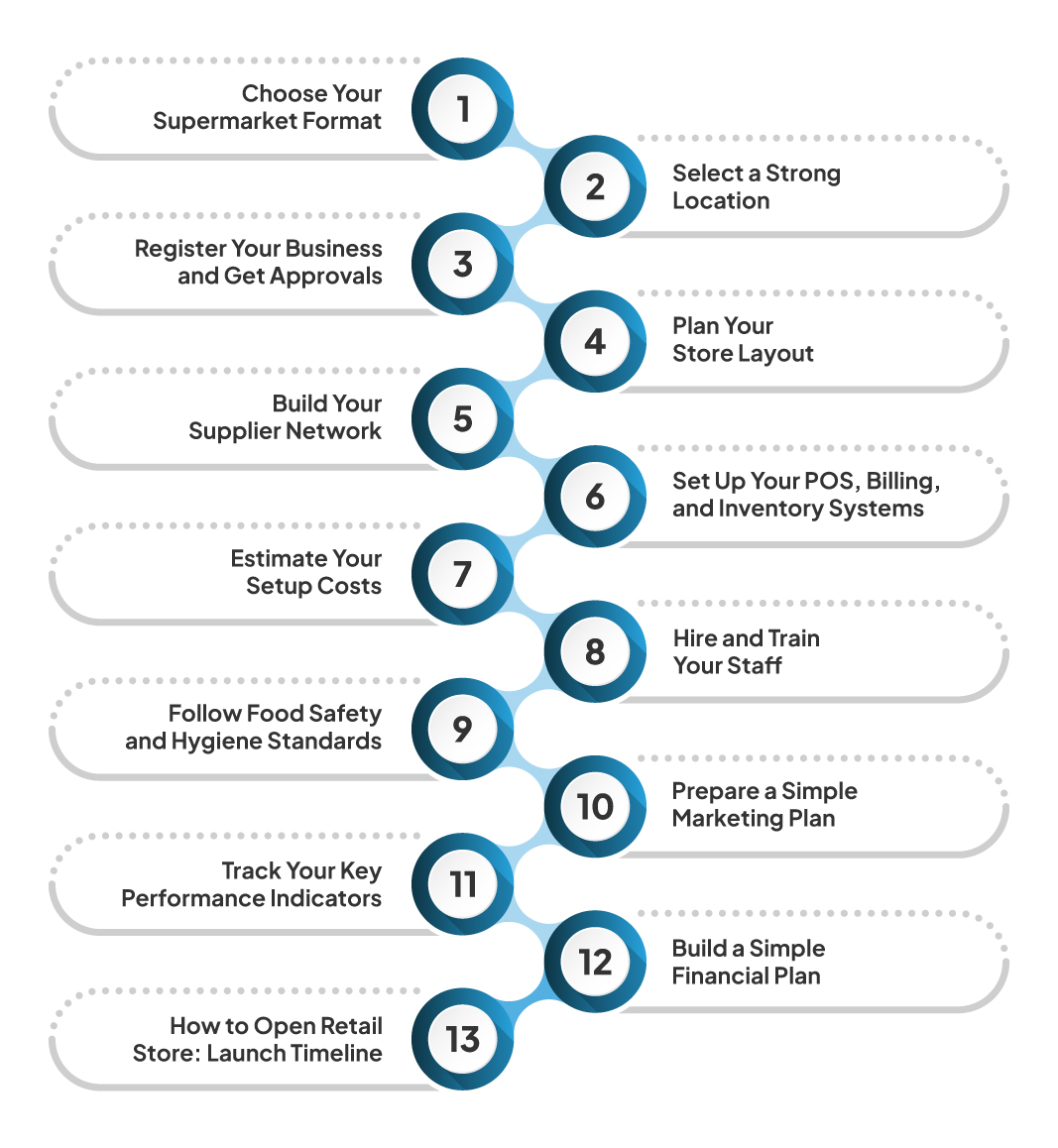
The first step in learning about how to start a supermarket business is to choose a format. Think about your budget, target customers, and expected sales.
Store Types
- Mini supermarket
- Medium community supermarket
- Large supermarket
- Organic or specialty grocery
- Value or discount grocery
Your choice of store format will determine your initial investment, operational complexity, and target market. Each format serves different customer needs and requires different levels of capital and management attention.
What to Consider
- Expected daily footfall
- Stock variety
- Required shelf space
- Refrigeration needs
- Staff count
A medium-sized store might require 186–465 m², whereas a small supermarket typically starts at 46–93 m².
2. Select a Strong Location
When new owners ask how to open a supermarket in the UAE, the answer always begins with a strong location. It goes without saying that location affects revenue from the very beginning.
Ideal Areas
- Residential neighborhoods
- Close to schools or clinics
- Near community parks
- Ground floor units in mixed-use zones
- Areas with simple parking access
The right location can significantly impact your foot traffic and long-term profitability. Consider conducting market research to understand the demographics and shopping patterns in your chosen area before finalizing your decision.
3. Register Your Business and Get Approvals
Prior to operating your supermarket, you must fulfill certain government requirements.
Simple Licensing Steps
- Make a trade name reservation.
- Apply to the economic department for initial approval.
- Put your signature on a lease.
- Send the municipality your layout plan.
- Finish any necessary food safety approvals.
- Obtain your last trade license.
Each emirate may have slightly different requirements and processing times. It’s advisable to consult with local authorities or business setup consultants to ensure you complete all steps correctly and efficiently.
4. Plan Your Store Layout
A well-planned layout improves the shopping experience and reduces crowding.
Key Layout Elements
- Wide aisles
- Fresh area near the entrance
- Chilled and frozen zones along the sidewalls
- Billing counters near the exit
- Storage area at the back
- Good lighting for visibility
Strategic layout planning helps guide customer flow and maximize sales opportunities. Consider consulting with retail design professionals to optimize your space for both functionality and customer experience.
Layout Tips
- Keep high-demand items in easy-to-find spots.
- Use end-caps for promotions.
- Make room for baskets and trolleys.
- To make navigation easier, group similar products together.
These layout principles help create an efficient shopping environment that encourages customers to explore your full product range while maintaining smooth traffic flow throughout the store.
5. Build Your Supplier Network
Your stock availability, product freshness, and margins are all impacted by your supplier list.
Supplier Categories
- FMCG distributors
- Dairy and bakery suppliers
- Fresh produce vendors
- Meat and frozen goods suppliers
- Beverage suppliers
- Local wholesalers
Building strong relationships with reliable suppliers is crucial for maintaining consistent inventory and competitive pricing. Start connecting with suppliers early in your planning process to negotiate favorable terms.
What to Finalize Early
| Item | Why it Matters |
|---|---|
| MOQ | Helps you avoid overstocking |
| Delivery days | Ensures stable inventory |
| Payment terms | Controls cash flow |
| Returns | Protects you from damaged stock |
| Expiry handling | Reduces waste |
6. Set Up Your POS, Billing, and Inventory Systems
Many ask, how to start a supermarket business with minimal errors? Using dependable inventory and point-of-sale systems facilitates operational efficiency. Systems that are dependable are absolutely vital.
Core Features to Look For
- POS billing
- VAT-ready receipts
- Real-time inventory
- Barcode support
- Expiry and batch tracking
- Stock alerts
- Supplier management
- Daily sales reports
Modern POS systems eliminate manual errors and provide valuable insights into your business performance. Investing in the right technology from the start saves time and reduces costly mistakes.
How VasyERP Helps
- Simple POS interface
- Real-time stock counting
- Multi-branch management
- Expiry alerts
- Purchase and supplier modules
- Dashboard insights
These reduce manual work and help new owners make better and faster decisions.
7. Estimate Your Setup Costs
To keep costs under control, use a detailed cost plan.
Common Cost Breakdown
| Item | Estimated Cost |
|---|---|
| Trade License | AED 10,000–15,000 |
| Approvals | AED 1,000–3,000 |
| Refrigeration | AED 20,000–70,000 |
Costs are influenced by city, store size, and the product mix. Creating a comprehensive budget helps you secure adequate financing and avoid cash flow problems during the critical startup phase.
8. Hire and Train Your Staff
Your employees need to be aware of customer service, expiry handling, and store hygiene.
Common Roles
- Store manager
- Cashiers
- Shelf staff
- Stock receiver
- Cleaner
Building a competent team is essential for delivering excellent customer service and maintaining smooth operations. Look for candidates with retail experience and strong customer service skills.
Training Areas
- POS and billing basics
- Expiry checks and stock rotation
- Customer handling
- Food hygiene practices
- Store cleanliness
Comprehensive training ensures your staff can handle daily operations efficiently and maintain the high standards your customers expect.
9. Follow Food Safety and Hygiene Standards
Basic hygiene regulations must be followed by supermarkets.
Main Compliance Points
- Keep chillers and freezers at correct temperatures.
- Check expiry dates daily.
- Store food off the floor.
- Maintain clean preparation areas.
- Train staff in personal hygiene.
Food safety compliance protects your customers and your business reputation. Regular inspections and proper documentation help you maintain the required standards consistently.
10. Prepare a Simple Marketing Plan
You don’t need to have a complex plan, yet make local reach a priority. The following specifically elaborates on how to open a small supermarket in the UAE.
Easy Ideas
- Flyers in nearby buildings
- Social media posts
- Loyalty cards
- Simple weekly deals
These assist you in building a base of loyal clients. Focus on cost-effective local marketing strategies that help you connect with your immediate community and build word-of-mouth momentum
11. Track Your Key Performance Indicators
You can determine whether your supermarket is doing well by tracking these KPIs.
Basic KPIs
| KPI | Why Track It |
|---|---|
| Daily sales | Shows demand levels |
| Average basket size | Helps with pricing decisions |
| Stock turnover | Shows how fast items move |
| Shrinkage | Helps reduce losses |
| Gross margin | Demonstrates store profitability |
| Stockouts | Fills in supply gaps |
Regular monitoring of these metrics helps you identify trends, spot issues early, and make data-driven decisions to improve your business performance.
12. Build a Simple Financial Plan
Simple P&L Structure
- Sales
- Cost of goods sold
- Gross profit
- Operating expenses (rent, salaries, utilities)
- Net profit
For the first 3 to 6 months, it’s recommended to keep your spending consistent. Tracking your financial performance helps you understand profitability and make informed decisions about pricing and inventory management.
13. How to Open Retail Store: Launch Timeline
Suggested Timeline
Week 1–2: Select location, secure approvals
Week 3–4: Sign lease, start layout planning
Week 5–6: Install shelves, chillers, and POS
Week 7: Supplier onboarding
Week 8: Staff hiring and training
Week 9–12: Soft launch and full opening
Conclusion
By following this step-by-step checklist, you can reduce risks, control costs, and launch your supermarket with confidence. Once your store is operational, having the right technology in place becomes just as important as the initial setup. Solutions like VasyERP help simplify billing, inventory management, supplier coordination, and expiry tracking—allowing you to focus more on customer experience and business growth. With the right planning and tools, opening and running a successful supermarket in the UAE becomes a practical and achievable goal.

- 1
- 0
- 0