Quick Summary:
A supermarket checkout must scan packaged products, bill weighted produce, apply promotions, accept several payment methods, and update stock before the next customer arrives. This guide compares seven systems for South African retailers.
You will walk away learning the following:
- Which grocery store point-of-sale software options suit different store sizes.
- What to check before choosing the best pos system for grocery store operations.
- How VAT rules, internet reliability, barcode scanning, weighing scales, and payment options shape your final choice.
The past few years have been tough times for the manufacturing business in South Africa. 2025 saw a 1.3% reduction in output in comparison to 2024. The Trump administration’s 30% tariffs on the country further impacted exports and, as a consequence, manufacturing, and now there is the war in Iran, whose impacts are yet to be fully felt.
In addition to this are the local constraints like rising electricity costs, logistics bottlenecks, and skills shortages, which further add to the strain. The final nail in the coffin is manufacturing relying on disconnected systems.
While you can do little about external factors, you can improve your margins by improving how your business functions internally, i.e., with the right manufacturing software. It automates production planning, tracks inventory in real time, and more.
This guide covers the 10 best manufacturing software solutions available in South Africa: options that will suit everyone from the food manufacturers in Gauteng and automotive component suppliers in the Eastern Cape to FMCG distributors in KwaZulu-Natal.
What is Manufacturing Software?
Manufacturing software is a digital solution that helps you plan, manage, and control your production operations from a single window. To get into the specifics, they integrate the core operational functions of a manufacturing business, including, but not limited to:
- Bill of Materials (BOM) management
- Production scheduling and work order management
- Inventory and raw material tracking
- Costing and financial integration
- Supply chain and procurement management
How Manufacturing Software Helps South African Manufacturers Stay Competitive
South African manufacturers face a combination of challenges that generic software cannot adequately address.
- Load shedding requires systems with offline capability or cloud resilience.
- Rand-denominated costing requires a BOM and cost management system that updates automatically when input prices change.
- Multi-site operations like food, packaging, and FMCG manufacturing require real-time stock visibility across locations.
Software for manufacturing companies built specifically for South African conditions addresses all of these requirements in one place.
The Best Manufacturing Software For 2026 at a Glance
| Tool | Best For | Pricing |
|---|---|---|
| VasyERP | Small to large manufacturing operations | Contact for pricing |
| SAP Business One | Mid-size SA manufacturers | Contact for pricing |
| Oracle NetSuite | Mid-to-large manufacturers | Contact for pricing |
| Microsoft Dynamics 365 BC | Manufacturers in the Microsoft ecosystem | Contact for pricing |
| Epicor Kinetic | Make-to-order and engineer-to-order | Contact for pricing |
| Odoo Manufacturing | SMEs | Free |
| ERPNext | Tech-savvy SMEs on tight budgets | Free (open-source) |
| Acumatica Manufacturing | Growing mid-market manufacturers | Consumption-based pricing |
| Infor CloudSuite Industrial | Large industrial manufacturers | Contact for pricing |
| Sage X3 | Mid-market process manufacturers | Contact for pricing |
10 Best ERP Systems for Manufacturing for South African Businesses
Here is a comprehensive breakdown of the best manufacturing software for small and large businesses in South Africa in 2026.
1. VasyERP
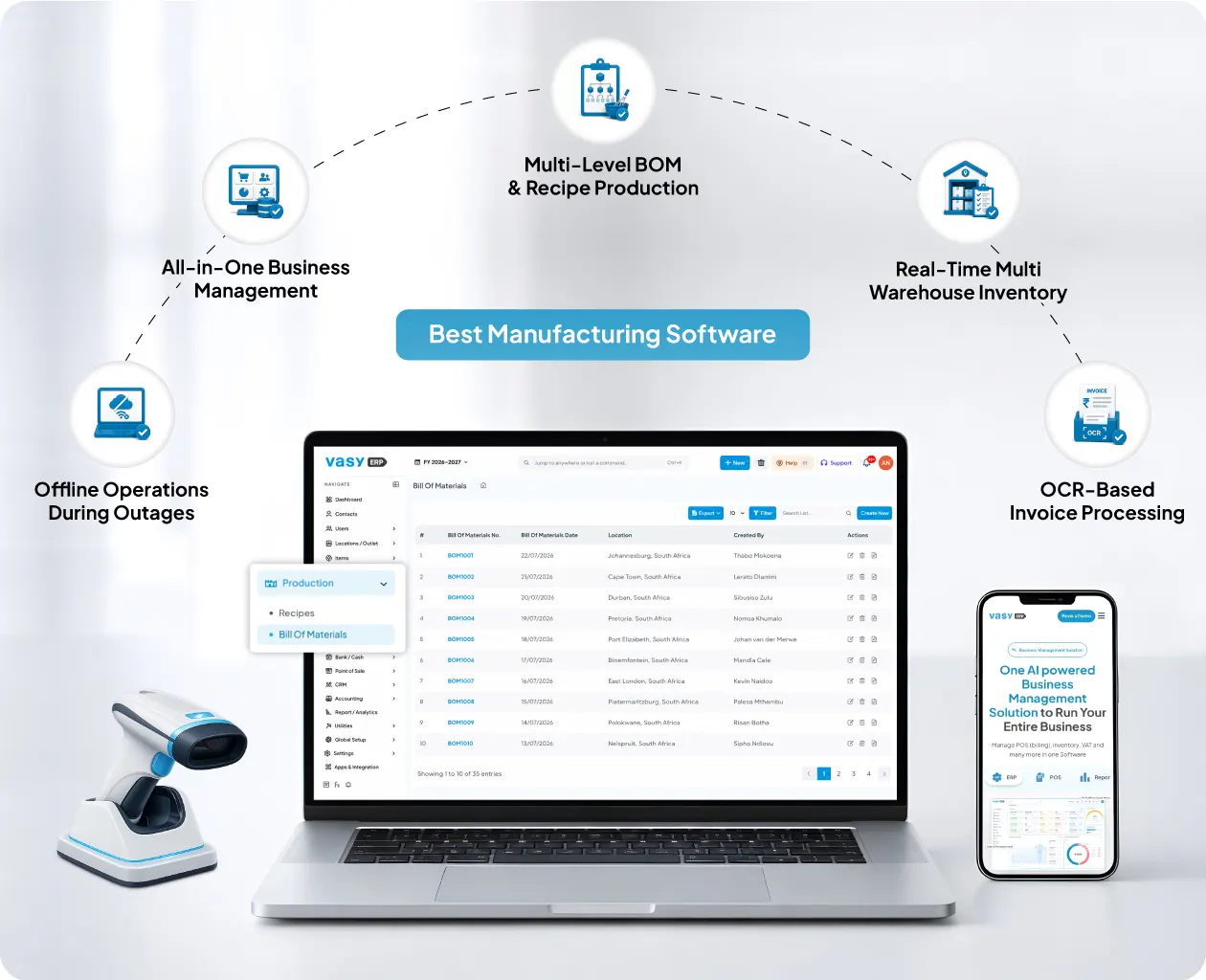
VasyERP is a cloud-based ERP and manufacturing management platform built specifically for South African and emerging-market manufacturers. It combines production management, bills of materials, inventory control, batch tracking, procurement, and accounting into one natively integrated system.
For South African manufacturers specifically, VasyERP addresses the conditions that most international platforms overlook. It can work offline during load shedding, supports the local currency and is SARS-compliant.
Key Features:
- Bill of Materials with multi-level support and recipe-based production.
- Real-time inventory across multiple warehouses and locations.
- OCR-based purchase automation for supplier invoice processing.
Pros:
- All-in-one system replaces multiple disconnected tools.
- Works offline during load shedding and connectivity drops.
- Built for South African compliance and business workflows.
Cons:
- Best suited for retail-adjacent and SME manufacturing; less suited to heavy industrial or engineer-to-order manufacturing at enterprise scales.
Pricing:
Contact for pricing details
2. SAP Business One
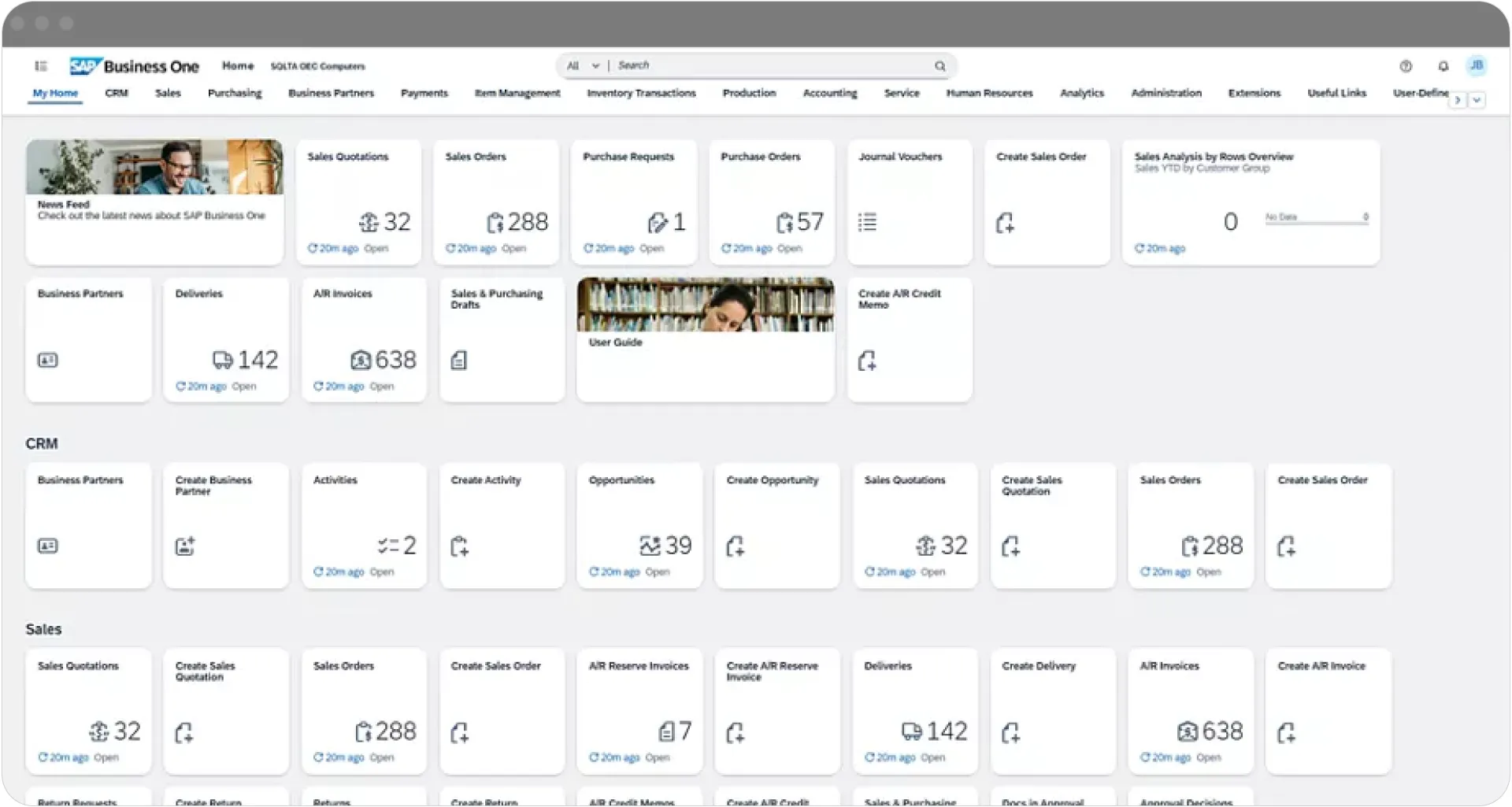
SAP Business One is a widely deployed ERP system for manufacturing, targeting small to mid-sized businesses. It covers production orders, BOM management, Materials Requirement Planning (MRP), quality control, and financial management and has an established certified partner network in South Africa that handles local implementation and support.
Key Features:
- Production planning and material scheduling.
- Bill of Materials and route management.
- Warehouse management and material flows.
Pros:
- Well-established ERP with a global support network.
- Strong financial management is built in, along with reporting depth.
- Scales from SME to mid-market without platform migration.
Cons:
- The manufacturing module is standard, not suitable for complex manufacturing firms.
- Payroll and HR module not included.
Pricing:
Contact for pricing details
3. Oracle NetSuite
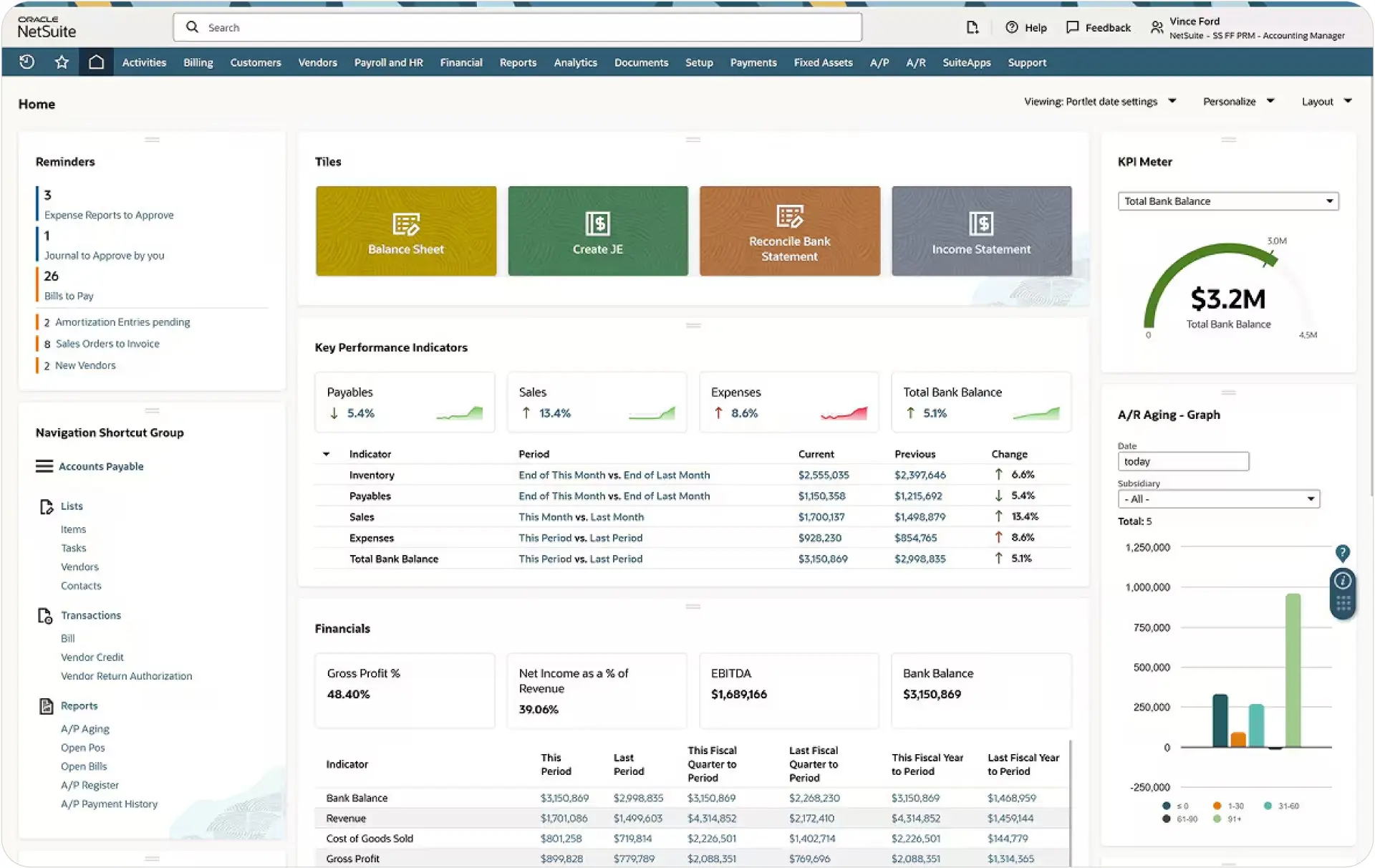
Oracle NetSuite is a cloud-native ERP system for manufacturing with strong financial management, multi-subsidiary support, and real-time dashboards. It’s the best software for manufacturing companies with complex financial structures or international operations.
The platform is also widely recognised for its AI-powered business management capabilities.
Key Features:
- AI-powered business management suite
- Cloud-native multi-currency and multi-subsidiary financial management.
- Production management and demand forecasting.
Pros:
- Cloud-native architecture with no on-premise hardware.
- Best-in-class financial reporting for complex manufacturing entities.
- Strong e-commerce integration for manufacturers selling directly.
Cons:
- UI feels dated relative to newer platforms.
- Implementation requires experienced partners.
Pricing:
Contact for pricing details
4. Microsoft Dynamics 365 Business Central
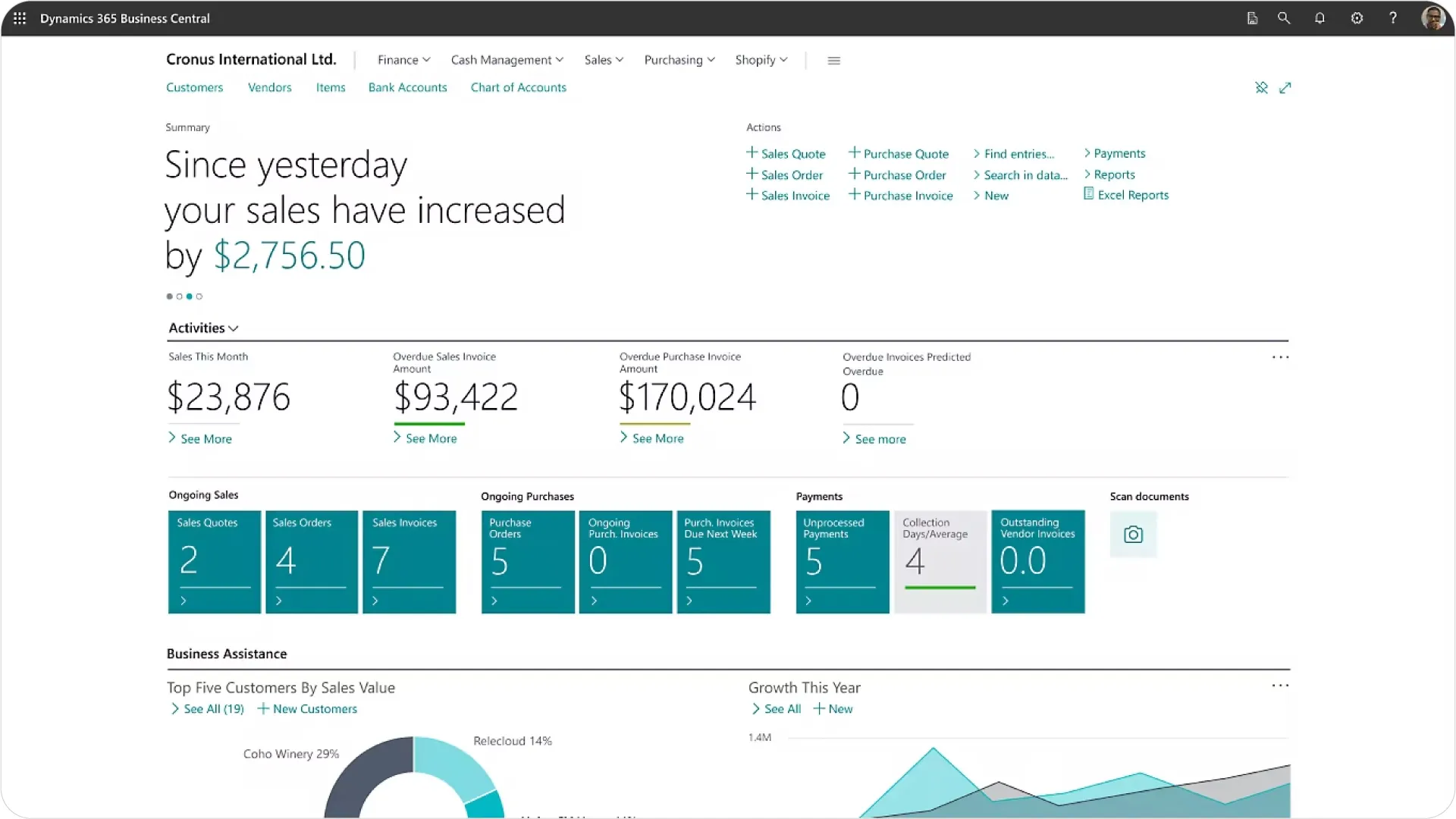
Microsoft Dynamics 365 Business Central is your best choice for an ERP system for manufacturing if you are already operating within the Microsoft ecosystem.
The system includes AI-powered sales and inventory forecasting for replenishment based on actual demand and availability.
Key Features:
- Production order management with capacity and resource planning.
- Native Microsoft 365 and Teams integration.
- Copilot AI capabilities for financial and operational tasks.
Pros:
- Familiar Microsoft interface reduces staff training time.
- Strong SA partner network for implementation and support.
Cons:
- Advanced customisations require add-ons, which can get expensive.
- Less suited to complex process manufacturing environments.
Pricing:
Contact for pricing details
5. Epicor Kinetic
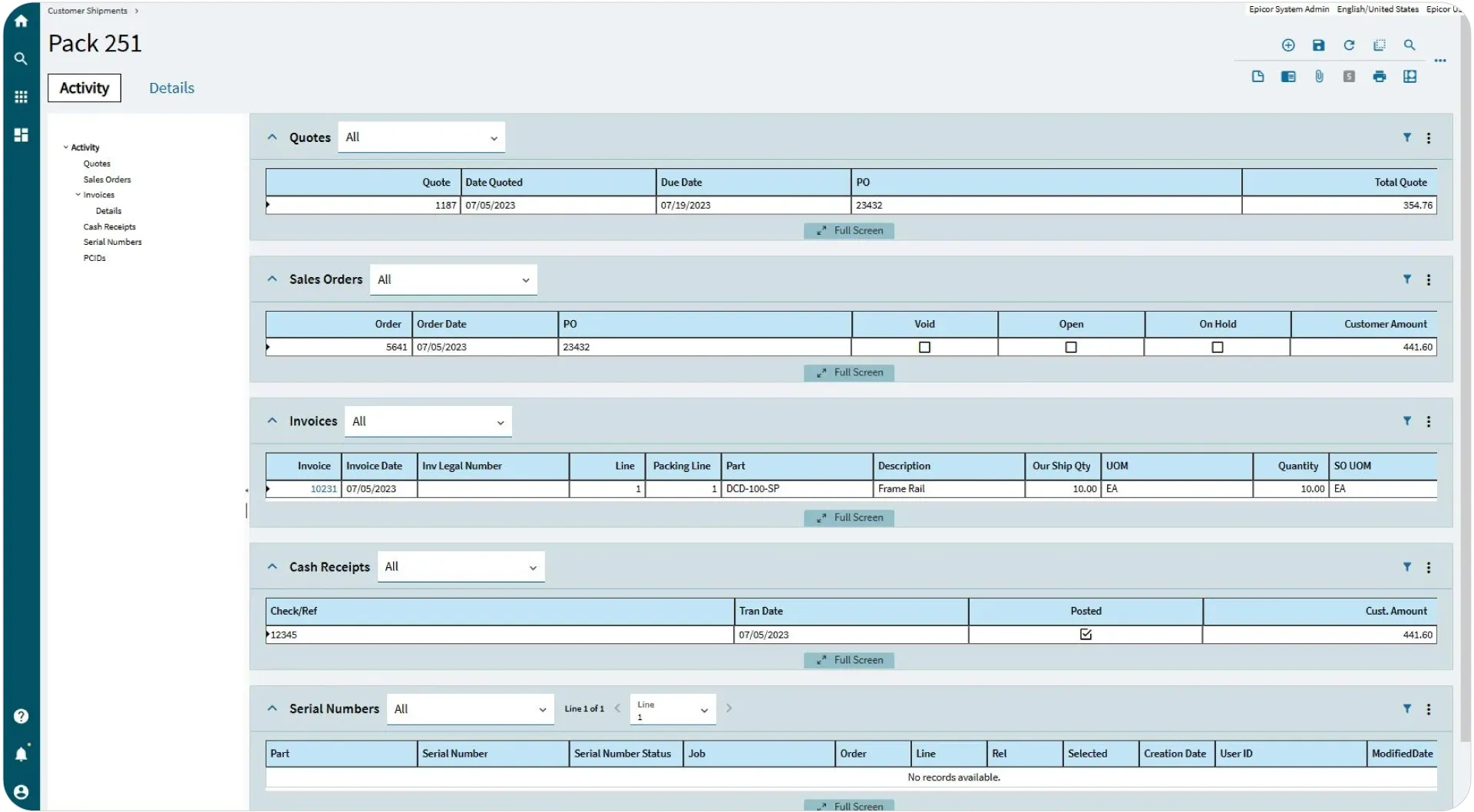
Epicor Kinetic is a manufacturing-first ERP system for manufacturing with strong capabilities for make-to-order, engineer-to-order, and repetitive manufacturing environments.
It helps them maximise profitability with real-time business intelligence and built-in collaboration tools.
Key Features:
- Detailed cost tracking across materials, labour, and overhead.
- Strong MES (Manufacturing Execution System) integration.
- Flexible production modes: MTO, ETO, repetitive.
Pros:
- Manufacturing depth is among the strongest on this list.
- Good fit for manufacturers with complex custom production workflows.
Cons:
- Financial and HR modules are weaker than the manufacturing core.
- Higher implementation cost and timeline than most SME options.
Pricing:
Contact for pricing details
6. Odoo Manufacturing
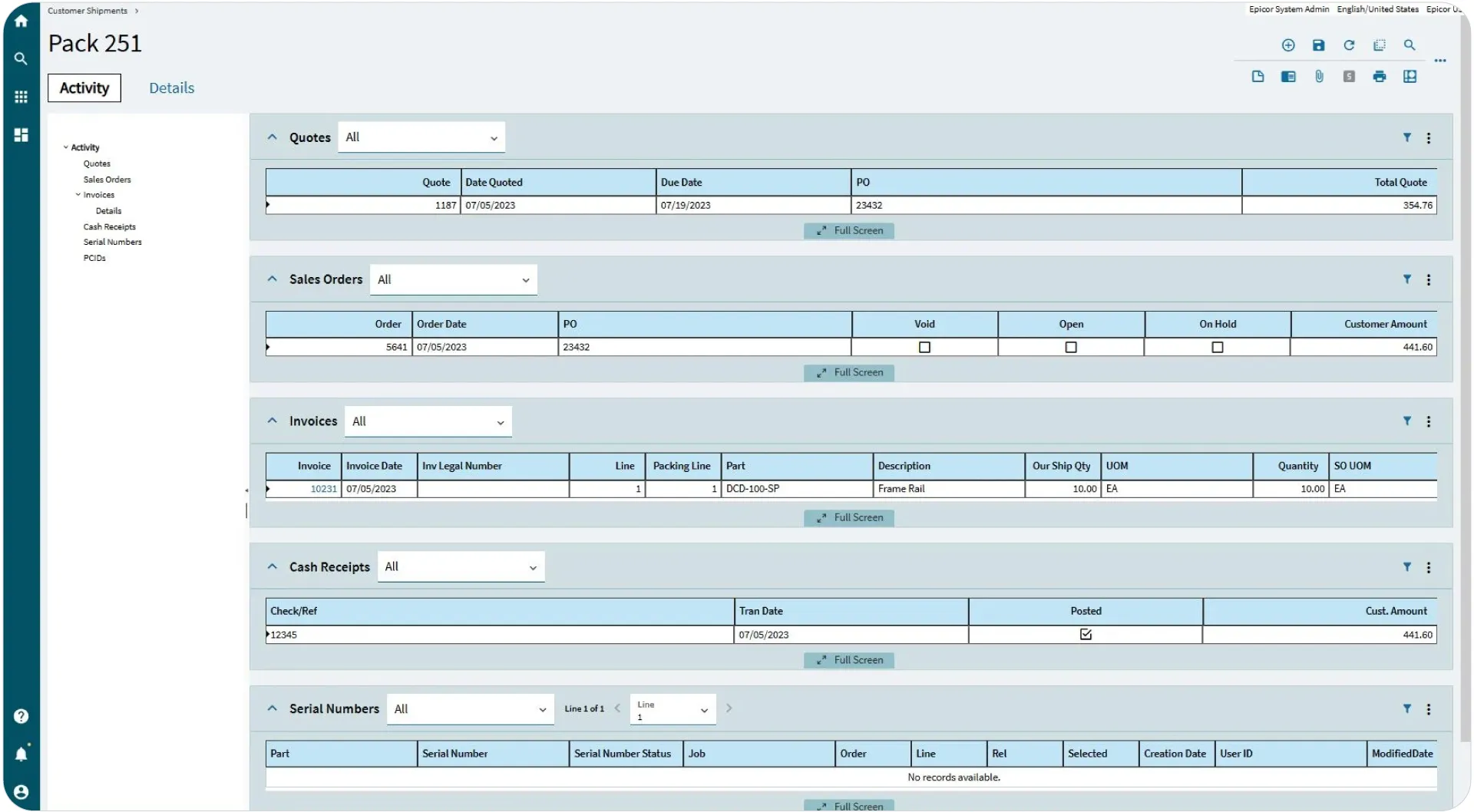
Odoo is the best software for manufacturing companies that are looking to take the open-source route.
The platform is modular, so you can add on a lot more than the core manufacturing module that covers work orders, BOM management, quality control, and maintenance.
Key Features:
- Multi-level BOM management and product costing.
- Work order management with production scheduling
- Quality control checks are integrated into the production workflow
- Advanced stock reservation logic.
Pros:
- Community Edition is free to self-host, making it one of the most accessible manufacturing software options for small businesses globally.
- 82 native modules cover most business functions without third-party tools.
- Active SA community and implementation partners.
Cons:
- Self-hosted deployment requires IT resources to maintain and update.
- Less polished user interface compared to the other commercial solutions on the list.
Pricing:
Free
7. ERPNext
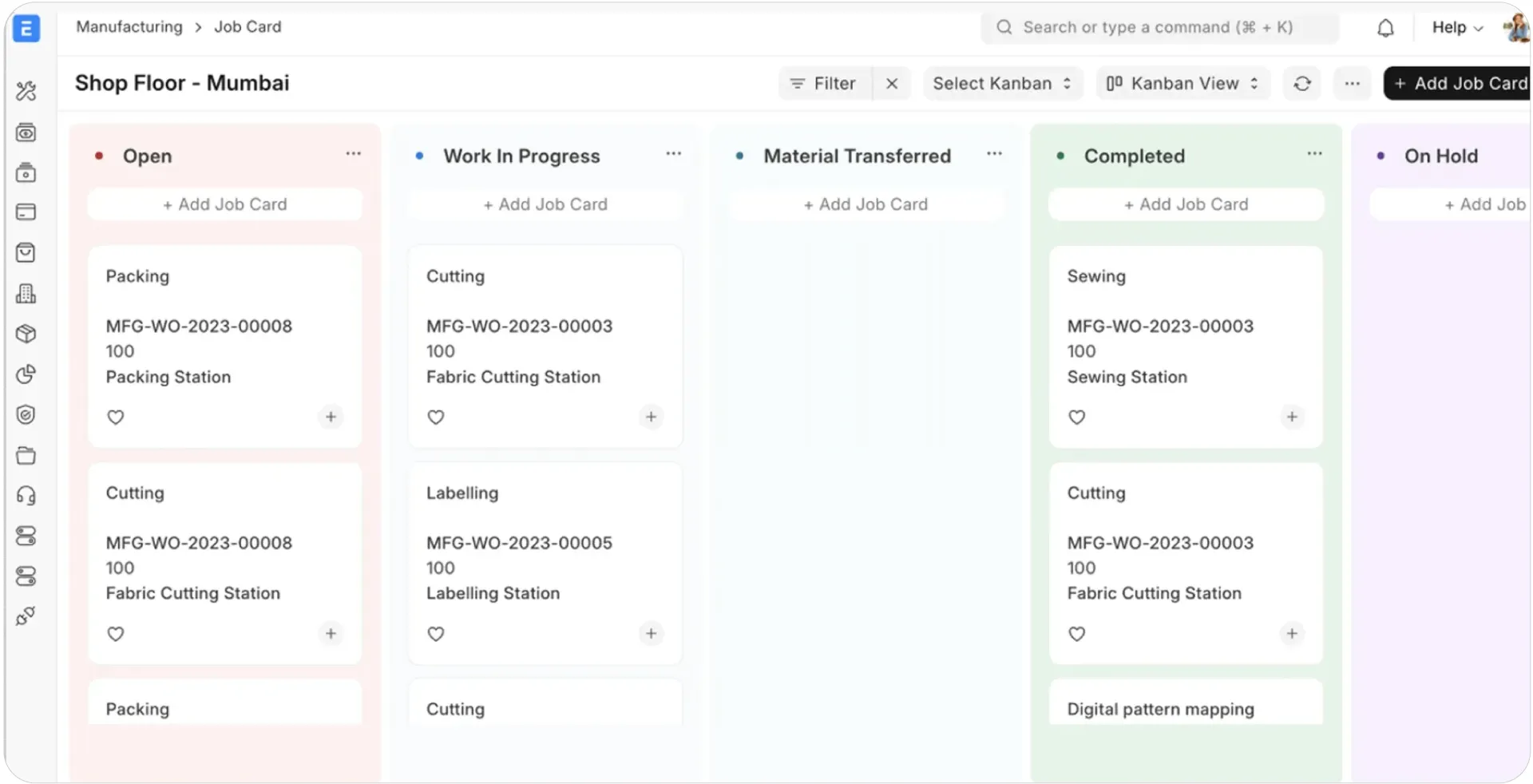
ERPNext is another fully open-source ERP system for manufacturing on the list that covers manufacturing, inventory, purchasing, accounting, and HR. It’s built on the Frappe framework and is a single platform that costs nothing for self-hosted deployment.
Key Features:
- Open-source BOM and work order management.
- Multi-warehouse inventory with batch and serial number tracking.
- Built-in accounting with SARS-compatible tax configuration.
- Master production scheduling and MRP views.
Pros:
- Zero software licence cost for self-hosted deployment.
- An active South African community for local configuration support.
- Covers most manufacturing ERP functions out of the box.
Cons:
- Requires technical staff or a local implementer to set up and maintain.
Pricing:
Free (Open-source)
8. Acumatica Manufacturing Edition
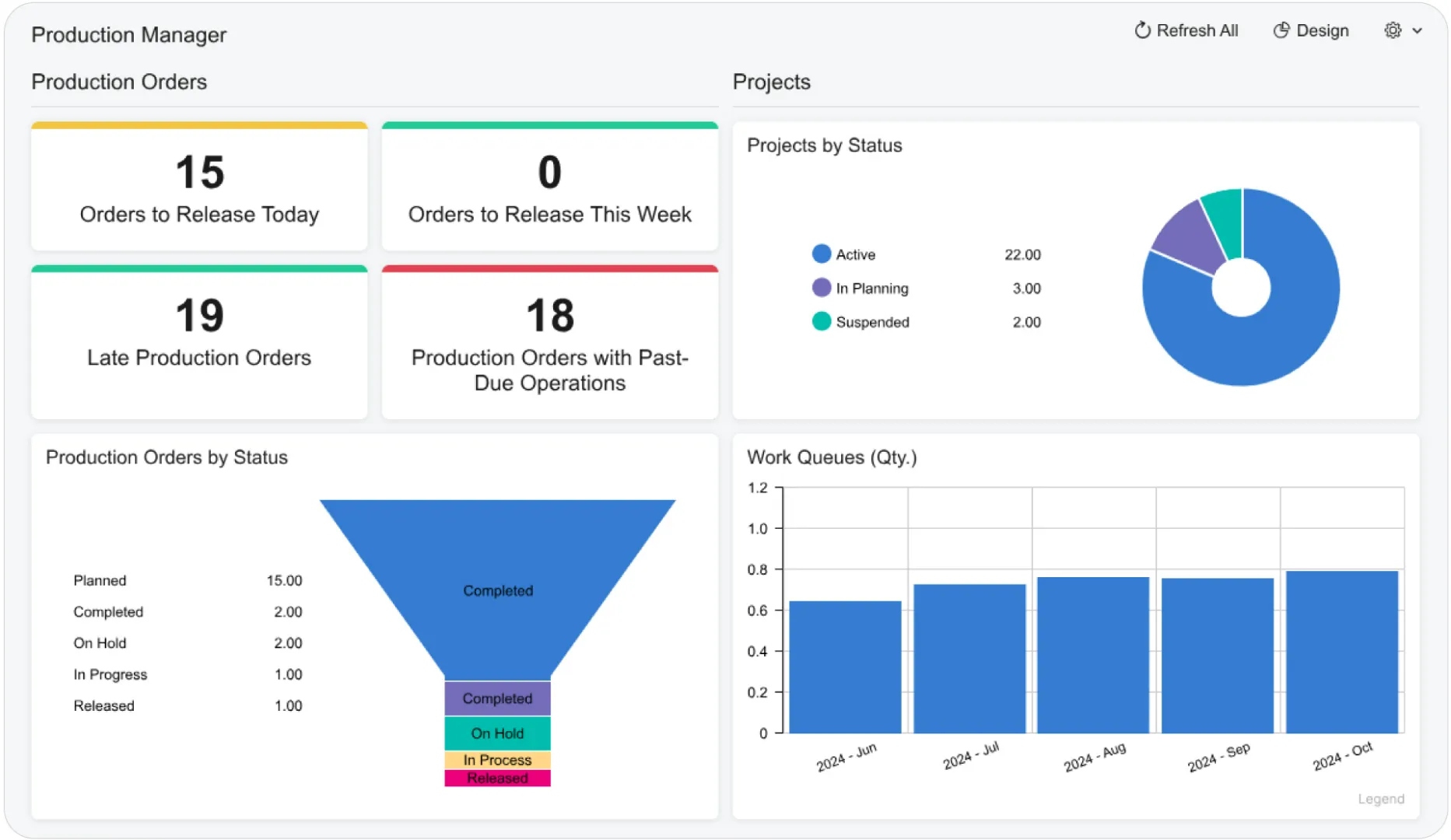
Acumatica Manufacturing Edition is a cloud-native ERP system offering strong support for job costing, production scheduling, and inventory management. What sets it apart from the rest of the software for manufacturing companies is its distinctive consumption-based pricing model.
Here, you pay based on resources used rather than per user.
Key Features
- Production management with MRP and capacity planning.
- Strong project accounting for make-to-order environments.
- Low-code/no-code platform for customisation.
- Role-Based Dashboards.
Pros
- Unlimited users under one licence: huge cost advantage for large teams.
- Good fit for manufacturers with project-based production.
- Cloud-native with no on-premise hardware required.
Cons
- Not very well known in the South African market.
- Consumption pricing can be difficult to forecast for fast-growing businesses.
Pricing:
Consumption-based pricing
9. Infor CloudSuite Industrial
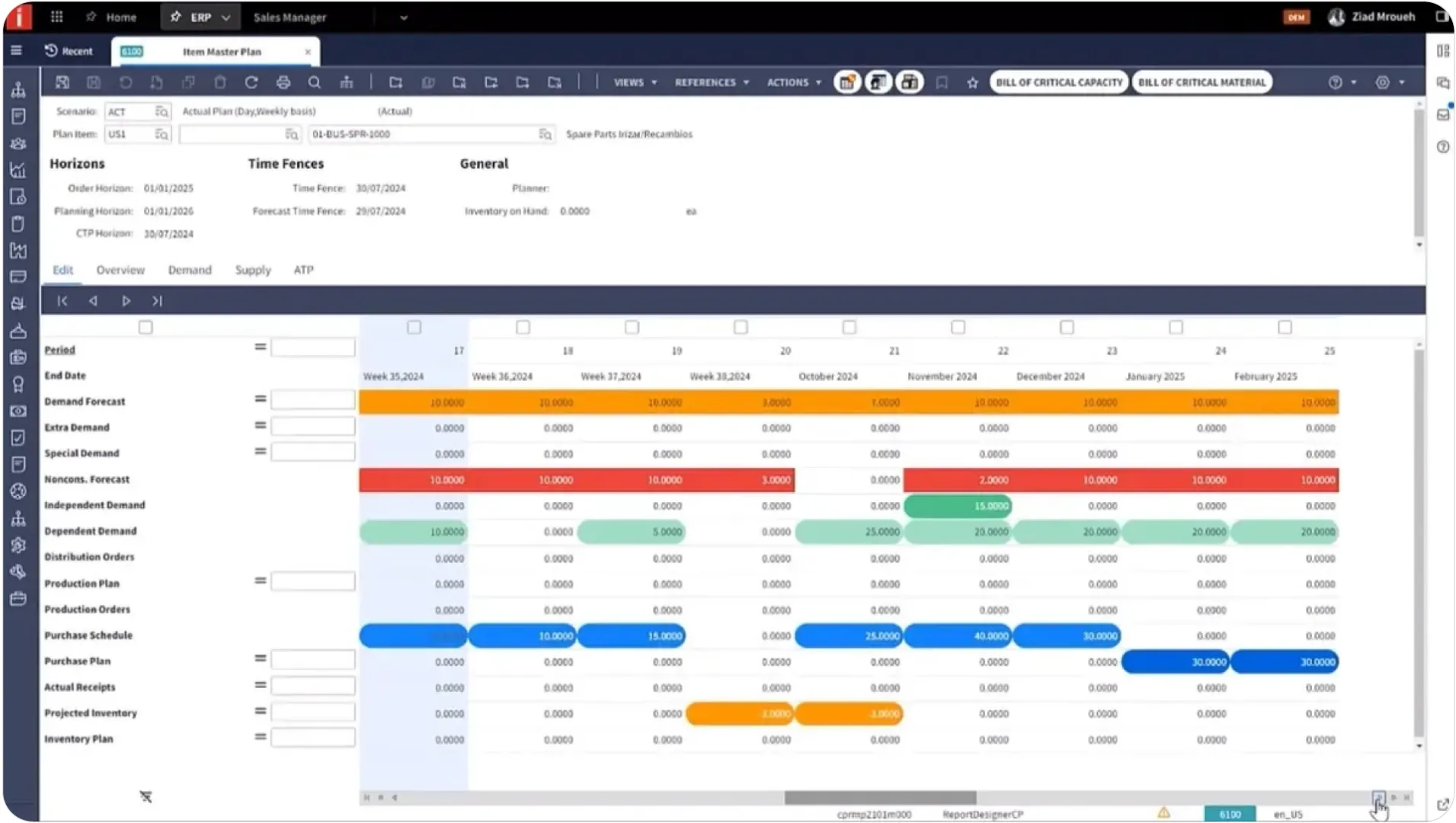
Infor CloudSuite Industrial (formerly SyteLine) is an enterprise-grade ERP system for manufacturing designed for large, complex industrial operations.
It combines industry-specific ERP with advanced capabilities such as PLM, MES, and AI-powered analytics, all in the cloud.
Key Features:
- Advanced production planning and scheduling for complex environments.
- Multi-site inventory and supply chain management.
- Industry-specific configurations for discrete and process manufacturing.
Pros:
- Strong South African partner ecosystem.
- Strong multi-site and multi-entity management.
- AI-driven planning and analytics are built into the platform.
Cons:
- Enterprise pricing and implementation cost put it out of reach for most SA SMEs.
Pricing:
Contact for pricing details
10. Sage X3
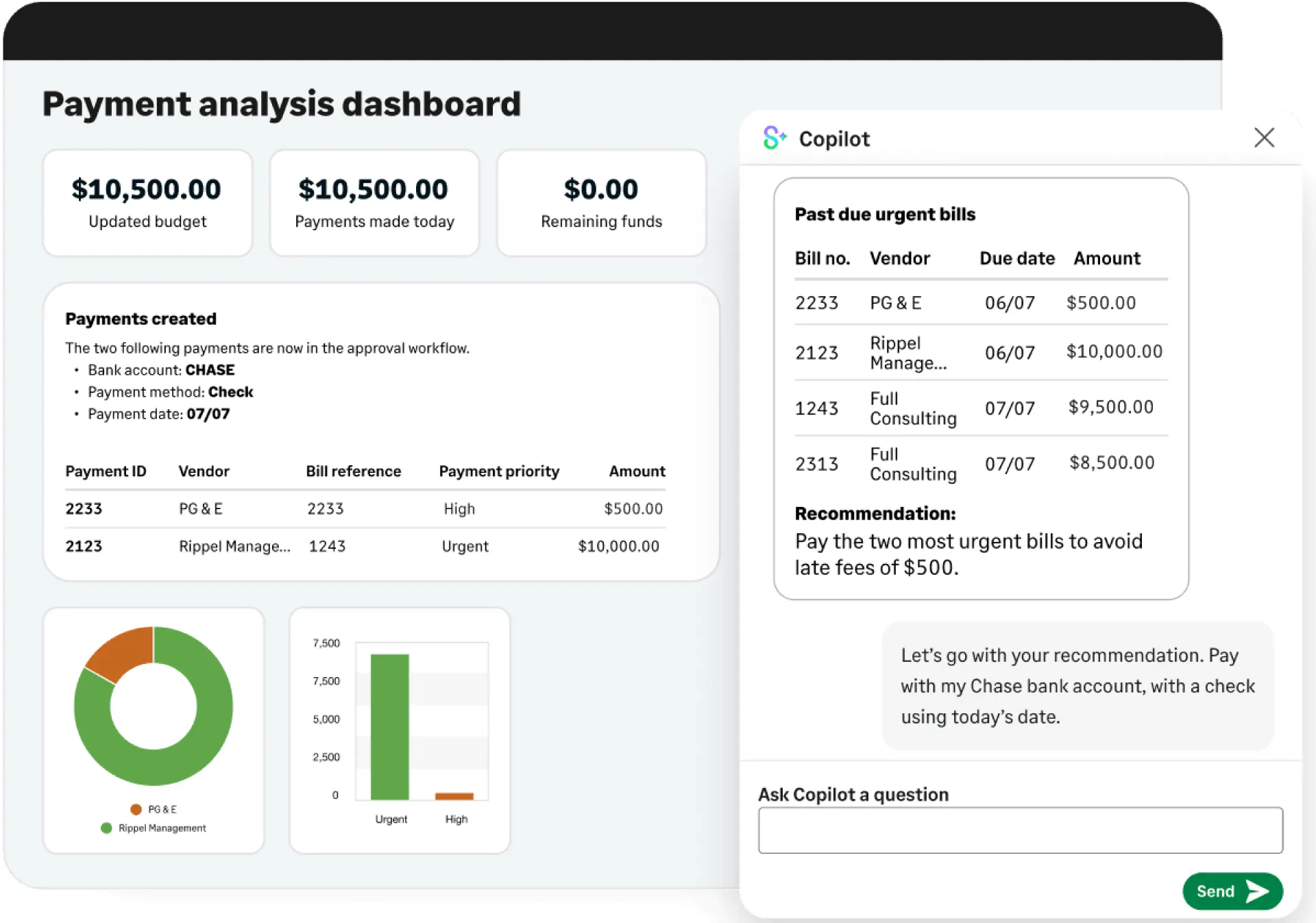
Sage X3 is a mid-market ERP system for manufacturing with a specific focus on process manufacturing, i.e., food and beverage, pharmaceutical, and chemical production. Sage has an established direct presence in South Africa through Sage SA, making it one of the more locally supported international options on this list.
Sage Copilot also provides an AI assistant to ask questions, automate tasks, and get real-time insights.
Key Features
- AI-powered ERP with Sage Copilot
- Real-time production visibility and capacity planning
- Advanced WMS and end-to-end batch genealogy.
Pros
- Faster implementation than tier-1 ERPs like SAP.
- Comprehensive compliance features.
- Local South African support from Sage.
Cons
- Smaller third-party integration ecosystem than Microsoft or Oracle
Pricing:
Contact for pricing details
Key Benefits of Manufacturing Software for South African Manufacturers
The best manufacturing software for you will deliver measurable operational improvements across the following four areas:
1. Reduction in Production Delays
Real-time inventory visibility will ensure that raw materials are always available when needed. With every component being tracked against production orders, your teams will know what was used, what remains, and what needs reordering.
2. Controlled Manufacturing Costs
With BOMs now being accurately managed within the system, you can better identify cost-saving opportunities. Variance reports can give you early warnings of margin erosion when actual production costs deviate from the standard.
3. Support Better Production Planning
With every team working off the same ERP system for manufacturing, your production schedulers, procurement teams, and finance teams forecast demands and plan more efficiently.
4. Improvement in Quality and Compliance
Inbuilt features these tools contain, like batch tracking, expiry management, and audit trails, support SARS documentation requirements, which will automatically result in an improvement in quality and compliance across the board.
How to Choose the Best Manufacturing Software for Your Business
The decisions to choose the right software for your business should depend on the following parameters:
1. Can the Solution Match Your Production Type?
Make-to-stock, make-to-order, engineer-to-order, and batch process manufacturing each have different software requirements. Verify if the solutions support them and eliminate them from consideration.
2. Does the Solution Address SA-Specific Production Needs?
SA-based manufacturing constantly deals with load shedding, does accounting in rand and is required to be SARS-compliant. Any software for manufacturing companies that does not support these scenarios should be removed from your shortlist.
3. Does the Solution Provider Provide Support Locally?
Verify the vendor has partners or offices in South Africa. Check references from local manufacturers.
4. Does the Solution Match My Business’s Scale?
Finally, check if the solution is built to match the size of your business and can scale with you as you grow.
Manufacturing Software Implementation Challenges and How to Overcome Them
Most manufacturing ERP implementations that fail do so for largely the same predictable reasons:
- Underestimating the data migration effort: Cleaning and importing product masters, BOMs, and supplier records takes a lot longer than most manufacturers budget for. Allocate dedicated resources to this stage before go-live.
- Insufficient staff training: Production teams need hands-on training in the actual system. Build at least two weeks of structured training, if not more, into the implementation plan.
- No internal implementation owner: There needs to be one person accountable for driving the project from the business side. Not doing so causes decisions to stall and, as a result, results in blowing past deadlines.
- Going live on too many modules simultaneously: Anything can go wrong when going live. Go with a phased go-live to reduce the impact on every module at once.
Why South African Manufacturers Are Moving to Cloud-Based Manufacturing Software
South African manufacturers are adopting cloud-based systems faster than ever. Here is why:
- Lower upfront costs, as a cloud-based deployment eliminates expensive hardware purchases.
- Cloud ERP implementations average 3-6 months versus 12-18 months for on-premise deployments.
- Cloud systems update automatically.
- Modern cloud systems like VasyERP can work offline during power disruptions.
- Cloud systems scale with your business without needing additional investment in infrastructure.
Choosing the Right Manufacturing Software for Long-term Growth
The tools on this list range from free open-source platforms to enterprise-grade systems costing millions of Rand to implement. The right choice is not the most feature-rich or the most recognised brand but the one that suits your business best.
VasyERP stands apart for South African manufacturers. It is built for local conditions. The system handles load shedding with offline functionality. It supports multi-level BOMs, batch tracking, and expiry management. It integrates manufacturing with inventory, purchasing, accounting, and POS on one platform.
For SA manufacturers who need a system built for local conditions, VasyERP is worth a direct look. Book a 30-minute demo with our team to see the full manufacturing workflow in practice for your specific production setup.
FAQs Regarding Best Manufacturing Software
ERPNext and Odoo offer affordable entry points for businesses with limited budgets. SAP Business One is designed for small and mid-sized companies. VasyERP is also a strong option for manufacturers looking for integrated manufacturing, inventory, retail, and accounting capabilities.
For most South African manufacturers, yes. Cloud-based manufacturing software eliminates server infrastructure costs, provides automatic updates, and gives management real-time access to business data from anywhere.
Cloud-based manufacturing software for small businesses typically takes three to six months to implement. Mid-market solutions usually require four to nine months, while enterprise platforms can take between 12 and 18 months, depending on business complexity.
Yes. Most modern manufacturing software integrates with accounting and inventory systems, allowing production, purchasing, stock control, and financial records to stay synchronised.
Yes. Bill of Materials (BOM) management is a core feature of most manufacturing ERP systems. However, the level of BOM functionality and complexity supported varies between software platforms.
Last Updated on July 28, 2026