Quick Summary:
Still trying to manage production with manual stock checks, scattered spreadsheets, and delayed purchase decisions? This guide breaks down exactly what Material Requirements Planning means, how an MRP system helps manufacturers stay ahead of shortages, and why modern ERP software makes material planning easier to manage.
You'll walk away knowing:
- Whether your business has outgrown manual material planning and disconnected records
- What material requirements planning actually does for day-to-day production and purchasing
- How to keep materials, inventory, and procurement aligned without the usual planning confusion
Defination of Material Requirements Planning (MRP)?
Material requirements planning is a method used by manufacturers to determine the raw materials, components, and subassemblies required for finished goods. It works by using production demand, the bill of materials, current stock, and open orders to identify what still has to be purchased or produced. A simple way to understand the MRP meaning is to think of it as a planning method that answers three basic questions:- What do we need?
- How much do we need?
- When do we need it?
Why Businesses in South Africa Struggle Without a Proper MRP System
Many businesses in South Africa still handle material planning through spreadsheets, manual stock records, emails, and phone calls. That may work for a smaller operation, but it becomes much harder to manage as order volumes rise and product lines become more complex. A delay in one material can affect the whole production schedule. An outdated stock count can lead to unnecessary purchasing. A missed lead time can force urgent buying at a higher cost. Over time, these issues stop being occasional problems and start affecting daily operations. This is why South African businesses struggle without a proper MRP system. Manual planning is reactive. It often depends on memory, periodic checks, and records that do not always match. A system-based approach is different because it works with structured inputs such as demand, bills of materials, stock data, and lead times.| Warning Sign | Business Impact |
|---|---|
| Stockouts that interrupt production | Production schedules are disrupted and customer commitments become harder to meet. |
| Overstocking that locks up working capital | Too much cash gets tied up in inventory, which puts pressure on liquidity. |
| Production delays caused by one missing item | Missing material can hold up an entire batch, reducing efficiency and output. |
| Purchase teams chasing suppliers because reorders were late | Teams spend more time on urgent follow-ups, while procurement becomes reactive instead of planned. |
| Planners spending too much time matching records instead of planning ahead | Time that should go into planning and coordination gets lost in manual checks and corrections. |
Quick TipCheck where stock records, supplier lead times, and purchase decisions stop matching what is happening on the shop floor. That usually shows where planning is breaking down.
How Material Requirements Planning (MRP) Works
At a practical level, material requirements planning works by bringing together a few key inputs and turning them into planning decisions. These inputs usually include: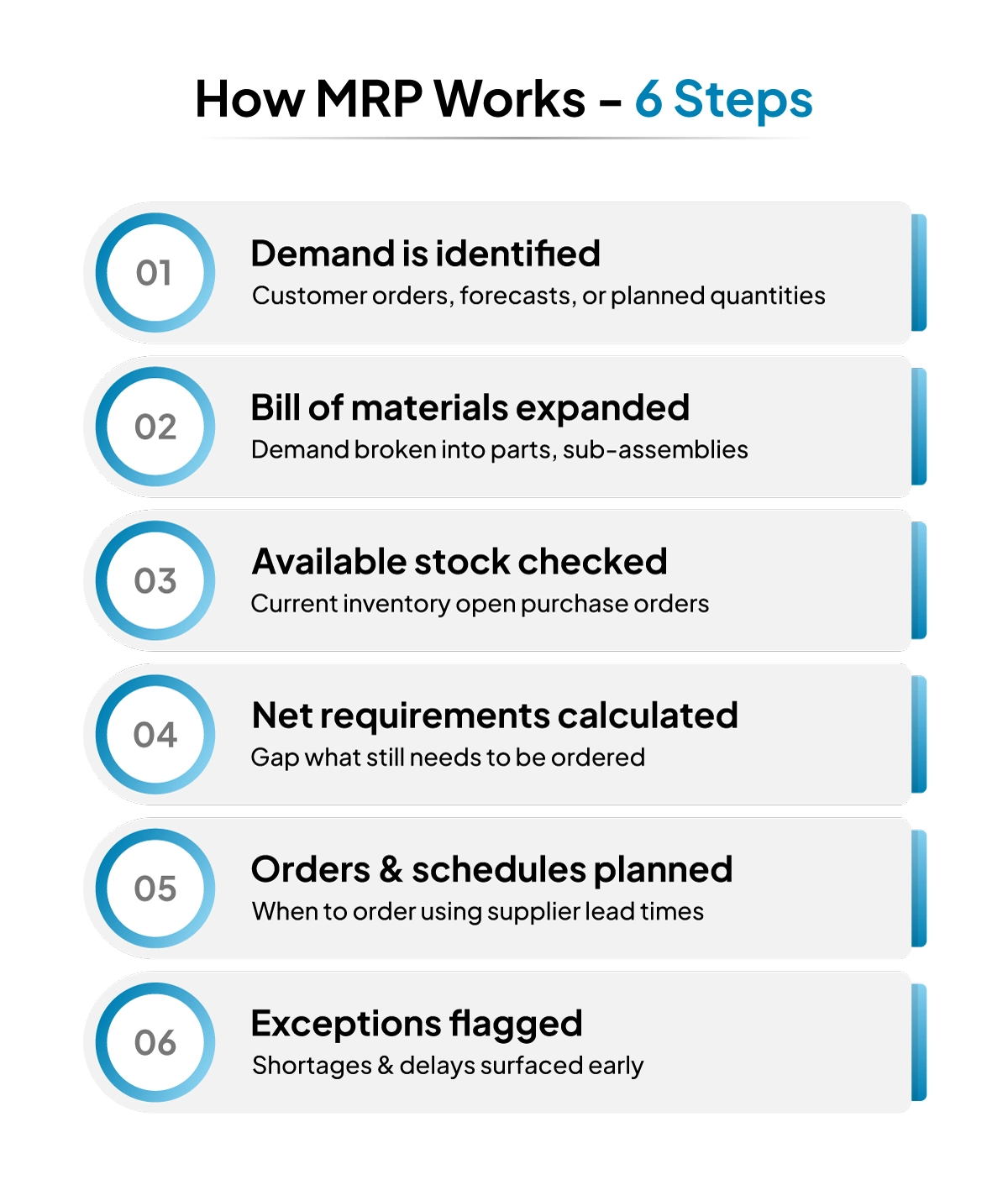 Once these inputs are available, the process usually follows a clear sequence.
1. Demand Is Identified
The process starts with what the business needs to produce. This may come from customer orders, forecasts, or planned production quantities. This becomes the basis for the rest of the planning process.2. The Bill of Materials Is Expanded
The bill of materials lists the raw materials, parts, and subassemblies needed for the finished product. The system uses this to convert finished-goods demand into detailed material requirements.3. Available Stock Is Checked
The next step is to review what is already in stock and what is already on order. This matters because the business may already have part of what it needs.Quick Tip MRP works best when inventory records are accurate. If stock data is off, the planning output will be off too.
4. Net Requirements Are Calculated
After stock and incoming supplies are taken into account, the remaining gap becomes the net requirement. This shows what still needs to be purchased or produced.5. Orders and Schedules Are Planned
Using supplier lead times and the production schedule, the system works out when materials should be ordered and when work orders should begin. This helps purchasing and production stay aligned.6. Exceptions Are Flagged
A modern MRP system can also point out shortages, delays, or timing issues. This gives planners time to act before those problems affect production or customer deliveries. When this process is handled through a system instead of scattered manual records, planning becomes easier to manage and easier to scale.Benefits of Using an MRP System
The benefits of MRP become clear when businesses compare organised planning with reactive planning. Instead of keeping extra stock just in case or rushing to fix shortages once production is affected, manufacturers can work with better timing and better control. 1.Reduced Inventory Costs: A good MRP system helps businesses buy materials closer to actual production needs. This can reduce excess stock, lower carrying costs, and free up working capital. 2. Improved Production Planning: When materials are planned against real production schedules, teams are less likely to stop midway because something is missing. This supports steadier production and better use of labour and equipment. 3. Better Vendor Coordination: When purchase teams have a clearer view of material needs and timing, they can order earlier and follow up with suppliers more efficiently. This reduces urgent buying and supports better supplier coordination. 4. On-Time Order Fulfilment: If materials are available when they are needed, businesses are in a better position to finish production on time and meet customer commitments more consistently. These are some of the main benefits of MRP. Better planning also helps procurement, inventory, operations, and finance work with fewer surprises.Who Should Use Material Requirements Planning?
Material requirements planning is useful for businesses that manufacture goods and need better control over raw materials, components, timing, and production dependencies. It is especially relevant for South African businesses, where one missing material can delay an entire order or where excess inventory creates pressure on cash flow. It is a strong fit for:- Manufacturers with multiple raw materials or subassemblies
- Businesses running batch production or multi-stage production
- Operations with variable supplier lead times
- Companies dealing with frequent stock imbalances
- Growing businesses that want planning, purchasing, and inventory to work in sync
Quick Tip If you are moving away from spreadsheets, start with one product line first. It is easier to clean up stock records, bills of materials, and reorder timing that way.
MRP vs MRP II vs ERP: What’s the Real Difference?
The terms MRP, MRP II, and ERP are often mentioned together, but they are not the same. Knowing the difference helps businesses choose the right type of system support.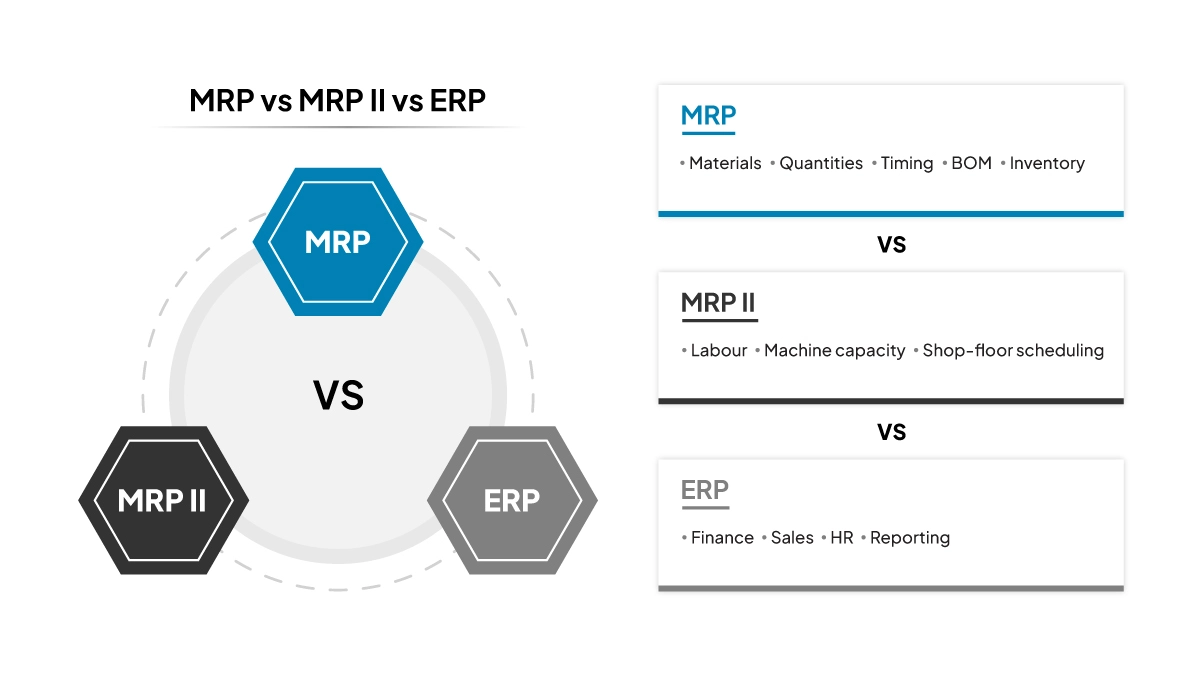
What Is MRP?
MRP focuses mainly on materials. Its main role is to calculate material quantities and timing based on demand, inventory, and the bill of materials.What Is MRP II?
MRP II, or Manufacturing Resource Planning, covers more than materials. It also includes production resources such as labour, machine capacity, and shop-floor scheduling. This gives businesses a wider view of production planning.How ERP Brings Everything Together
ERP system connects planning with inventory, purchasing, finance, sales, and customer-facing operations in one shared system. Instead of handling material planning as a separate activity, ERP puts it alongside other business functions so teams can work with connected data.Why Modern Businesses Skip Standalone MRP
Many businesses now prefer not to use standalone MRP because planning works better when it is connected to the rest of the business. A separate planning tool may calculate requirements, but it will not fix reporting gaps, purchasing visibility issues, stock synchronisation problems, or poor coordination between departments.Limitations of Traditional MRP Systems
Traditional MRP systems helped businesses move away from fully manual planning, but many legacy setups still struggle in current operating conditions. 1. Spreadsheet Dependency: Even where older planning software is in place, many businesses still export data into spreadsheets for changes, approvals, or reporting. This creates version control issues and makes it harder to trust the latest data. 2. Poor Real-Time Visibility: If stock levels, purchase orders, and supplier updates are not reflected quickly enough, planning outputs become less reliable. A plan is only useful if the underlying data is accurate and current. 3. No Integration with Sales or Finance: A legacy planning tool may calculate material requirements, but it often cannot show the wider business picture. Without links to purchasing, accounting, or sales activity, teams still end up working in silos.Modern MRP Software in South Africa: What’s Changed Today
Modern planning tools in South Africa are expected to stay connected to real operations and support quicker decisions.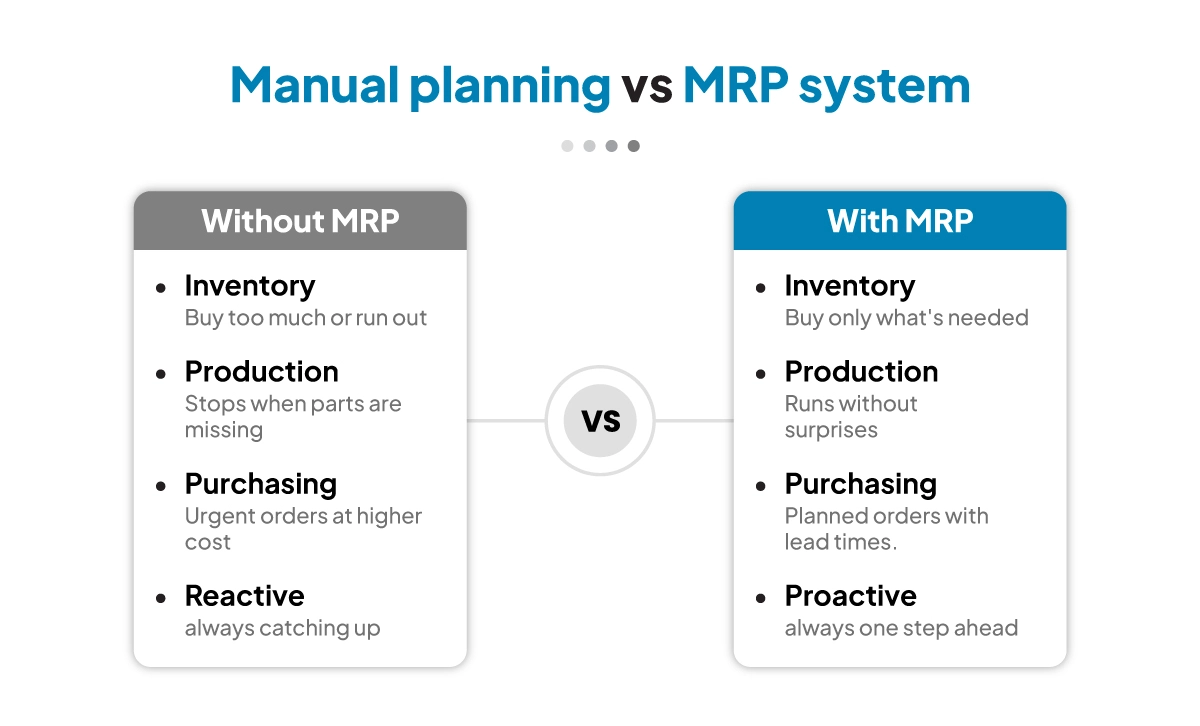 1. Real-Time Inventory Sync: Modern systems give faster visibility into stock across warehouses, branches, and open purchase orders. This improves planning accuracy and helps reduce surprises during production.
2. Demand-Driven Planning: Planning is now tied more closely to live orders, sales movement, and changing demand patterns rather than relying only on fixed assumptions. This helps businesses respond faster when requirements change.
3. Cloud-Based Access: Cloud deployment makes it easier for teams in purchasing, stores, production, and management to work from the same system without depending on offline files or delayed updates.
4. Integration with POS, Accounting, and Procurement: This is one of the biggest changes in current planning software. Businesses increasingly want material planning to sit alongside inventory, purchasing, finance, and reporting instead of working as a separate function.
1. Real-Time Inventory Sync: Modern systems give faster visibility into stock across warehouses, branches, and open purchase orders. This improves planning accuracy and helps reduce surprises during production.
2. Demand-Driven Planning: Planning is now tied more closely to live orders, sales movement, and changing demand patterns rather than relying only on fixed assumptions. This helps businesses respond faster when requirements change.
3. Cloud-Based Access: Cloud deployment makes it easier for teams in purchasing, stores, production, and management to work from the same system without depending on offline files or delayed updates.
4. Integration with POS, Accounting, and Procurement: This is one of the biggest changes in current planning software. Businesses increasingly want material planning to sit alongside inventory, purchasing, finance, and reporting instead of working as a separate function.
Quick Fact 68% of respondents had conducted a cybersecurity risk or maturity assessment of their smart manufacturing technology stack in the previous year.
Source:Deloitte
How VasyERP Helps South African Businesses Plan Materials Smarter
For businesses trying to improve material planning, the real challenge is usually not calculation alone. Raw materials, purchase decisions, inventory movement, production schedules, and reporting all need to stay connected.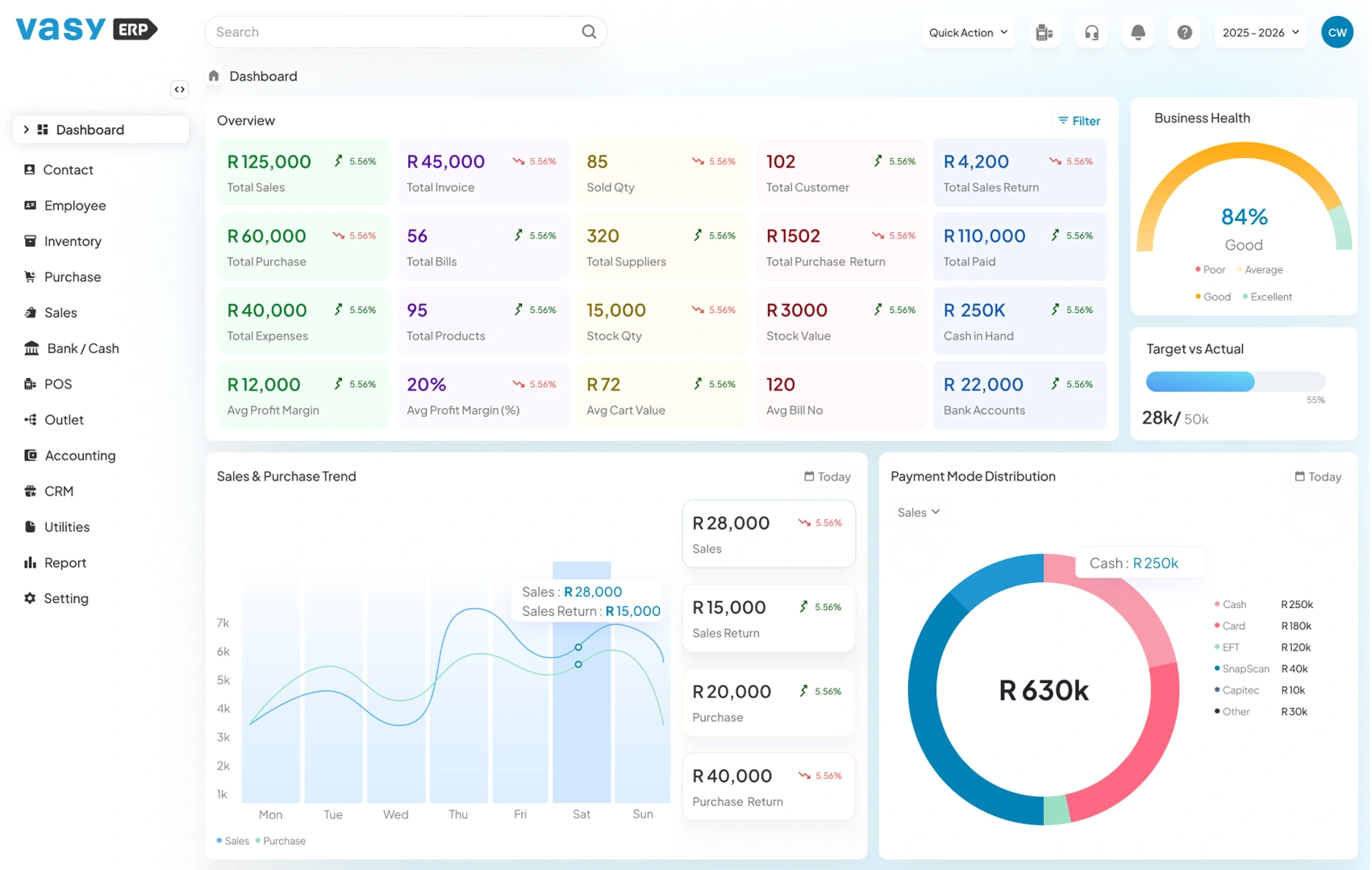 VasyERP brings together the operational areas that affect material planning so South African businesses can work with better visibility and fewer manual gaps. Instead of treating planning as a separate task, it supports it within the wider production and inventory workflow. In practical terms, that includes functions such as:
- Bills of materials
- Inventory tracking
- Procurement and vendor management
- Warehouse management
- Production planning
- Reporting and business visibility
- Delayed purchasing because requirements were not identified early enough
- Stock imbalances caused by disconnected records
- Production hold-ups linked to missing materials
- Extra manual work spent checking spreadsheets and matching updates
FAQs for Material Requirement Planning
At its simplest, MRP meaning refers to a planning method that helps businesses figure out what materials are needed, how much is required, and when those materials should be ready for production.
An MRP system helps control costs by reducing unnecessary buying and lowering the risk of stock shortages that slow production down. When material planning is tied to actual demand, stock levels, and lead times, businesses are less likely to over-order or spend more on urgent last-minute purchases.
The main benefits of MRP are better timing, better visibility, and fewer avoidable disruptions. It helps growing manufacturers plan materials more accurately, keep production moving, and make purchasing decisions with less guesswork. It also gives teams a more reliable way to manage stock as operations become more complex.
Material requirements planning works from a few key inputs, including demand, the bill of materials, stock on hand, open purchase orders, and lead times. This gives teams a way to see what still needs to be purchased or produced before the next stage of manufacturing begins.
A business usually needs an MRP system when manual planning starts creating repeated problems such as stockouts, excess inventory, missed reorders, or production delays. As order volumes grow and supplier coordination becomes more difficult, a more structured system becomes easier to manage than spreadsheets and manual checks.
Last Updated on May 6, 2026