Quick Summary:
Setting up a grocery store in South Africa begins with practical groundwork. Before buying too much stock, you need to look at registration, licences, supplier options, billing, payments, and stock tracking. This guide walks through those early decisions, along with staff rules, local marketing, and how VasyERP can help once daily sales begin.
You will walk away learning the following:
- What to plan before opening a grocery or convenience store in South Africa.
- Supplier, billing, payment, and inventory decisions to plan early.
- How local marketing and store reports can help with daily decisions.
A grocery store may look simple to customers. They pick up bread, milk, household items, or snacks, pay at the counter, and leave. For the owner, there is a lot happening in the background. If you want to start a grocery store in South Africa, you need to handle licences, suppliers, pricing, VAT, expiry dates, staff, payments, and stock movement.
Even a small mistake in billing or stock records can reduce your margins. This guide explains how to start a convenience store or grocery store in a practical way, from planning and registration to billing and inventory.
Is Starting a Grocery Store in South Africa Worth It?
Starting a grocery store in South Africa can be a sound business decision, provided the store is built around local demand, regular purchases, and fair pricing. Groceries are everyday essentials, so customers usually come back often when the store is convenient and fairly priced.
The opportunity is better when your store fills a clear gap. You may offer affordable staples near homes, quick convenience items near offices, or fresh produce in an area with limited options.
A grocery store can become profitable when you manage the purchase price, selling price, and stock movement properly. Slow-moving products, expired goods, theft, and billing errors can reduce profit even when sales look steady.
Interesting Fact: Globally, the grocery and food retail market was valued at close to $11.9trillionin 2023, with a projection of $14trillion by 2030.
Source:Grandview Research
How to Do Grocery Business in South Africa?
When planning how to do grocery business in South Africa, the store type should come first. A corner convenience shop, mini-supermarket, and multi-branch setup all work differently. Each one needs a different amount of space, stock, staff, storage, and billing support.
The next part is the actual setup work. Register the business, check local trading rules, prepare the premises, find suppliers, set up billing, bring in staff, and promote the store nearby. If you are planning how to start a convenience store in South Africa, begin with products that people purchase regularly.
Essentials, snacks, beverages, airtime, toiletries, bread, milk, and other daily-use items are safer to start with than a large range of slow-moving stock. 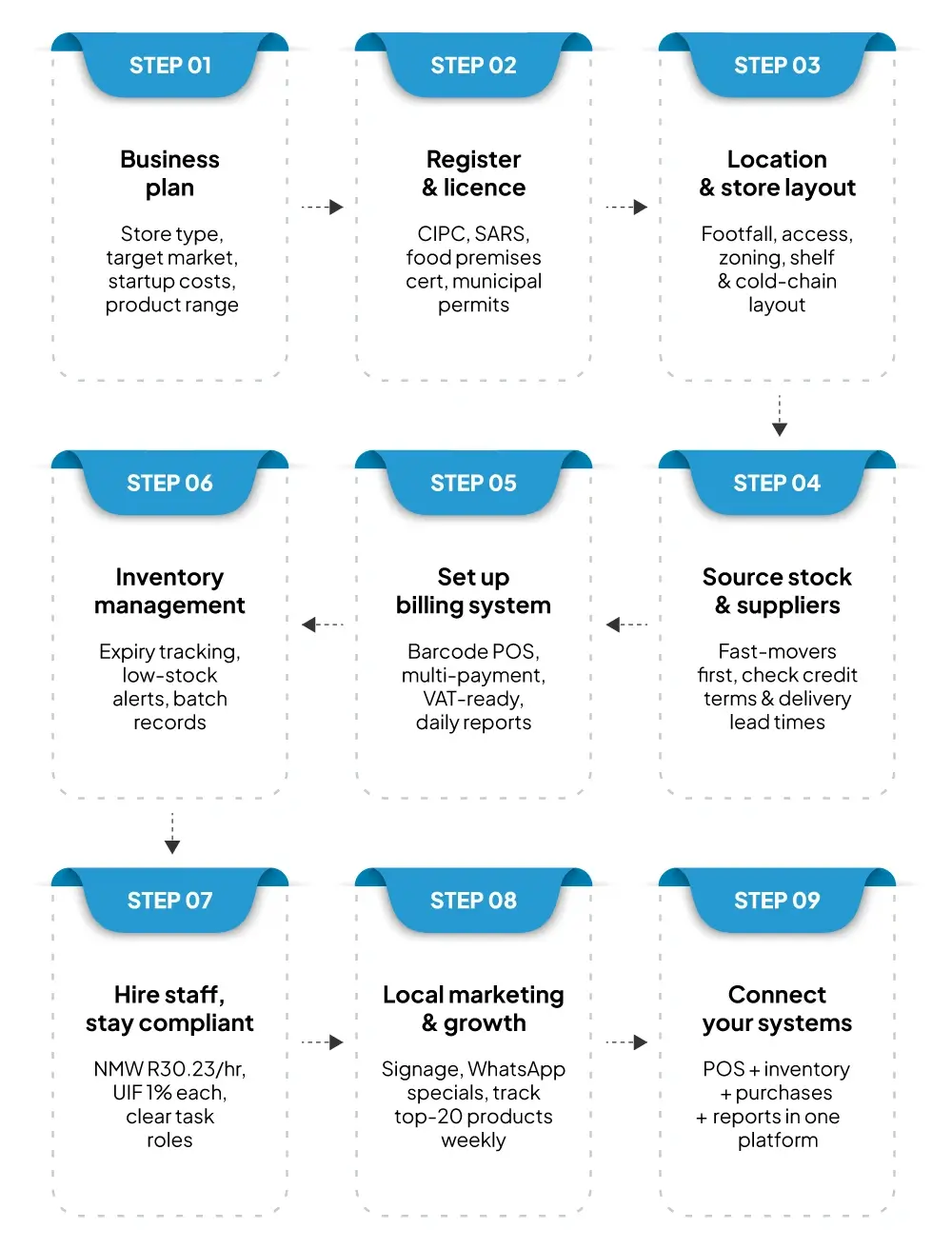
Step 1: Write Your Business Plan Before You Open
Before you start a grocery store, write a short business plan. It should explain what you will sell, who you will sell to, how much stock you need, and how the store will earn money. Include these points:
- Store type, target customers, and local demand
- Product range, supplier plan, and pricing approach
- Startup costs such as rent, shelves, refrigeration, POS software, signage, licences, and opening stock
- Monthly costs such as wages, electricity, security, software, supplier payments, and delivery expenses
A business plan also helps you avoid unnecessary stock. Fresh produce can drive daily foot traffic, but it requires careful spoilage management. Frozen foods need reliable refrigeration.
Step 2: Register Your Business & Get All the Licences
Before you commit to a shop or start ordering products, check the legal requirements in your municipality. Depending on the location and store format, you may need business registration, tax registration, approval for food premises, and permission to trade.
Company registration can be done through the Companies and Intellectual Property Commission, or CIPC. For tax, review your SARS obligations at the start. From 1 April 2026, compulsory VAT registration applies once annual turnover reaches R2.3 million, while voluntary registration is available from R120,000.
For food handling, South Africa’s regulation R638 requires a valid Certificate of Acceptability for food premises. Applications must be made to the local authority. You may also need to check municipal trading rules, zoning approval, fire and safety requirements, signage permissions, and a liquor licence if you plan to sell alcohol.
Step 3: Find the Right Location & Set Up Your Store
Location can decide how quickly your store builds regular customers. A cheaper rental may not help if the area has poor footfall, limited parking, weak visibility, or difficult delivery access. When choosing a location, check daily movement, nearby homes or offices, competitor pricing, delivery access, power reliability, safety, and space for storage, shelves, refrigeration, and checkout.
The store layout should make shopping easy. Place essentials where customers can find them quickly. Keep impulse items near billing and high-value items closer to staff visibility.
Step 4: Source Your Stock: Suppliers & Product Categories
Suppliers affect both your costs and how often your shelves stay full. When you start a grocery store, do not choose only by the cheapest rate. Check delivery timing, minimum orders, credit terms, returns, and how well the supplier handles regular stock. 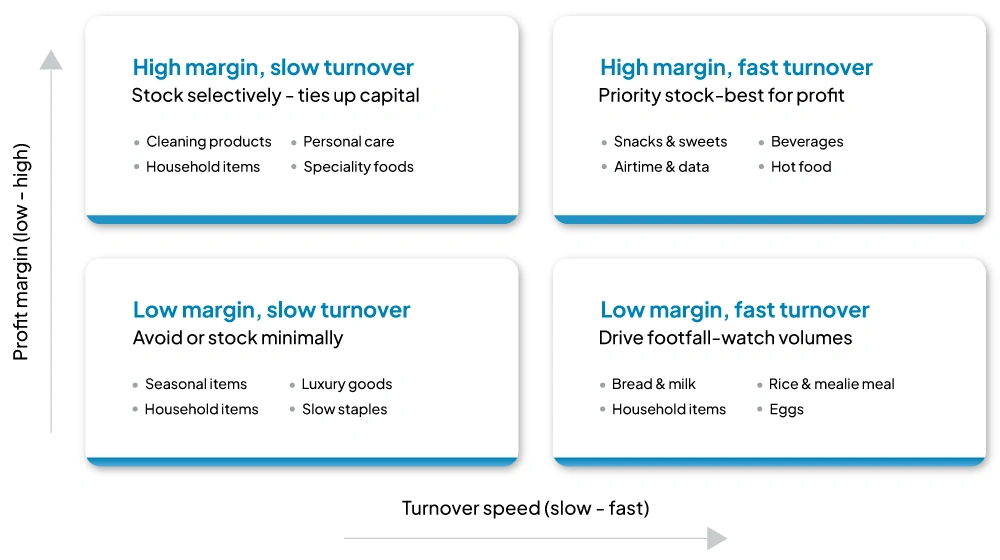 Begin with the categories customers usually buy every week. Staples, fresh goods, packaged foods, drinks, household items, and personal care products are a safer starting point before adding slower-moving products.
A practical way to do grocery business is to group products into fast-moving, seasonal, high-margin, and slow-moving items. Milk may sell daily but has a short shelf life, while cleaning products may move slower but are easier to store.
Step 5: Set Up Your Billing System
In a grocery store, each bill should update stock, record the payment, apply the right price, and give you a clear sales total at the end of the day. A good grocery POS system should handle barcode billing, item-wise pricing, different payment modes, VAT-ready records, returns, customer purchase history, and daily sales reports. This becomes useful when customers pay by cash, card, or other digital payment options.
Step 6: Manage Your Inventory Like a Expert
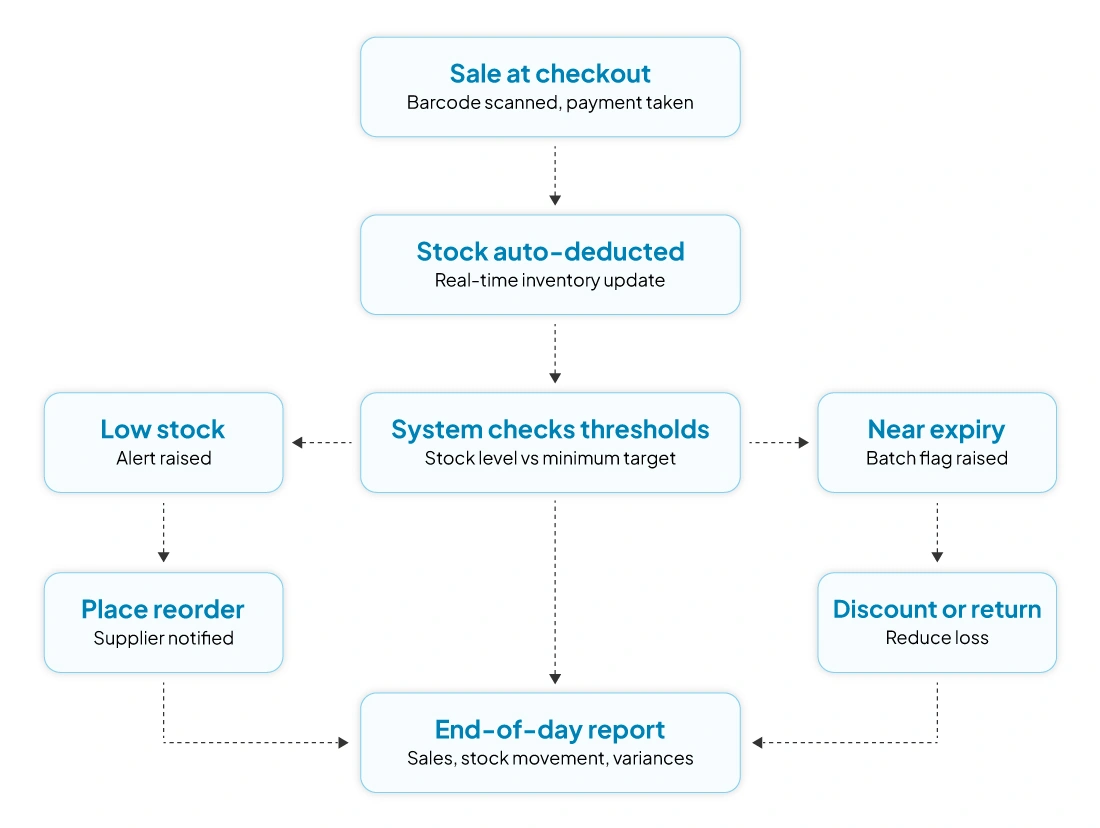 Inventory is one of the most important parts of learning how to do grocery business. Too little stock drives customers away, while excess stock ties up capital in overfilled shelves and expired goods. Inventory records should help you see which products move quickly, which ones sit for too long, and which items are near expiry, returned, damaged, or transferred.
This gives you a clearer view before placing the next supplier order. Manual stock checks may be enough in the early days, but they can slow you down as the product range grows.
With a POS-linked inventory system, stock changes after every sale, so missing items, low stock, and stock differences are easier to spot before they become bigger problems.
Step 7: Hire Staff and Stay Labour Law Compliant
You do not need too many people to run a small grocery store, but each person should have a clear task. A cashier, stock handler, cleaner, supervisor, delivery helper, or security person may be needed depending on the store size and location.
Training should focus on everyday store work, including billing, returns, price checks, stock receiving, expiry checks, hygiene, cash handling, and closing tasks. This helps reduce counter mistakes and keeps store operations more organised.
Before hiring, check South Africa’s labour rules. The 2026 National Minimum Wage amendment sets the rate at R30.23 per hour, effective 1 March 2026. Employers should also check UIF and Compensation Fund requirements. UIF contributions total 2%, split equally between the employee and the employer at 1% each.
Step 8: Market Your Grocery Store Locally & Grow
After the store opens, your first goal is to build regular footfall from nearby customers. Grocery stores grow when people know they can get regular essentials quickly, at clear prices, and without stock issues. Use offers that match regular grocery buying.
Month-end staple discounts, small breakfast bundles, snack combos, and WhatsApp specials can help bring nearby customers back. Use clear local visibility so people around the store know where to find you.
Put up clear signage, distribute flyers close to the shop, and speak to nearby offices, eateries, or housing communities about regular grocery needs.
How VasyERP Helps You Run Your Grocery Store in South Africa Efficiently
When you start a grocery store, daily control becomes important from the first day. You need quick billing, accurate stock updates, clean purchase entries, expiry tracking, staff access control, and reports that show how the store is performing.
VasyERP helps manage these tasks in a single retail management system. Your grocery store can manage POS billing, purchases, stock, accounts, customer details, and reports in one place instead of switching between different tools. For South African grocery stores, VasyERP can support:
- Online and Offline POS Billing: Billing does not have to stop when the internet is unstable, which is useful during busy store hours
- Inventory and Expiry Tracking: Store teams can monitor batches, expiry dates, ageing stock, and low-stock alerts from one system
- OCR-Based Purchase Entry: Supplier invoices can be scanned sopurchasedetails are added with less manual entry
- Role-Based Access: Cashiers, managers, and owners can get different access based on the work they handle
- Multi-Location Control: Branches and storage points can be tracked from one system, making stock transfers easier to check
A grocery store runs better when checkout, purchases, inventory, and reports are connected. It gives owners a clearer view of daily work, helps reduce manual gaps, and makes it easier to manage growth over time.
Last Updated on July 3, 2026