
Quick Summary:
This guide is for South Africans looking at small business ideas they can start without overcomplicating the process. It covers registration basics, lower-cost options, and the checks to make before choosing an idea that fits your money, skills, customers, and growth plans.
You'll walk away knowing the following:
- How to register and prepare a business idea in South Africa.
- Which low-cost business ideas with high profit can work when costs are controlled.
- Which home business ideas can start small and grow steadily?
- How to choose a business idea based on demand, margins, skills, and operations.
A good business idea should fit your market, budget, and buying behaviour. The idea may sound strong on paper, but it still needs customers, workable costs, and a setup you can manage every day.
The best business ideas usually start with a simple need. They serve a specific customer group and can be managed without losing track of cash, stock, suppliers, or daily work. This guide looks at business options in retail, food, e-commerce, home-based services, green technology, and small-scale production.
How to Register a Business Idea in South Africa
You usually do not register an “idea” on its own. You register the business structure, protect the brand or invention where needed, and set up the records required to trade properly.
1. Start With a Simple Business Plan
Before registering anything, write down the basics:
- What you will sell
- Who you will sell to
- Where you will operate
- How much it will cost to start
- How much you will charge customers
- Where customers will discover your business and place orders
This should help you test the idea before spending on stock, branding, equipment, or rent.
2. Choose the Right Business Structure
Many entrepreneurs start as sole proprietors. Others register a private company with the Companies and Intellectual Property Commission, or CIPC.
The CIPC allows a for-profit company to be registered with or without a reserved company name. If you register without a reserved name, the company registration number becomes the company name until you apply for a name later.
3. Protect the Brand Where Needed
Once the company name is sorted, look at the parts customers will actually remember. That could be the logo, product name, packaging, label design, or the product idea itself.
Food brands, cosmetics lines, fashion labels, digital services, and other unique business ideas should check this before launch. In some cases, trademark, design, or patent protection may be needed.
4. Check Tax and VAT Requirements
Start keeping records as soon as the business begins trading. Keep track of sales, supplier bills, stock purchases, expenses, payments, returns, and customer orders so you are not sorting everything out much later.
VAT registration becomes compulsory once your taxable supplies exceed the SARS-prescribed threshold of R1 million within the relevant 12-month period. In some cases, a business can also apply for VAT before it is required to. Check the latest SARS rules before making a decision.
Low-Cost Business Ideas With High Profit
Low-cost business ideas with high profit do not need a big launch. A smaller offer is usually safer. Start with a few products, see what sells, keep spending under control, and add more only when orders are steady.
1. E-Commerce and Grocery Store
A grocery business can start without a shop. Take orders on WhatsApp or a basic online list and deliver nearby.
Keep the delivery route small. Fewer areas mean easier packing, fewer delays, and fewer missed items.
Watch fresh stock closely. Bread, dairy, fruit, and vegetables can cut profit if they sit too long. Buy based on daily sales.
2. Franchise-Driven and Specialized Retail Businesses
A franchise or specialised retail store can give you a clearer starting point. You could look at beauty products, pet supplies, school items, uniforms, mobile accessories, health products, or specialist food retail.
These stores work because the offering is specific. Customers know why they are coming in, and the business is usually easier to promote than a store that sells too many unrelated items.
Before choosing this route, compare:
- Franchise fees or setup costs
- Supplier terms and product margins
- Rental and staff costs
- Training and support
- Demand in the local area
3. Small-Scale Manufacturing and Export-Focused Production
You can start small-scale manufacturing with packaged food, sauces, candles, textiles, cleaning products, cosmetics, craft items, or basic assembly work. Leave export plans for later, after the product quality and packaging are consistent.
This is one of the small business ideas that can work when people reorder the product and the margin is worth the effort. It can also help turn local skills or raw materials into something customers are willing to pay more for.
Keep the first range small. Record the full cost of each batch, including what you spend to make, pack and finish it. Those notes will also help you check expiry dates, quality issues and changes in production cost later.
4. Clean Energy and Sustainable Technology Services
Clean energy services can include solar accessory sales, inverter support, LED retrofits, energy audits, battery maintenance referrals, and water-saving product installation. You do not need to begin as a full solar installer.
Start with audits, product sourcing, maintenance coordination, or partnerships with qualified installers. Keep the advice honest and simple because customers in this category often need guidance before they spend.
5. Baking and Snack Packs
You do not need to open a bakery straight away. Start from a home kitchen, shared kitchen, or small production space and take limited orders first.
Biscuits, cakes, lunchbox snacks, savoury packs, office snack boxes, and small event platters can all work. The main thing is to notice what people reorder. A short menu will be easier to manage than a long list of items that may not sell.
6. Restaurants, Cafés, and Takeaway Outlets
A food outlet may look busy and still leave little profit. Each order has to cover rent, staff, ingredients, packaging, electricity, and delivery costs, so the pricing cannot be guessed.
Coffee, snacks, lunch meals, easy dinners, and family takeaway can still sell if the food is consistent. Start with a small menu your team can prepare well every day.
Keep the menu focused. Track peak hours, bestsellers, supplier prices, delivery costs, payment modes, and food waste. A busy outlet can still lose money if stock and portions are not controlled.
7. Spaza Stores and Neighborhood Convenience Shops
Spaza stores and neighbourhood convenience shops serve daily needs. They can sell bread, milk, maize meal, airtime, snacks, drinks, toiletries, household basics, and other fast-moving items.
Local convenience remains powerful because customers often prefer nearby purchases for small daily needs. The store does not need to carry everything. It needs to carry the right products consistently.
5 Unique Business Ideas to Start From Home
Some home business ideas are easier to try because you can start with a skill, a laptop, people you already know, or a simple service in your area. These unique business ideas let you see if there is real demand before you pay for rent, staff, or a larger setup.
1. AI Avatar Modelling
AI avatar modelling involves creating digital models, product visuals, short promotional clips, or branded content assets for small businesses.
A small clothing seller may need new model images for every drop. A beauty brand may need visuals for reels, ads, product pages, or launch posts. Coaches, course creators, and online stores may also need fresh content often, but a full shoot every month is not realistic for many of them.
For AI avatar modelling, build a small sample portfolio first. Show what the tool can create, what still needs editing, and where client approval is needed. Also keep consent, image rights, and usage terms clear before any work is delivered.
2. Green Technology Services
Green technology work can start before you ever handle an installation.
You could help people compare products, check their home setup, shortlist equipment, and connect them with qualified installers when the work needs technical support.
One customer may be choosing between inverters. Another may want LED lighting, water-saving fittings, or an energy monitor. A small shop may simply want to cut power use but not know where to start. If you can turn the options into plain advice, this can work as a home-based service.
3. Local Tool Library
Many people need a drill, ladder, carpet cleaner, sewing machine, or garden tool once, then not again for months.
A local tool library rents these items out for short periods.
This can suit areas where people need tools for small jobs but do not want to buy or store them.
4. Backyard Micro-Farm Planner
This helps homes, schools, restaurants, and guesthouses use small spaces for herbs, vegetables, or edible plants.
Start with simple layouts, container gardens, seasonal planting lists, starter kits, and occasional maintenance. Larger garden plans can come later.
Such home business ideas combine planning, product sales, and recurring maintenance.
5. Subscription-Based Pet Sitting
Pet owners may need regular help, especially during long workdays or short trips. The service can cover feeding, walks, check-ins, medicine reminders, or quick home visits.
Instead of waiting for once-off requests, offer weekly or monthly slots. It makes your income less random and gives owners a routine they can rely on. Keep homes in the same area where possible, or travel time will eat into the day.
How to Choose the Right Business Idea
The right idea should fit four things: demand, margins, ability, and operations. If one of these is weak, the business may look exciting but become hard to run.
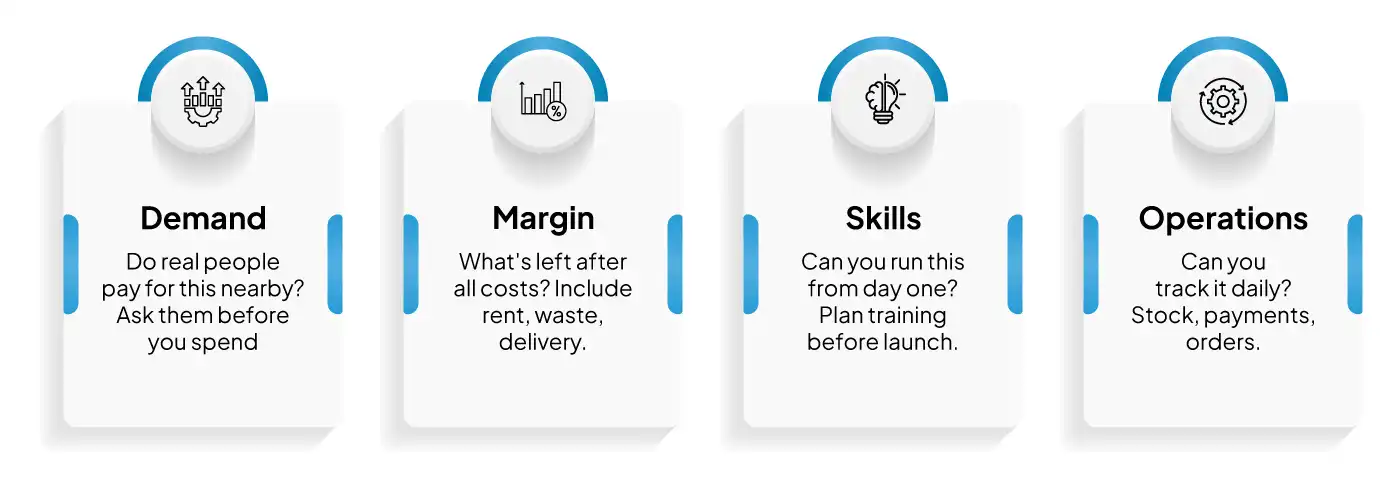
1. Check Real Customer Demand
Before choosing the idea, speak to the people who might actually pay for it. Find out what they already use, what bothers them, and what is missing in the area. With a home service, ask how often they would need it and what price makes sense to them.
2. Calculate the Actual Margin
A product can sell well and still leave little profit after rent, delivery, packaging, waste, card fees, electricity, and staff costs.
Before choosing between the best business ideas, calculate:
- Expected selling price
- Direct product or material cost
- Packaging and delivery cost
- Monthly fixed costs
- Expected profit per order or unit
This helps you avoid ideas that look busy but produce weak returns.
3. Match the Idea to Your Skills and Time
Go with an idea you can realistically handle based on your skills, time, and ability to learn the work. If the idea depends on skills you do not have yet, plan the training or support before launch.
4. Plan for Daily Operations
Low-cost business ideas with high profit can still become difficult to run. Orders may sit in one notebook, payments in another file, stock in a spreadsheet, and supplier bills in a folder.
Keep the records simple, but keep them updated. You should know which items sell often, which ones cost too much, and when stock is running low. It also helps later with VAT, supplier payments, customer balances, and monthly reports.
How VasyERP Can Help Upscale Your Business
When orders start increasing, it becomes harder to manage sales, stock, bills, and payments from different files and notes. What worked in the first few weeks can start slowing you down once sales, stock, suppliers, and reports all need regular attention.
VasyERP helps growing South African businesses manage billing, inventory, VAT, accounting, purchases, CRM, reports, and multi-location operations from one connected system.
It also supports batch tracking, stock alerts, barcode management, OCR-based purchase entry, multi-location operations, and online integrations for businesses that want to scale without adding disconnected tools.
The best business idea is easier to grow when your daily operations are organised from the start. When stock, billing, and reports are easier to manage, the business has a stronger base for better sales, margins, and customer service.
Last Updated on June 16, 2026