Quick Summary
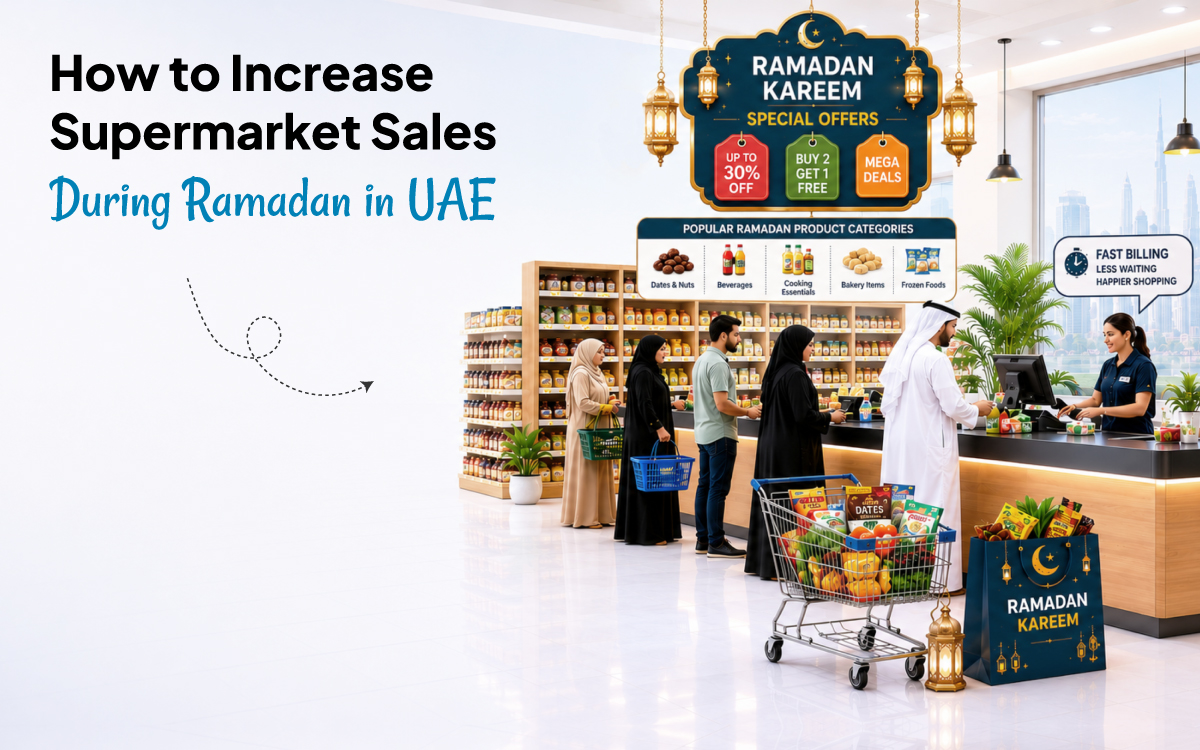
During Ramadan, UAE shoppers usually buy more for Iftar, Suhoor, family meals, and Eid, so some shelves can empty faster than they do in a regular month. This guide explains how to increase supermarket sales during the season.
You will walk away learning:
- How Ramadan shopping trends in the UAE affect supermarket planning
- Which product categories need stronger stock control
- How to run Ramadan offers without hurting margins
- How online ordering and loyalty programmes can support repeat sales
Ramadan pressure usually shows up at the shelf first. In a UAE supermarket, dates and drinks may move quickly before Iftar, family-size staples may pick up on weekends, and Eid products may start taking space before the month ends. Regular ordering numbers do not always match that pattern.
For stores looking at how to increase supermarket sales, the work needs to start before the rush reaches the counter. Fast-moving shelves need more frequent checks, offer tags should match POS pricing, and billing or delivery teams should know which promotions are active.
A few unchecked problems in these areas can hurt daily sales. Customers may leave when an item is missing, the offer price is unclear, the billing line is too slow, or the delivery slot is already full.
Understand Ramadan Shopping Trends in UAE
Customers may stock up before Ramadan, then return through the month for meals, guests, weekends, and Eid shopping.
Changes in Customer Buying Behaviour
A customer may shop very differently for Iftar, Suhoor, guests, and Eid. Many customers shop before Iftar, after Taraweeh prayers, and during weekends. Supermarkets need enough staff, open counters, and ready stock during these peak windows.
To understand how to increase sales in grocery store settings, track demand by product, time, and branch.
Popular Ramadan Product Categories
For Ramadan, review products by shopping need instead of listing every item separately. Start with Iftar picks, Suhoor staples, cooking basics, frozen foods, bakery products, sweets, dry grocery, and fresh produce. Then add any store-specific items that sold quickly during last year’s Ramadan.
Fresh stock needs closer checking than packaged goods. Low orders can leave empty shelves during peak hours, while excess orders can lead to wastage by the next day.
The final 10 days should have a separate Eid stock check. Gift packs, sweets, dry fruits, personal care products, and home items may need more shelf space once Eid shopping begins.
Optimise Inventory Before Ramadan
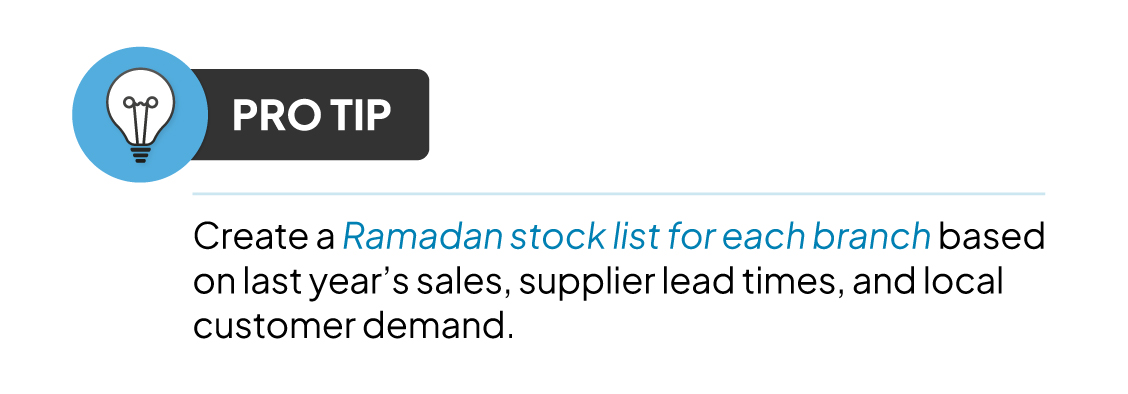
Early planning gives your supermarket more time to confirm supplier availability, set reorder levels, and avoid last-minute purchase pressure.
Stock Fast-Moving Products
Fast-moving Ramadan products should have clear reorder rules. These include dates, juices, dairy, frozen snacks, flour, rice, lentils, cooking oil, spices, bakery items, and ready-to-cook products.
Use Demand Forecasting
Demand forecasting helps you avoid overstocking products that look seasonal but do not move at the same speed in every store.
Review sales by category, day, and time slot. UAE supermarkets can use retail ERP software features such as sales history, purchase data, and branch-wise stock movement to improve buying decisions.
Run Ramadan Promotions and Offers
For retailers working out how to increase grocery sales, Ramadan offers should be built around products customers already buy together.
Create Bundle Offers
Bundle offers work well because Ramadan baskets often include products that are used together. Build bundles around how customers actually shop in Ramadan, such as one basket for Iftar, another for Suhoor, and a separate one for Eid items closer to the end of the month.
Keep bundle pricing simple. Customers should quickly understand what is included, how much they save, and when the offer ends.
Offer Discounts on Popular Products
Discounts on high-demand products can bring more customers into the store, but they should be planned carefully. Choose a few traffic-driving products such as dates, beverages, rice, oil, or dairy. Then place related higher-margin products nearby.
This can push more items into each basket without depending only on heavy discounts.
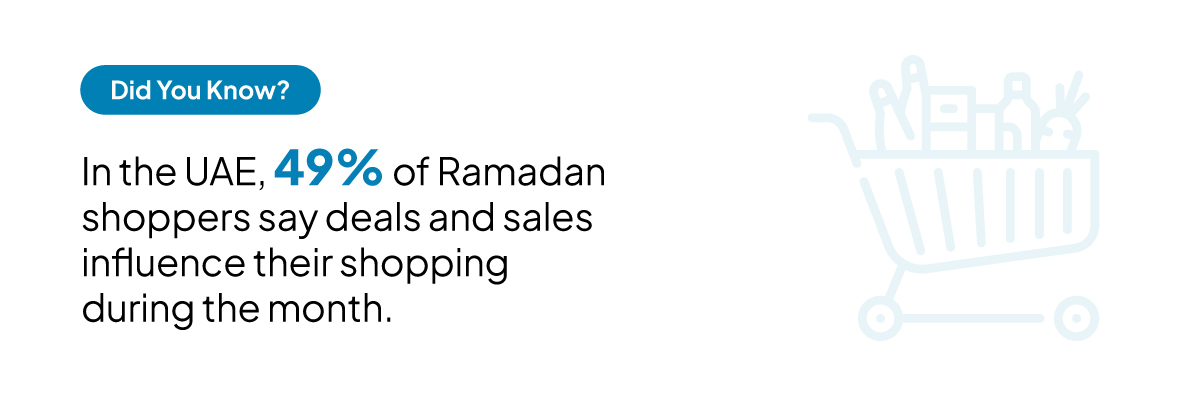
Launch Limited-Time Promotions
Do not run the same Ramadan offer from start to finish. In the first few days, shoppers may be filling kitchen shelves. As Eid gets closer, shelf space may need to shift towards gifting, sweets, dry fruits, and home-use products.
Keep offers short and tied to the shopping window. A weekend Iftar offer, an evening deal, or an Eid shelf offer is easier to manage than one large month-long promotion.
Improve In-Store Customer Experience
Stock alone will not save the sale if the store feels difficult to shop in. Customers should be able to find Ramadan items quickly, understand the offer price, and get through billing without a long wait.
For owners looking at how to increase sales in retail supermarket operations, this part is simple: remove the small delays that make shoppers leave products behind.
Arrange Ramadan-Themed Displays
Use the front aisle, end caps, and checkout-side space for products customers usually ask for during Ramadan. These spots work well for quick Iftar picks, Suhoor items, and small add-ons.
Set up the display like a shopping shortcut, not just decoration. One shelf can cover Iftar drinks and snacks, another can cover Suhoor basics, and a smaller section can be kept for Eid gifting closer to the end of the month.
Reduce Billing Queue Time
Checkout can become a problem quickly before Iftar. If the line moves too slowly, some shoppers may leave items behind or avoid coming back during peak hours.
Use barcode billing, quick item lookup, extra payment options, and trained cashiers to keep the counter moving without confusion.
Train Staff for Better Customer Service
Your staff should know where Ramadan products are placed, which items are part of bundles, how offers work, and what alternatives to suggest when an item is unavailable.
This is especially important for new or temporary staff. A quick internal briefing before peak hours can reduce billing mistakes and customer confusion.
Add extra billing support during late afternoon and late evening, as these are often key Ramadan shopping windows.
How to Increase Supermarket Sales with Online Ordering
Ramadan shoppers may still buy from your store even when they do not visit the branch. Online orders are useful for repeat baskets, family grocery lists, and last-minute Iftar needs.
Offer Home Delivery Services
Create a few delivery basket options instead of asking customers to build every order from scratch.
Keep the choices simple: Iftar basket, Suhoor basket, weekly grocery basket, and Eid basket. Open only the number of delivery slots your team can fulfil properly.
Promote Online Shopping
Promote online grocery ordering UAE customers can easily use. WhatsApp can work for repeat buyers, while QR codes can sit near billing counters, shelf displays, and delivery bags.
Update your Google listing before Ramadan starts. Add the holiday timings, pickup notes, delivery cut-off, payment details, and current offers.
Use Loyalty Programmes to Retain Customers
Some Ramadan shoppers may visit only because of an offer, a nearby branch, or a quick delivery option. Add them to the loyalty programme at billing, so the next visit is not left to chance.
Reward Repeat Customers
Keep the rule easy. For example, customers can earn points on Ramadan baskets or get a small offer on their next purchase.
Personalised Promotions
Generic offers can get ignored during Ramadan. Check what the customer usually buys before sending the offer. A dairy-heavy basket could get a Suhoor message, while a bulk grocery basket could get a family meal offer.
Use Technology to Manage Ramadan Rush
Ramadan rush is difficult to manage when billing, stock, purchases, offers, and accounts are updated in separate systems. A missed stock entry, wrong offer price, or delayed purchase update can affect what happens at the counter and on the shelf.
Benefits of ERP and POS Software
During busy Ramadan hours, the POS should update stock after each sale, apply the correct offer, create VAT-ready invoices, record customer details, and show which products are moving fastest.
VasyERP connects POS, inventory, accounting, CRM, purchases, offers, reports, and e-commerce orders in one system. This helps supermarkets manage Ramadan sales with fewer manual checks and cleaner day-to-day control.
Manage Multiple Branches Efficiently
Multi-branch supermarkets need central visibility during Ramadan. A connected ERP helps you track sales, stock, purchases, transfers, offers, and branch performance from one dashboard.
VasyERP supports multi-location operations, central inventory, stock transfers, centralised pricing, and branch-wise reporting. This helps supermarket owners move stock faster, compare branch performance, and manage offers consistently.
Ramadan Marketing Ideas for UAE Supermarkets
Marketing should support actual store operations. The item should be available, the POS price should be updated, and cashiers should not hear about the offer from the customer.
Social Media Marketing
Post the details shoppers actually need: offer price, valid dates, store timings, delivery cut-off, and branch availability.
For bundle deals, use a clear product photo instead of a generic Ramadan creative. Customers should be able to see what is included and how to order.
Local Advertising Strategies
Use simple local reminders during Ramadan. Counter posters, delivery flyers, lift notices, WhatsApp groups, and Google Business Profile can help nearby shoppers check offers and store timings.
Conclusion
To increase supermarket sales during Ramadan in the UAE, keep the store ready for the rush. Check fast-moving stock, keep offer prices clear, support billing counters, and manage delivery capacity.
These small checks can reduce missed sales, slow checkout, wrong pricing, and customer complaints.
- 0
- 0
- 0