Top 10 Business Ideas Up to ₹10 Lakh in India for 2026
March 27, 2026

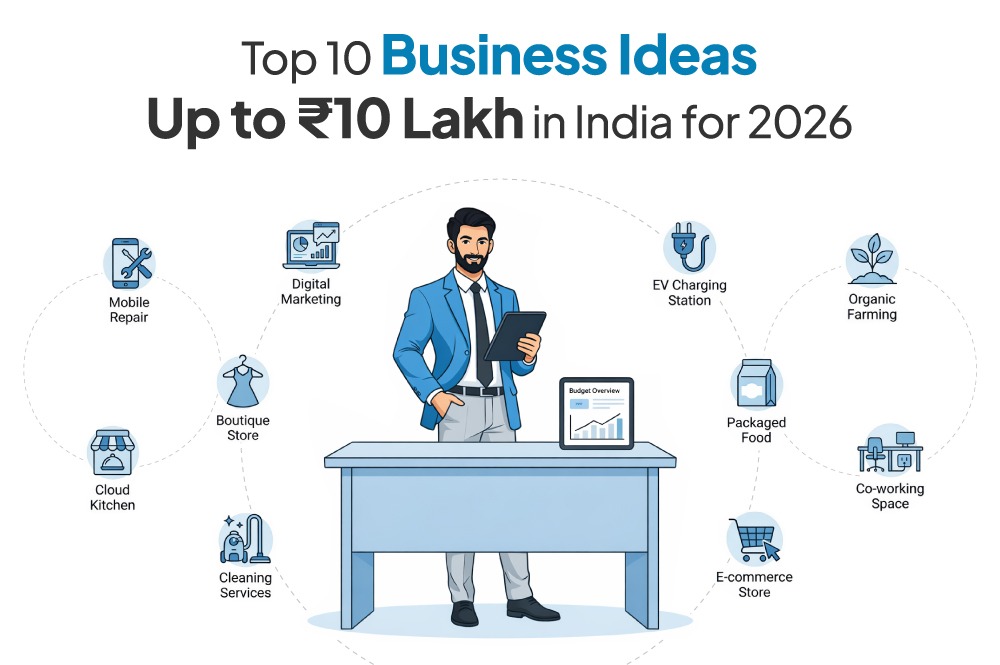
This blog discusses the leading options on a budget set up to ₹10 lakh or less by 2026. The content provides practical data, investment breakdowns, and city-specific benefits that will enable you to make educated choices. If you are new to starting your own company or ready to expand, these business concepts are selected based on their actual viability, earning capacity, and potential for future expansion in the transforming Indian economy. This post covers the top 10 business ideas you can start in India up to ₹10 lakh or less in 2026. It includes practical data, investment breakdowns, and city-specific insights to help you make informed decisions whether you're a first-time entrepreneur or looking to expand.
It is possible today to create a future-ready & profitable business in India with just up to ₹10 lakh. Digital channels give you direct access to your target audience faster and at lower cost than ever before. Use the changing consumer behaviour trends to your advantage. Moreover, the government also offers many forms of assistance that can help you reduce barriers.
In 2026, focus on niche or service-based businesses and technology-driven solutions that solve real problems. Countless ideas and enterprises have been designed that will return well while adhering to your budgetary constraints. Choose opportunities that give flexibility and exhibit growth potential.
Do not pick a concept at random. Develop detailed research about each target’s market conditions; establish a location that will support the business model and match your capabilities. If you are going to pursue ideas in your business, you will have a greater chance of success than if you were to pick ideas at random.
Focus on practicality with any small enterprise opportunity you may be considering in India; to create a sustainable profitable enterprise in India, you will need to pay attention to value and reliability. This guide will provide you with ways to compare small business ideas in India and your options to establish costs and obtain clarity on what to expect once you begin.
It is important to have clarity before making your investment and first determine if there is a demand for your product or service in the marketplace. Many start-ups fail simply because they don’t address a real market need so validate demand before you invest. Second, you need to decide how much time and energy you will put into running your new venture as some business ideas require daily commitment while others offer semi-passive income streams.
Also, make sure that you are locating your business in an area that has sufficient foot traffic and good accessibility if you are going to be doing an actual “in-person” operation. If you are going to operate via e-commerce, then ensure that you have a solid plan for both digital marketing and overall growth.
Develop your budget carefully by dividing your funds up between set-up, operation, and marketing costs. Do not spend too much money at the beginning. Ensure that right from the very beginning you take care of all of your compliance, licensing, and taxes as many start-ups fail to consider these basics which create problems down the road for them.
Long-term is your objective; do not pursue current fads. The best business ideas are based on what is evolving in society today and will continue to be relevant in this new digital economy.The businesses that last are the ones built for tomorrow, not just today.
These are some of the most popular and scalable small business ideas in India that can be started up to ₹10 lakh or less and have been chosen based on demand, return on investment potential, and ease of execution:
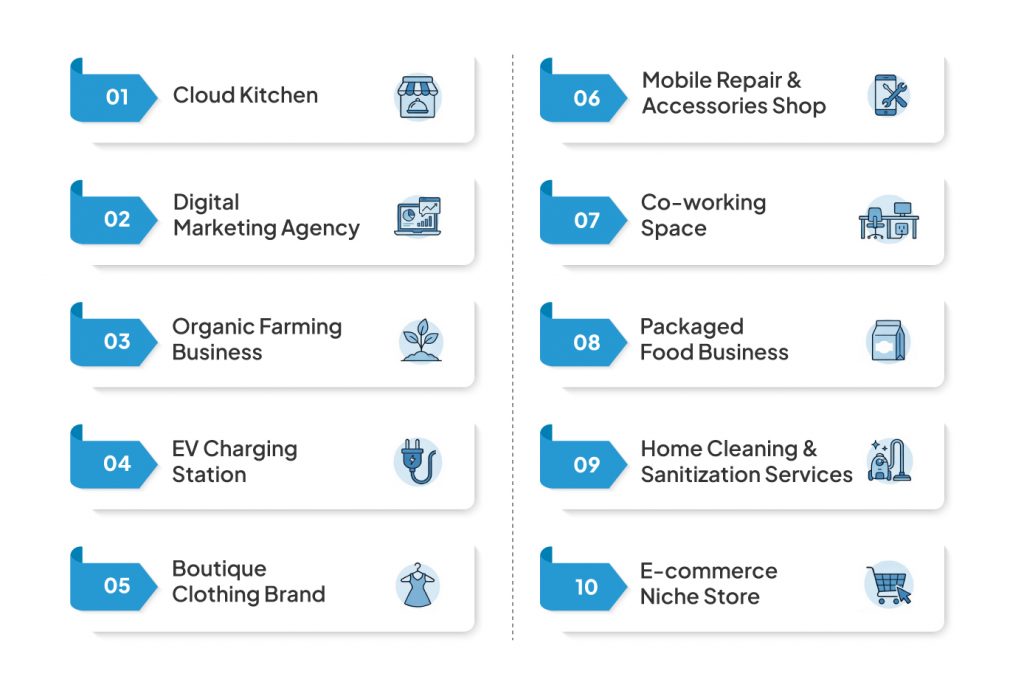
Food delivery has become increasingly popular, and cloud kitchens eliminate the requirement for costly dine-in space. You can use a small kitchen and partner with food delivery applications to sell your product. Consider marketing niche flavors or healthy meal options to be unique within saturated urban markets.
With the rapid growth of businesses moving online, there has been an increase in the need for digital service providers. Creating a digital marketing agency requires minimal infrastructure and strong skills. Local companies are making the shift to digital, so you can offer them services such as search engine optimization (SEO), social media management, and online advertising.
With many individuals concerned about eating healthy, there is an increase in the demand for organic food. If you acquire the land required to grow the crops, become certified, and sell the produce directly to the consumer or partner/retail, you can build a steady stream of income over time.
As electric vehicles (EVs) continue to grow in popularity throughout India, EV charging stations are not being established quickly enough to meet demand. By starting a charging station in an area with heavy traffic and choosing a location that has been approved by the Government of India, you can receive a dependable return on your investment. apply through the Ministry of Heavy Industries’ FAME II scheme or partner with EESL for subsidised charging equipment.
Source: Link
With the growing popularity of niche boutique brands, India’s large fashion industry has created an opportunity for you to focus on creating boutique products targeted at specific locations, use eco-friendly materials, or create personalized/customized clothing products. Creating a brand presence on Social Media can quickly establish a loyal customer base. If you’re considering this space, you can also explore how to start a garment store to better understand the basics. Creating a strong presence on social media can help you quickly build a loyal customer base.
The growth of Smartphone usage has continued to rise, resulting in an increase in demand for Smartphone repair services. The low-cost start-up option, paired with the ability to sell add-on accessories (such as cases, chargers, and headphones) makes the profit margins for the Mobile Phone Repair business extremely high!
When it comes to Flexible Workspaces, freelancers and startups are driving this demand for coworking spaces. So if you can create a co-working space that looks and feels good in urban cities or can provide membership as a recurring revenue stream, then you will be able to create more income for yourself by offering additional services.
The packaged food market is one of the fastest-growing sectors in India, spanning snacks to ready-to-eat meals! There are many things to consider when building a successful package food manufacturing business, including the quality of your products, branding your product, regulatory compliance, and selling your products either online or in retail.
As urban households are increasingly using professional cleaning services to clean their homes, the demand can be significant. The service-based model for providing home cleaning & sanitisation services requires an investment in minor equipment and employee training to start; however, there is a consistent demand for these services.
Opening and operating an e-commerce store in a niche is one of the most accessible business ideas to start, it has the potential to grow. The low-cost model, along with the ability to sell nationwide, makes the online niche store one of the best online business ideas.
Before you begin to start a new business venture or look for online business ideas, having an idea of the financial requirements will assist you in planning your investments. Here is an outline of your startup costs, monthly operating costs and expected return on investment for an average case scenario to help you plan.
| Business | Setup Cost | Monthly Cost | Expected ROI |
| Cloud Kitchen | ₹8-12 lakh | ₹2-3 lakh | 12-18 months if orders scale through delivery platforms |
| Digital Marketing Agency | ₹3-5 lakh | ₹1-2 lakh | 6-12 months based on client acquisition and retention |
| Organic Farming | ₹10-20 lakh | ₹1-2 lakh | 2-3 years with long-term stability |
| EV Charging Station | ₹15-25 lakh | ₹1 lakh | 2-3 years with rising EV adoption |
| Boutique Brand | ₹5-10 lakh | ₹2 lakh | 12-18 months with strong branding |
| Mobile Repair Shop | ₹3-6 lakh | ₹1 lakh | Within 1 year due to high demand |
| Co-working Space | ₹15-25 lakh | ₹3-5 lakh | 2-3 years with consistent occupancy |
| Packaged Food | ₹8-15 lakh | ₹2-3 lakh | 1-2 years depending on distribution |
| Cleaning Services | ₹4-8 lakh | ₹1-2 lakh | Within 12 months |
| E-commerce Store | ₹3-7 lakh | ₹1-2 lakh | 6-12 months with effective marketing |
These estimates are just an approximation of what you can expect to invest in each business, however, actual results may vary significantly from the estimated amounts depending on location, execution and market demand. Implementing cost controls and properly planning all your expenses can greatly increase your profitability.
India’s urban & semi-urban markets are rapidly evolving, offering new opportunities in numerous industries due to their growing size. The demand for products or services and consumer purchasing power will be higher in the metro-city, while the operating costs will be lower, and the level of competition will be reduced in the Tier-2 city.
Be sure to select your city based on your type of business. Service-based companies usually perform better in Metro areas, while manufacturing businesses and agricultural production typically perform better in smaller towns or cities. Prior to deciding which location to use, do some research about who your potential customers will be. If you are looking at starting your own small business, make location your number one priority. The right city will provide you with greater visibility, lower costs, and help improve the chance of your success.
A brief overview on various key government schemes or loans that can aid small businesses, specifically businesses of ₹10 lakhs or up, by helping further reduce any financial burden that they may have or making it easier for them start and/or grow their business.
| Scheme | Description |
| MUDRA Loan | Offers funding up to ₹10 lakh for micro businesses without collateral, ideal for beginners starting small ventures. |
| Stand-Up India | Provides loans between ₹10 lakh and ₹1 crore for SC/ST and women entrepreneurs to promote inclusivity. |
| Startup India | Offers tax benefits, easier compliance, and funding support for innovative startups. |
| CGTMSE | Credit guarantee scheme that helps businesses get collateral-free loans from banks. |
New business owners will encounter avoidable errors that can hinder their ability to grow or cause them to go out of business. By identifying these common traps before they happen, you can choose to make better decisions and create a stronger foundation for long-term success.
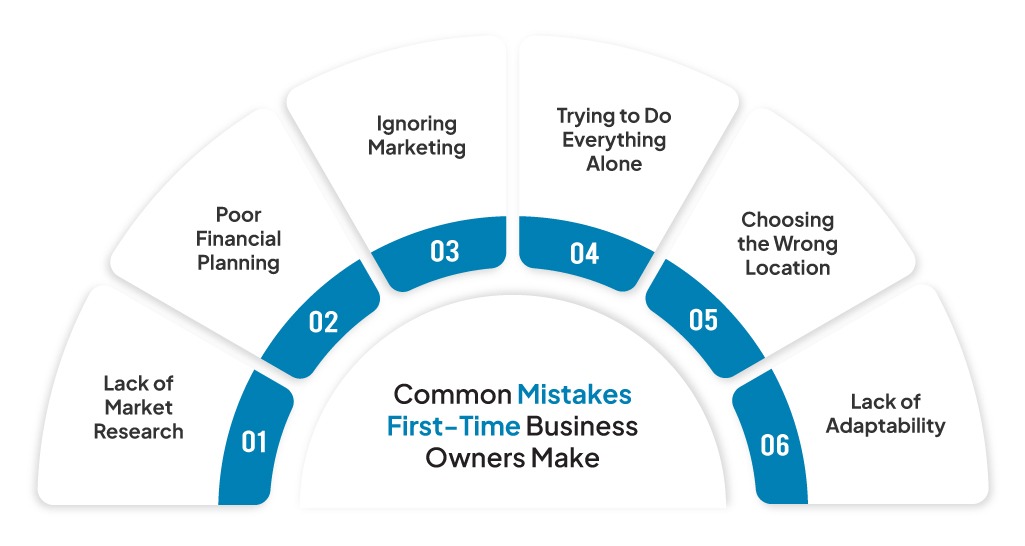
It is feasible to start one or more business ventures up to Rs. 10 lakhs in 2026, but you must plan and approach this wisely. There are many different types of business ideas in India that you could consider (including service-based models, digital/online businesses, and products that are particularly focused on niche markets). The options are numerous and viable.
Selecting the correct business idea and understanding your target market is essential for success. The execution of your plan should involve continued execution of your business ideas in a systematic manner, and if you are considering starting a profitable business in India or growing your current business, you should concentrate on being flexible as the market evolves.
You must provide solutions to legitimate problems. Do not pursue fads or trends without having an explanation for why you would do this. Start small and test your ideas as early as possible. Continue to expand your profitable business in India as you grow. With the appropriate strategy and mindset, even smaller capital investments can produce profitable and enduring companies.
1. Which business is most profitable up to ₹10 lakh in India in 2026?
Digital marketing agencies, cloud kitchens or niche e-commerce stores; all three are good options as they have low operating costs and are easily scalable. Any business that provides ongoing service will also be profitable. Moreover, even those businesses that generate ongoing income and are increasing in demand from all sectors.
2. Can I get a loan to start a business up to ₹10 lakh in India?
Yes. You can get a loan to start a business up to 10 lakh rupees in India. You can apply for a government loan programme such as MUDRA or CGTMSE. These are loans that do not require a lot of collateral. Most banks and NBFCs will fund if the business plan is strong enough. You will need to have all the necessary documentation and establish how you intend to generate revenue, as that will help improve your chances of receiving approval.
3. Which business is best for beginners with low risk in India?
You could start a service-based business like cleaning, mobile repair services, or freelancing, as all these can be set up at a relatively low cost and will usually be easier to operate than a product-based business. These businesses also allow you to start small and scale gradually as demand grows, without requiring heavy upfront investment. You can even begin part-time, test the market, and improve your services based on customer feedback.
4. Which manufacturing business can be started up to ₹10 lakh in India?
You can start small-scale packaging of food products, making handcrafted products, and manufacturing clothing and accessories. These are all industries that have a strong ongoing demand and opportunities for growth potential in India. Once you build a strong brand and deliver quality products to your customers, you are likely to be able to establish a successful business in India.
5. What is the biggest risk of starting a business in India?
Failure to execute properly is the single greatest risk associated with having a strong concept. Many entrepreneurs overstate their market demand as well as their potential sales. And this can easily create temporary cash flow shortages and impact your ability to seize a significant amount of opportunity. Start with the right strategy. Validate your concept before you launch. Do not take your finances for granted always track them closely. Put a strong emphasis on customer acquisition from day one. Without a good strategy, every business will have difficulties growing.

Many business workflows include receiving documents in ...
April 17, 2025

It's time we deliver the experience of seamless checkou...
January 7, 2026

July 10, 2026

July 8, 2026

June 15, 2026

June 5, 2026

June 1, 2026