Consumer Wait-Time Psychology: How Billing Speed in Retail Directly Impacts Revenue
December 18, 2025

December 18, 2025
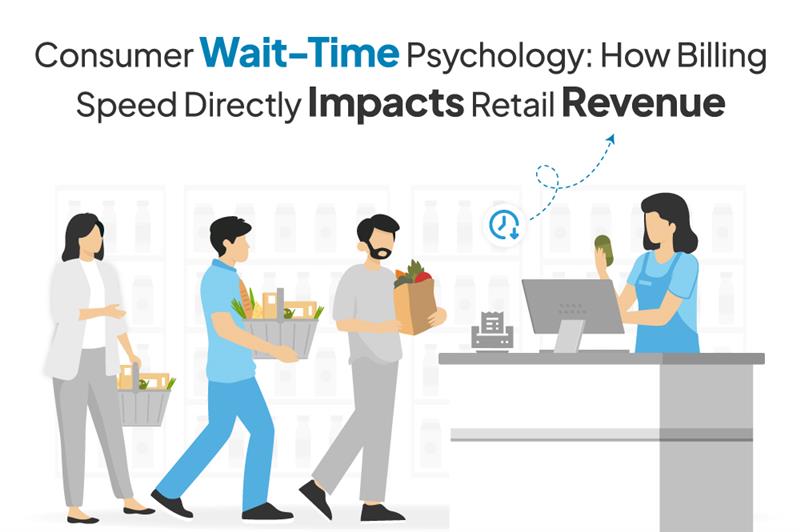
This blog discusses how billing speed in retail influences experience, customer emotion, and revenue performance. As consumer patience declines and digital expectations rise (2025), the time taken to bill customers plays a direct role in cart abandonment, customer loyalty, average basket size, and brand impressions. Drawing upon behavioral psychology, environmental design, and current billing technology, retailers can navigate perceived and actual wait time. The article further explores how tools such as AI-based queue prediction, mobile POS, and quick Billing systems like VasyERP create a better checkout experience and foster growth.
In the retail industry the customer experience isn’t limited to store layout, product assortment, or discounts it extends to time. Consumer expectations have changed considerably. Today, customers want a checkout experience that is the speed at which they shop online instant gratification, visibility, and no friction. Fast delivery apps, tap to pay, and hyper-efficient e-commerce platforms have decreased the tolerance for waiting in brick-and-mortar stores. The philosophy is simple, fast online shopping demands faster brick-and-mortar shopping.
Retailers consistently underestimate how much billing friction matters. Though they spend a great deal of resources on visual merchandising, advertising, and loyalty, they put little thought to the customer experience at the checkout, the last and most important experience. Now it is indeed a fact billing that requires longer wait times annoys customers. It even undermines conversions and even profit margins. The speed of the billing process has now become a key milestone in customer experience.
People do not logically think about waiting we think about it emotionally. Behavioral psychology shows our brain amplifies delays, especially when there is some uncertainty and no apparent movement. When we feel a loss of control, see no progress, and see others moving faster, waiting is even more painful. These experiences happen in retail checkout queues.
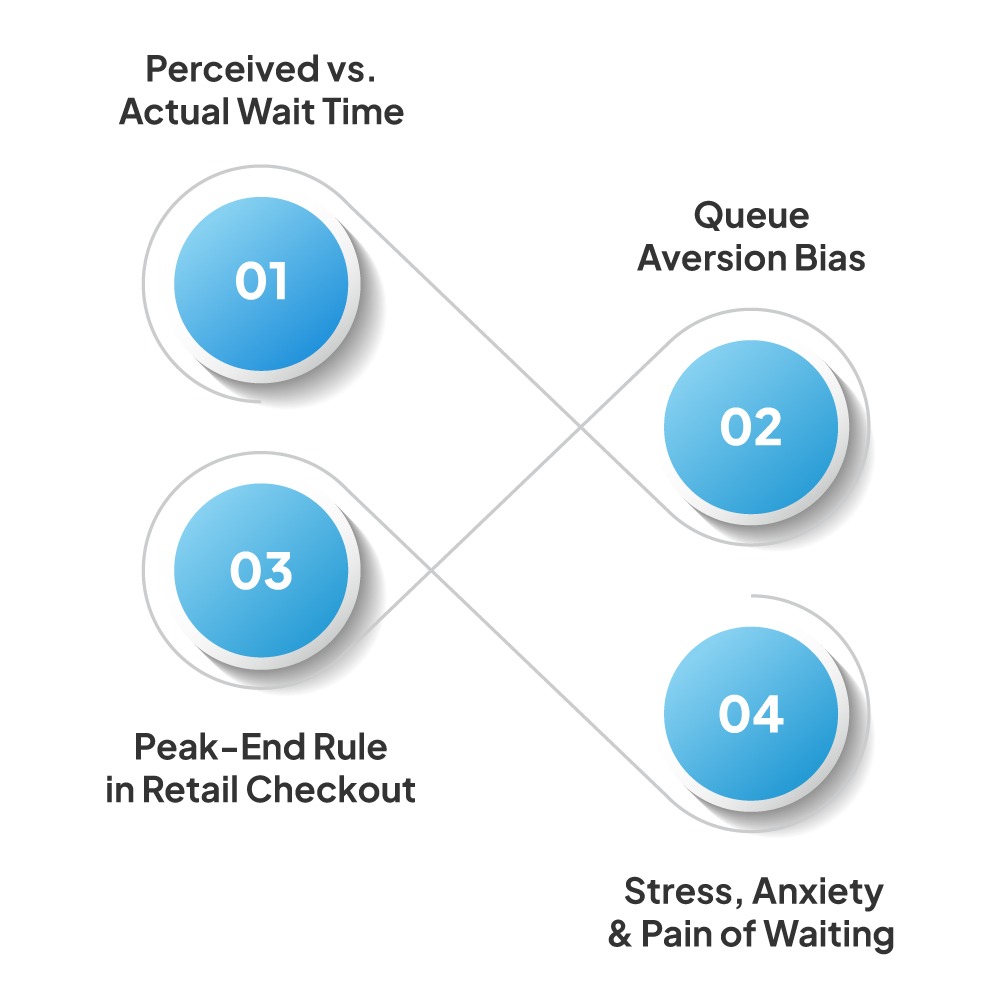
Customers perceive the wait to be longer than it is when movement is slow and unclear, perceived wait is stretched. The brain exaggerates delays in uncertainty, such as not knowing how long the wait will be. Even a two-minute delay can be perceived as five minutes when the line moves slow and chaotic. Clarity and visible motion cues can reduce perceived wait time immediately.
People instinctively shy away from queues because the brain perceives waiting in line as a waste of time. This behavior is called “queue aversion bias,” which is the reason customers do not complete a purchase and leave rather than wait, especially when other options exist, such as the self-checkout. The fact that many other customers are waiting subconsciously reinforces that the process is slow, even before stepping into the queue. This emotional behavior outweighs logic or loyalty to a brand.
The brain contextualizes experiences based on the end experience rather than the entire experience. This is called the Peak-End Rule. If the checkout process is slow or stressful, the entire experience is coded negatively in memory, irrespective of the enjoyment of the shopping experience. The checkout speed becomes the emotional signature of the entire experience at the store.
Billing is not merely a processing/operational step, but a revenue pivot point. The probability that a customer abandons their order increases with each additional delay, while satisfaction decreases, along with the possibility that the shopper will return to shop again. Completing billing expeditiously means that shoppers feel more confident, feel more encouraged to shop freely, and are more likely to return for repeat shopping.
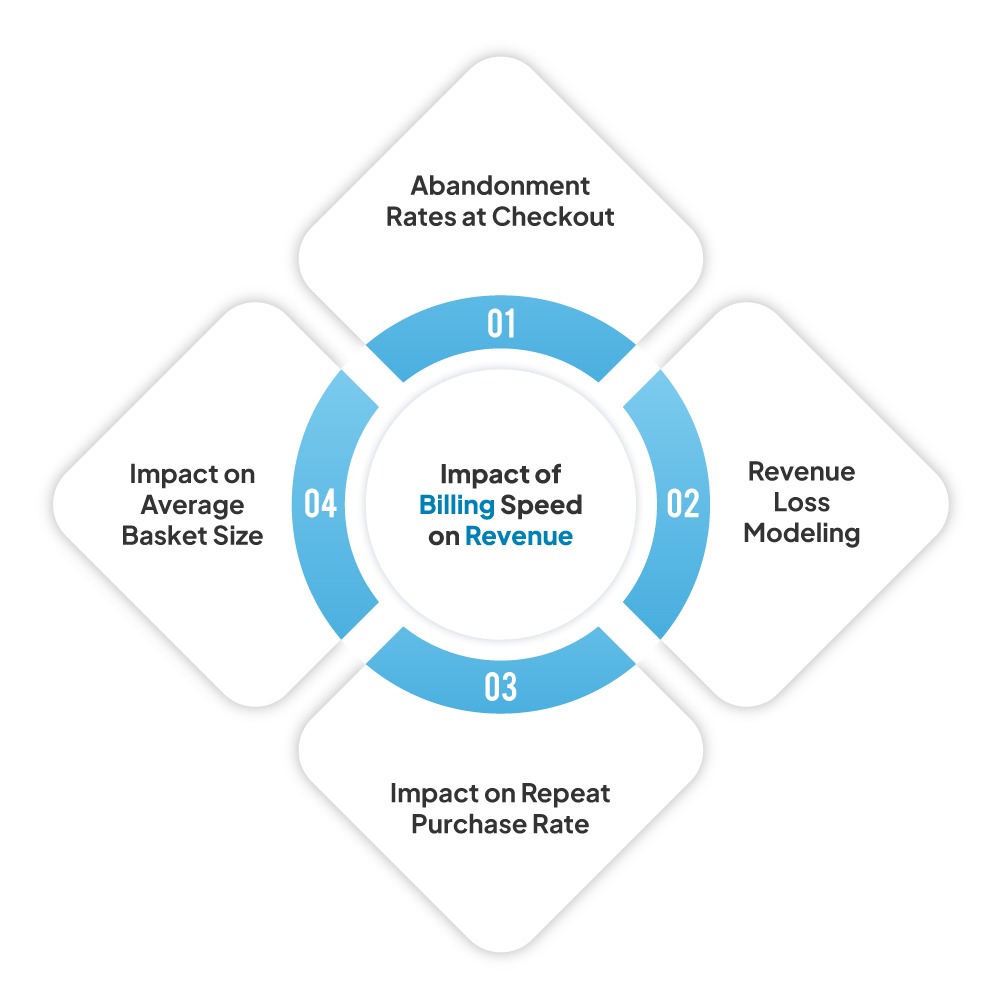
Customers often leave their baskets after just a few minutes of wait time especially with low-involvement or impulse items. Each year, that window narrows as the expectation for convenience rises. Long lines can indicate inefficiency, compelling customers to drop their baskets on the way to the register, even if they entered the store intending to purchase the basket contents. Perhaps the greater impact of abandonment is not lost revenue but the customer trust that is lost when a purchase is aborted.
Every minute of time lost relates fairly back to actual revenue loss that can be tackled and measured. Studies show that even a two to three-minute delay at the point of sale can result in a measurable direct impact on site conversion rates. High-value customers who care more about their time than a discount simply leave. Abandonment at the point of sale has a direct and silent impact on revenue.
Unhurried billing negatively impacts loyalty. Customers are not likely to return to establishments that provide a laborious or otherwise inefficient checkout experience. Even very loyal customers are likely to choose a quicker retail environment if a delay becomes an expectation. Conversely, fast billing is compelling in that it supports ease, satisfaction, and good memory (all of which foster repeat visits).
Customers will buy more when they are confident that they will not get stuck waiting at the checkout. Quicker billing supports the reduction in shopping anxiety and the mental availability to add to the basket (or even to impulse buy). Slow billings does the opposite: it encourages customers to restrict their baskets and/or make swift decisions.
Not all customers process waiting in the same way. Age, background information, locality, and the framing of the shopping trip all contribute to how long a customer is willing to wait.
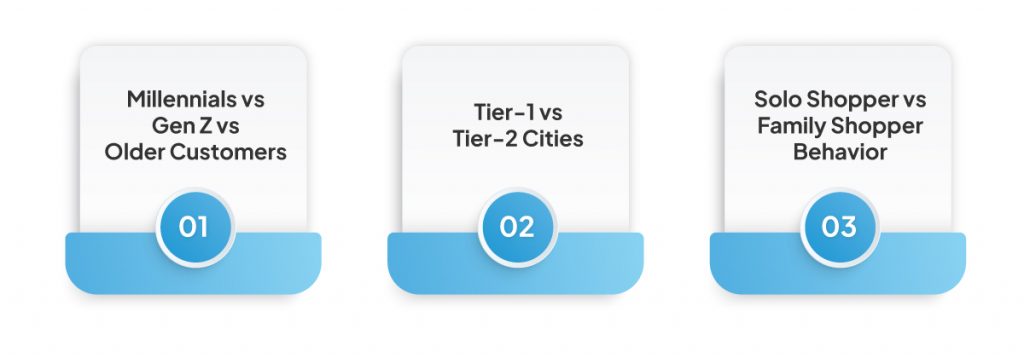
Generation Z and millennials typically want quick, tech-enabled processing for their bills and dislike any delay. Older customers may have slightly longer tolerances for waits but expect to know what and when they will be helped in a courteous and orderly manner.
Tier-1 shoppers have less patience due to more exposure to retail formats that are quick. Tier-2 shoppers may tolerate slightly longer delays, but their expectations are rising extremely fast due to increased digital adoption.
Serious family shoppers, especially those with children, are less patient and more frustrated and feel they should be prioritized.
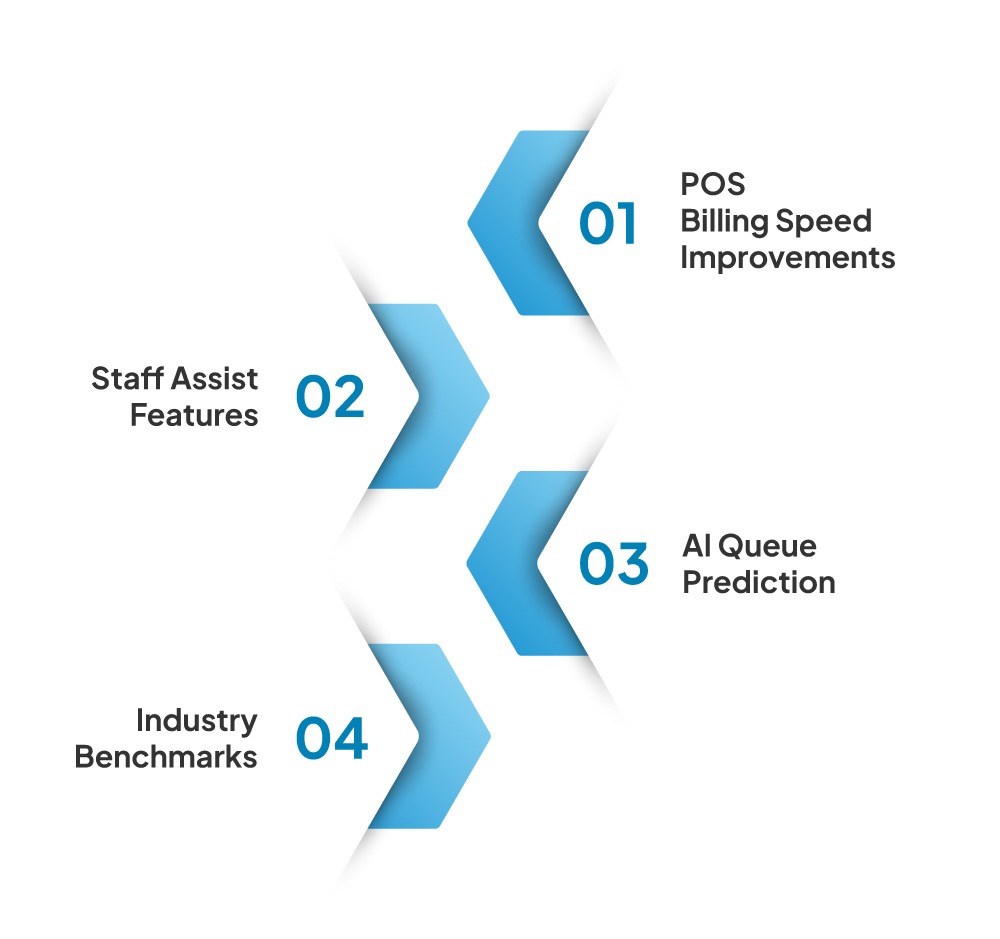
Modern point of sale software speeds up billing through preprogrammed functions, including cloud-based processing, AI product identification, barcode scanning, and RFID tagging. These technologies reduce errors through eliminating manual data entry, decreasing data sync times, and avoiding pricing or product lookup errors. Automated tax calculations, automatic inventory updates, and one-click payments allow for utilization to have fast, smooth billing experiences.
Nowadays, technology enables store staff to be more flexible with billing tools such as mobile POS systems, express checkout counters, and scan-and-go options. With these systems in place, store associates can assist customers at any point on the store floor as opposed to restricting them to one checkout area manned by a store associate, which increases congestion.
AI queue prediction systems support managers by measuring store traffic patterns, speed of billing, and potential customers to determine when there may be spikes in demand before they occur. The system then automatically alerts managers based on a series of data received in real-time to let them know when to open additional checkout counters or consider mobile POS.
Most industries strive to limit billing wait times to 2-3 minutes during regular hours and 5-7 minutes during busy times. Customer tolerance drops significantly past the 8-minute mark. Retailers that routinely achieve these timeframes tend to outperform competitors in loyalty, basket size, and revenue growth. VasyERP provides ultra-fast billing with GST compliance, barcode scanning, inventory sync, and cloud-enabled processing – all built for a fast retail environment. Vasy ERP’s ultra-fast billing dramatically cuts down queuing time with fast billing automation, multi-checkout counter management, and seamless performance at the point of sale.
If you would like to learn more, please get in touch with us today.
Customers who experience upstream billing procedures that are quick, reliable, and feel in control they feel respected, reassured, and valued. When billing causes a wait, they often feel neglected and frustrated. The checkout process is where operational efficiency meets emotional experience and this moment establishes revenue results. Billing efficiency is not only about managing times of customers waiting or in line; with billing efficiency, conversion progressions become completed, the rate of retention increases, the basket size increases, and customer loyalty is created. Fast checkout is not simply a transaction function; it becomes an engine for growth. As competition for retail increases, brands that contribute to increased billing efficiency will start to win the battle for the customer’s time – and ultimately, their money.
1. Why does checkout speed matter so much in retail?
Checkout speed has a significant impact on customer satisfaction, basket size, and repeat purchases. A slow billing process can be frustrating for customers and lead to an increase in cart abandonment. A fast billing process allows the shopper to feel confident and potentially less stressed. It also leaves shoppers with a good final impression, which increases the likelihood of them returning to shop again and increasing their basket size as well
2. What is the difference between perceived and actual wait time?
Actual wait time is the amount of time that customers are physically in line, while perceived wait time is the length of time it feels like. For example, poor communication, lack of line movement and chaotic queues can significantly contribute to perceived wait time. When a customer can visibly see they have moved or are moving in an orderly manner, the perceived wait time is lessened.
3. What is an acceptable amount of wait-time in retail?
The majority of customers would tolerate an acceptable wait-time of approximately 2-3 minutes for regular shopping retail and an acceptable wait-time of approximately 5-7 minutes for high-volume times. Irritation can rise rapidly past this time and then warrant possible abandonment for customers. Retailers who consistently stay below these accepted thresholds tend to demonstrate more loyalty and increased conversions.
4. How can retailers reduce wait time without adding more staff?
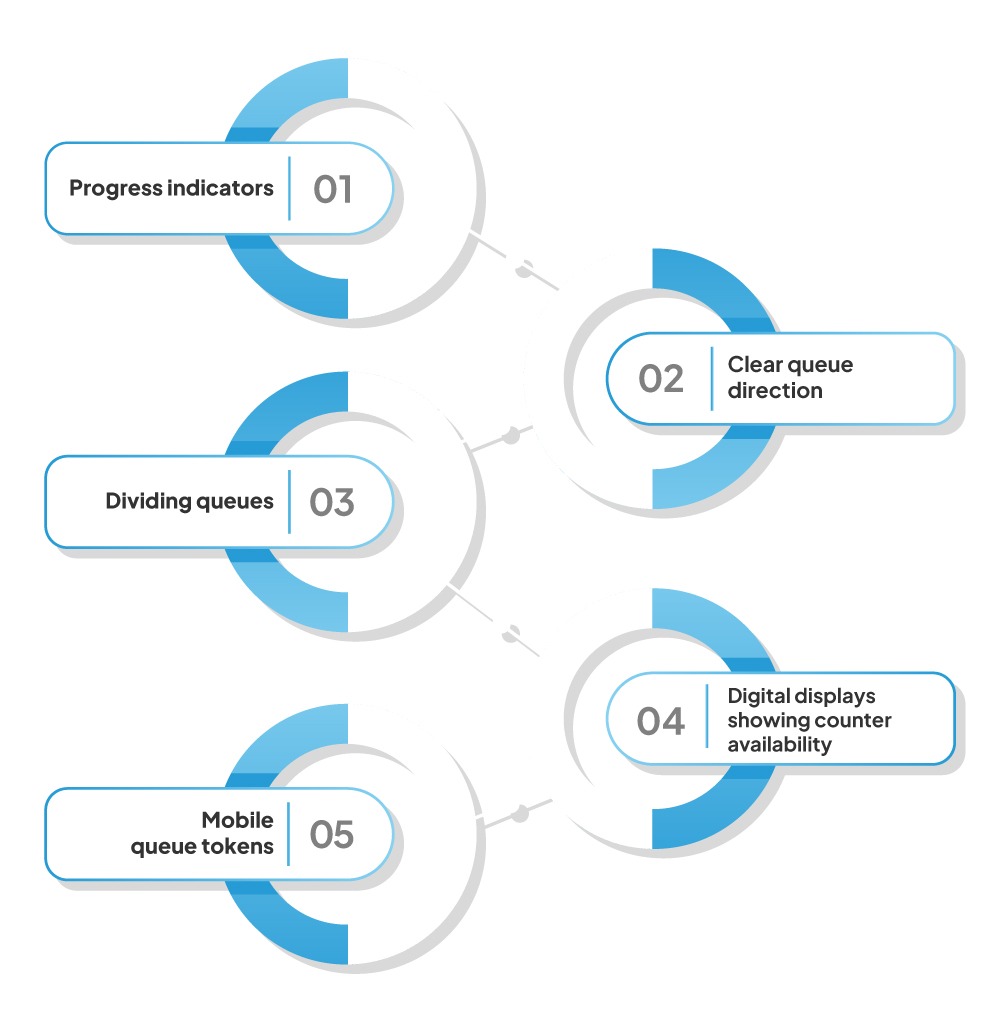
Retailers are able to reduce wait-time for the customer without adding more staff by implementing mobile POS systems, express counters, self-service checkouts, clearer signage, more straightforward queue layouts, and even tech driven improvements such as predictive AI with fast POS systems. These options serve to maximize flow, mitigate perceived wait-time without increasing staffing noticeably.

When you run a retail business, you not only have to ma...
October 25, 2024
https://youtube.com/shorts/g8rM8H2WsQg?si=j9sx9EHNmb_2w...
May 14, 2024

July 10, 2026

July 8, 2026

June 15, 2026

June 5, 2026

June 1, 2026