How to Start a Hardware Store in India (2026): Investment, Licenses & Setup
April 17, 2026

April 17, 2026
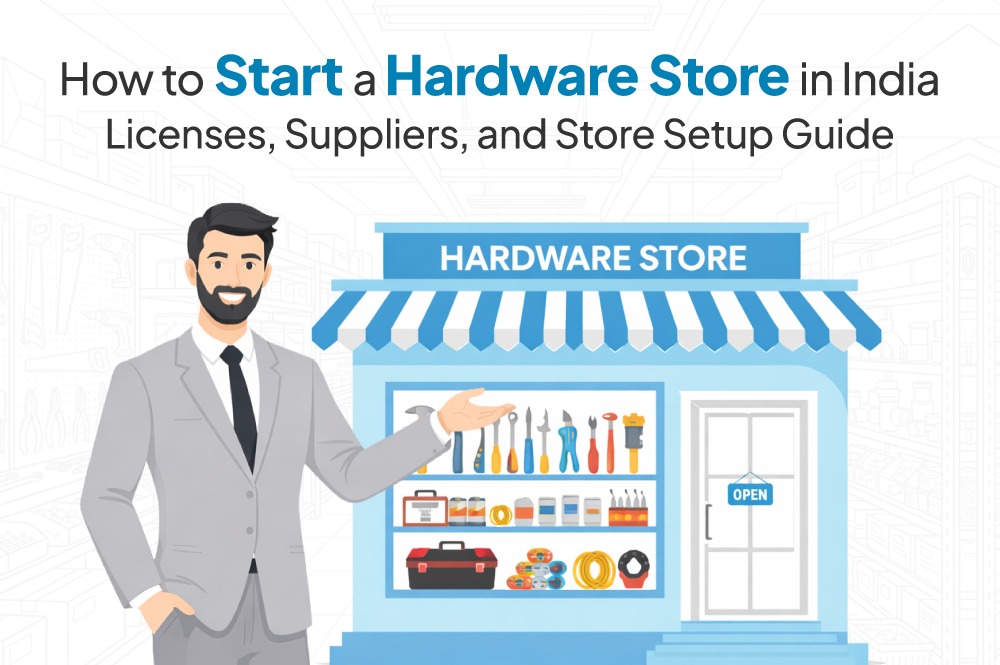
This guide explains how to start a hardware store in India, including investment, required licenses, supplier sourcing, store setup, and marketing strategies. It provides a step-by-step approach for launching and growing a profitable hardware business in both small towns and metro cities.
Starting a hardware store in India can be profitable but only with the right planning. for the entrepreneur. However, it can also feel overwhelming, especially when navigating the specifics of starting a hardware store in India. Entering into a hardware store niche is a smart decision because demand will always exist for construction materials and the tools necessary to perform everyday maintenance on items requiring repairs.
Developing a comprehensive business plan to start a hardware store in India will allow you to develop an income stream from your store. Your success depends on careful planning, choosing the right suppliers, meeting legal requirements, and executing your strategy effectively.
This guide will give you the information you need to create a successful and sustainable hardware store in India, including what you should consider when selecting suppliers as well as how to obtain necessary investment as well as the necessary licenses.
When establishing your hardware store, the first step is defining your target market. These steps will help you determine what products to stock and how to position your business.
Typical customers could be contractors, electricians or plumbers, carpenters or builders and last but not least homeowners; each having their own distinct needs. For instance, contractors typically buy in bulk, while homeowners prefer smaller quantities.
If the area you are thinking of starting a hardware store is more residential than commercial then your product range should include commonly used household repair items. Conversely, if the area is more commercial or industrial, your product range should include construction-related tools and bulk items.
Conducting competitor research will provide valuable insights into your local market. Specifically observe their prices, product mix and throughput. Identifying shortcomings or gaps in competitiveness by observing your competitors will provide targets for developing your own competitive advantages.
Knowing your target market will help you establish product selection criteria, pricing strategy and advertising methods that result in a sound foundation for your hardware store and increase the chances of achieving long term success.
Starting a hardware store in India requires ₹4–15 lakhs depending on location and inventory. The amount of startup capital to start a hardware store is typically modest. It varies based on location, store size, and merchandise range. A well-thought-out budget will help you launch your hardware store without financial strain.
The table below shows the typical startup cost breakdown for a hardware store in India:
| Expense Category | Estimated Cost (INR) |
| Shop Rent & Deposit | 1,00,000 – 5,00,000 |
| Interior Setup | 50,000 – 2,00,000 |
| Initial Inventory | 2,00,000 – 8,00,000 |
| Licenses & Registration | 10,000 – 50,000 |
| Staff & Miscellaneous | 50,000 – 2,00,000 |
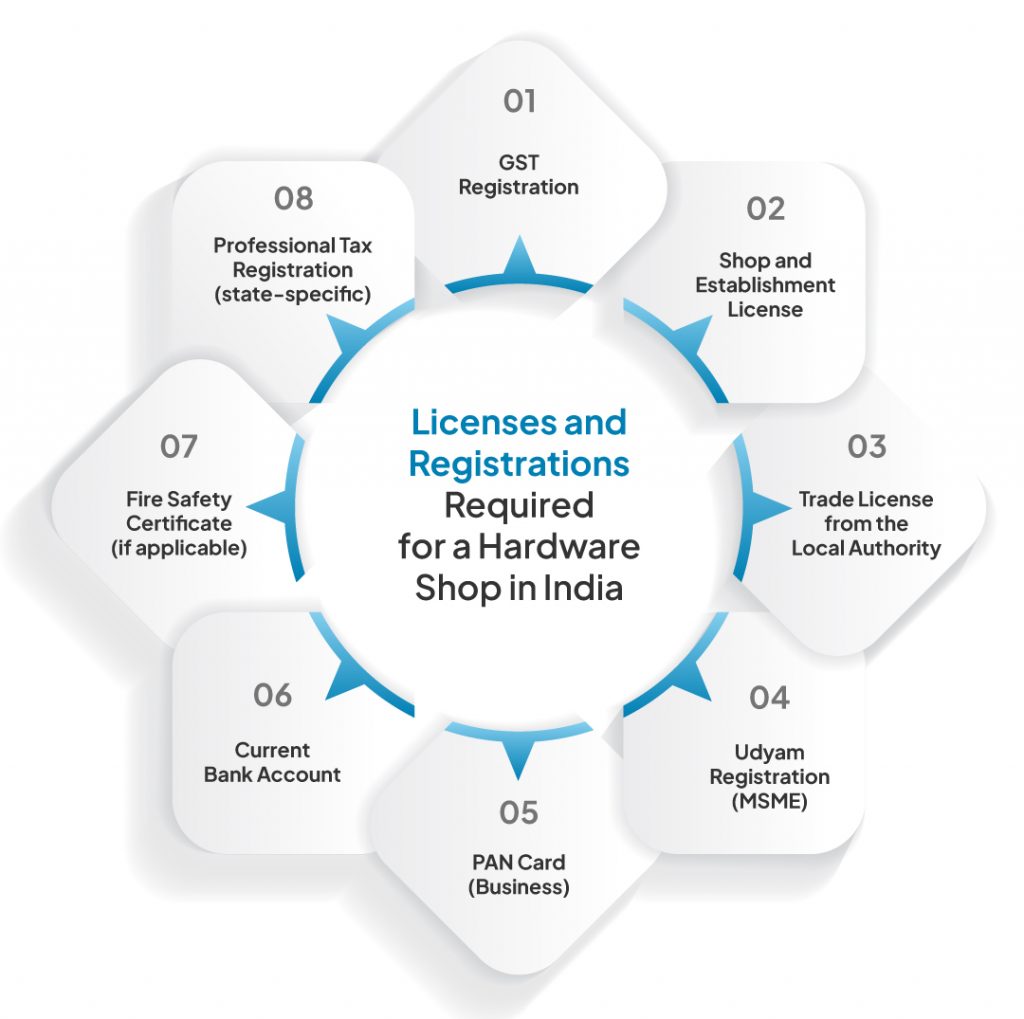
To successfully and legally set up the hardware shop in India, there are several registrations and licenses that you would have to obtain first. These registrations will also ensure that the day-to-day operations of your business run smoothly, as well as protecting your business from future legal troubles.
One of the top factors to consider when starting your hardware store is to have reliable suppliers. Reliable and trustworthy vendors will provide you with consistence in the quality of your products and the timeliness of their delivery.
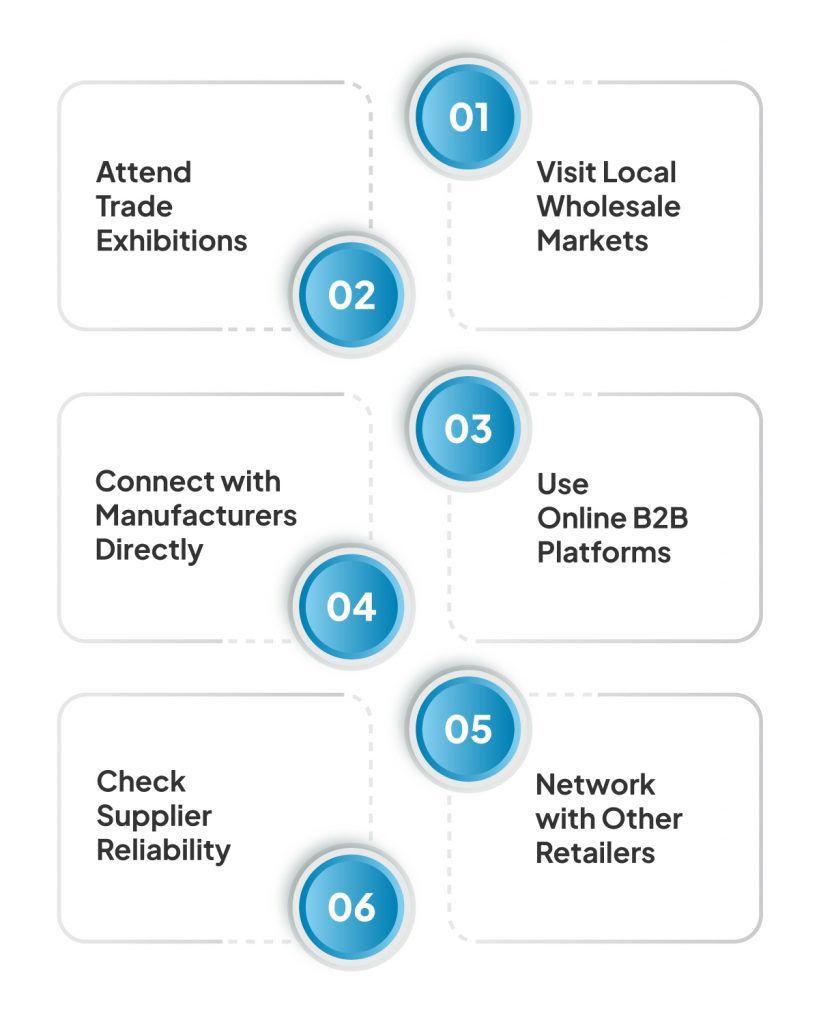
Going to the local wholesale market is a good way to find supplier contacts. Local wholesale markets allow you to compare products, compare prices, develop direct supplier connections to get better rates for yourself.
Trade shows are a good place to meet with manufacturers and distributors of products. Trade shows also provide an opportunity to explore industry trends and negotiate better terms with the supplier for your business.
B2B websites (e.g. IndiaMART, TradeIndia) have many suppliers listed that you can verify. You can check out multiple suppliers, compare pricing, and choose suppliers who can give you the best price as well as dependable delivery.
Buying directly from the manufacturer cuts out middlemen, resulting in lower costs and higher profit margins. In addition, you will receive more profit margin and will always have consistent product availability for your hardware store.
Speaking with fellow retailers in your area helps identify trustworthy suppliers and avoid unreliable ones. The experiences they have had with other suppliers will help you to avoid unreliable vendors.
Always check the credibility of your suppliers by looking up reviews on them; checking their delivery times; and checking their return policies. When you work with a reliable supplier, A reliable supplier keeps your inventory running smoothly
When selecting a location, areas with high demand include those close to construction sites, residential areas or industrial areas. The store’s location should be easy to reach and also have visibility.
Create a store design that will allow customers to access their required goods. Organize products into clear categories so customers can find items quickly. Placing products that are purchased frequently towards the front of the store, will make them more accessible to your customers.
Having proper lighting and having clear signage will lead to a more satisfied customer experience. You should also have enough storage space to store your bulk inventory.
Having a well-planned out store setup will create more efficiency and allow you to sell more product. Your store will look more professional and will be more customer-friendly.
Running a hardware store comes with its own set of unique challenges. Recognizing these challenges early will allow you time to prepare yourself to respond appropriately.
| Challenge | Impact on Business |
| Inventory Mismanagement | Leads to stock shortages or excess stock |
| Price Competition | Reduces profit margins |
| Supplier Delays | Affects product availability |
| Customer Credit Issues | Impacts cash flow |
| Seasonal Demand Fluctuations | Causes inconsistent sales |
If you have poor inventory management, you can experience your business’s losses and poor customer satisfaction levels. Well-planned inventory management will help to increase your profitability and create good customer satisfaction.
Marketing is essential for bringing in new customers and expanding your business once you open a hardware shop. A mix of digital and traditional methods for advertising is the best method for getting customers into your shop:
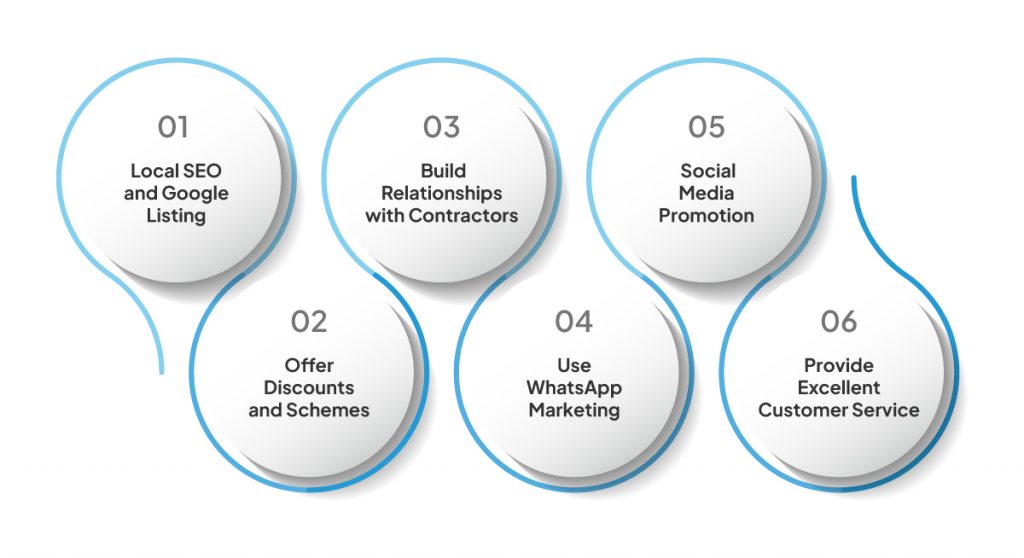
Digitalizing your hardware business is key for launching your new hardware store as it makes tracking inventory, recording payments, managing accounts, and filing taxes easier.
Tracking your sales and the goods sold is critical to monitoring a hardware store once it has begun operating. Now without tracking sales, you cannot accurately measure your profit or loss. You should use both the billing and accounting software to keep record of all sales as well as transactions. This will allow you to monitor your daily revenue and expenses as they occur.
You should generate reports on sales, profit margins and inventory. These reports provide you with information that will enable you to make better informed decisions regarding your company’s operations. You should also be able to analyze an individual’s buying trends. This allows you to stock items that are in high demand, encouraging you to grow your sales.
You can use digital tools to not only minimize human error but also maximize the time you invest into your business while providing you with complete compliance with all tax guidelines.
Having a well-organized tracking system ensures a successful hardware store that will continually grow.
If you want to start a successful hardware store in India, here’s a quick summary of the blog that will help you reach your goal. The first step is creating a business plan, which outlines the details of how you can run your store and how to execute those plans. Your target market will define what type of merchandise you will carry and create an avenue for you to build relationships as well as engage customers.
An effective hardware store business plan in India will help you stay organized, on track and make educated decisions to minimize risk and errors in judgment. However, as your business begins to grow, it becomes difficult to manually manage all aspects of your business including accounts receivable, inventory and reporting. That is exactly where the benefits of digital marketing can play a key role in helping you succeed.
With the use of solutions such as VasyERP, you will be able to perform your daily operations in a more efficient and streamlined manner. In addition, you will have a complete overview of your sales, as well as your entire business, in one easy-to-use location.
Consider leveraging smarter hardware billing software like VasyERP for optimising your store processes and speeding up your business upscene.
1. Is a hardware store profitable in India?
The hardware industry is profitable because of ongoing demand from the construction and maintenance industries. If you build your hardware store with good planning, reliable suppliers, and competitive prices, you will have consistent income along with the potential for long-term growth.
2. How much investment is required to start a hardware store?
Starting a hardware store in India typically requires ₹4–15 lakhs, depending on location and store size.
3. Which licenses are required for a hardware shop?
You must obtain a GST Registration, a Shop License, a Trade License, and MSME Registration to open your hardware store. These are the four necessary licenses and legal requirements to open and operate your hardware store without being fined or shut down by the government.
4. Where can I find hardware suppliers in India?
You may be able to source products from local wholesalers, distributors, online directories, and trade exhibitions. It is probably a good idea to establish relationships with vendors that you can rely on to receive quality products in a timely manner to maintain a steady supply of product for your new hardware retail business.
5. How do I choose the best location for my hardware store?
You should locate your hardware store as close as possible to construction sites, residential areas or manufacturing and industrial areas. Having a location that is highly visible and has great access will also create more sales than if you select a location you can’t see or get to easily.
6. How can I increase sales in my hardware store?
You can increase sales in your hardware store by offering discounts, forming relationships with contractors, using digital marketing, and providing excellent customer service. Doing these things will increase the overall number of customers who will shop in your hardware store and improve the chances of these customers returning to your hardware store to shop again.


The effectiveness of contemporary bakeries relies great...
January 22, 2026

The success of a fruit and vegetable store goes beyond ...
February 8, 2026

July 10, 2026

July 8, 2026

June 15, 2026

June 5, 2026

June 1, 2026