How to Start Selling on Amazon and Flipkart in India: Step-by-Step Guide for Retailers
April 15, 2026

April 15, 2026
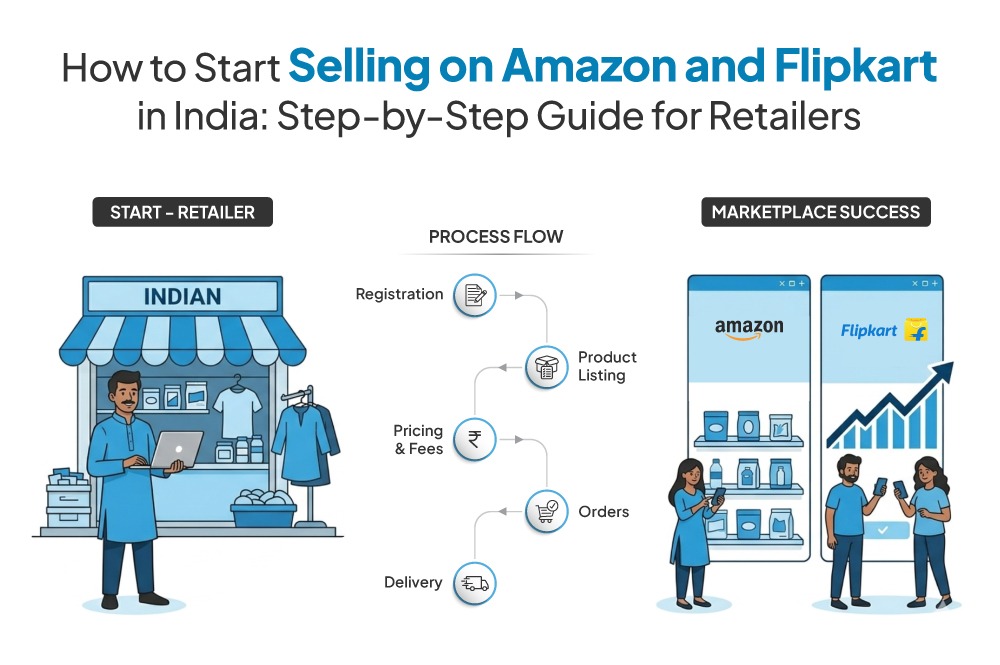
In this blog we will show you step-by-step how to sell on Amazon and Flipkart in India. The topics include registering on both platforms, providing necessary documentation, listing products for sale, understanding fees, and avoiding common mistakes. You will be taught various practical methods to begin and successfully grow your e-commerce business using either platform with confidence.
Retail and e-commerce in India are experiencing significant growth. A lot of traditional retailers are now moving online with the goal of increasing the size of their businesses and scaling them faster than by using traditional methods. With the availability of online marketplaces such as Amazon and Flipkart, retailers have found it easy to start selling their products without having to make a large initial investment to do so.
If you are interested in starting to sell your products on either Amazon or Flipkart and want to learn how to sell on Amazon and Flipkart in India then this blog will help simplify the entire process for you. Right from registering as a seller to listing your products to managing orders placed with you. You will find all of these processes have been laid out in an organized manner with clear steps.
Whether you are a small retailer or you plan to grow your business by using Amazon and Flipkart, understanding both marketplaces will be very beneficial. You will learn about common pitfalls when selling on either marketplace and you will also be able to set the groundwork for your e-commerce selling journey in India.
Marketplace options are plentiful while comparing how you would choose which marketplace to use comes down to several elements like product category, customer type as well as pricing strategies.
| Feature | Amazon | Flipkart |
| Reach | Global + India | Strong India focus |
| Seller Support | Advanced tools | Easy onboarding |
| Fees | Slightly higher | Competitive |
| Audience | Premium + mass | Value-driven |
| Logistics | Strong network | Strong in Tier 2/3 |
Both are trustworthy. As many sellers use both sites, you may also want to sell on each to maximise your sales and visibility.
To be able to setup your seller account for either Amazon or Flipkart you will need the proper documentation prior to registering; the acquiring of these documents now allows for an easier onboarding procedure as well as ensuring compliance with current laws in place within India.
Starting your career with Amazon is easy if you take the right steps. The following section outlines how to become an Amazon seller by listing out each step in an orderly way.
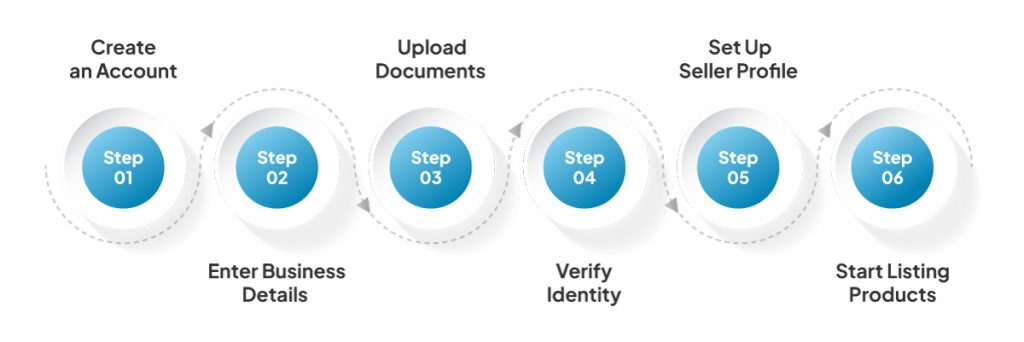
Go to the Amazon Seller Central India site. Sign up with your email. Then enter your information such as your name, phone number, and password to begin the registration process smoothly.
Provide business details including the business name, address and what type of business you are in. Be sure to provide information which match what is in your official business documentation. Doing this will minimize issues with verifying your identity in the future.
Upload your PAN, GST and banking documents. Be sure to upload clear and valid documentation to ensure the speedy approval of your account.
You will need to complete the OTP verification and complete a video KYC when applicable. This step is the final step to establishing the identity of a seller and building trust between the seller and the platform.
List your store name, logo, and return address. Having a professionally established seller profile assists with the confidence of buyers and increases the visibility of your brand.
You can now start uploading your product details, including title, description, images, and pricing. including title, description, images and pricing. This is where our selling career will begin.
Flipkart offers a simple onboarding process. This section explains Flipkart seller registration India in an easy way.
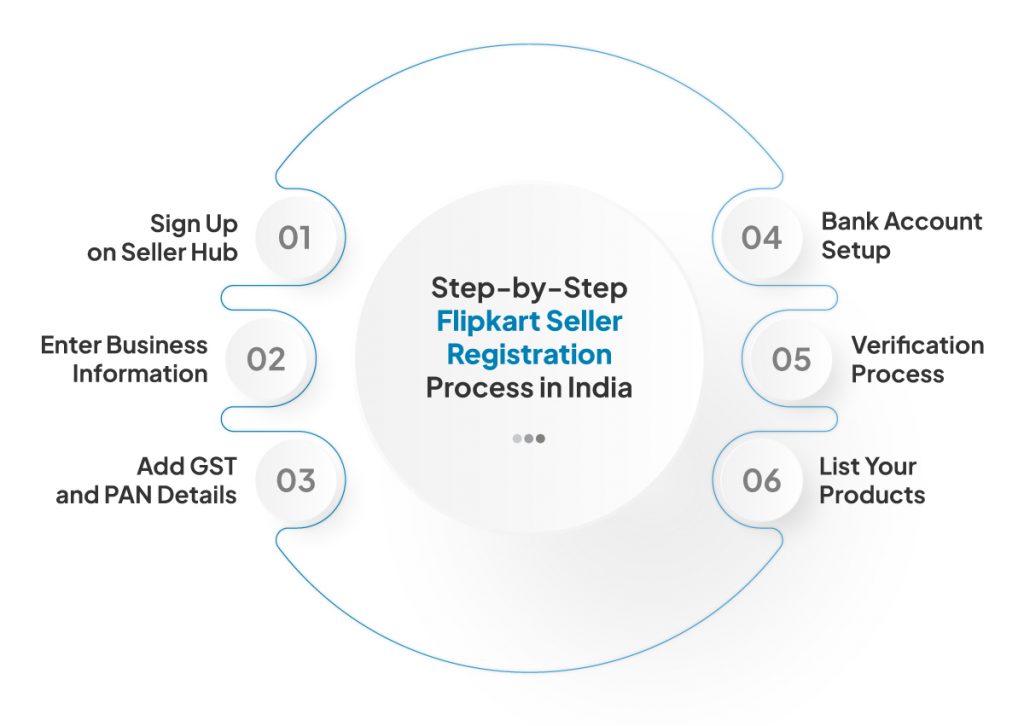
To begin, visit Flipkart’s Seller Hub and create an account using your mobile number and email ID. You will receive an OTP to verify your account.
You will also have to enter business information such as name, address, and category of business. You must fill this information out correctly because if there is even a typo in these sections, it may delay your approval process.
Complete your GSTIN (Goods and Services Tax Identification Number) and your PAN (Permanent Account Number) for all product categories listed on Flipkart.
You will be asked for your bank account number and other related information where payments will be deposited into your account. You must provide accurate information when entering the information for your bank account, or you will have issues getting paid.
Flipkart will take a few days to verify your information. This can take longer based on how accurate the documents you submitted are.
You are now ready to sell products after uploading your product catalogue with accurate details (proper description, correct images and pricing).
Your product listings are really important for driving sales! Optimizing your product listings will increase visibility and increase your chances of making sales.
The first step is having a clearly defined title containing keywords. Therefore, include the type of product, company name (or source), and key selling features associated with the product. For example, use relevant terms throughout your content strategy to mention how to sell products online in India.
Any images should be of good quality, taken from various angles, and should be set against a plain background (white). If you can provide an image showing how to use the product (lifestyle images) it will help your customers understand how the product will be used. Both platforms also support product videos, which tend to improve conversion rates. You can turn your existing product photos into short listing videos using invideo’s image to video tool, without needing a separate video shoot.
Discoverability of your products can be increased through the use of keywords. Use Amazon seller central India tools or Flipkart dashboards to determine trending Keywords to improve your listing.
When writing a description, write simply using short, concise sentences, and in describing the product highlight its key benefits (rather than just listing its features). Produce content that is easy for readers to read.
An excellent listing will set you apart from other retailers competing in the e-commerce marketplace in India.
Good stock management influences your online business’s success through sales, customer service, and efficiency.
If you’re a first-time seller on Amazon or Flipkart in India, you’ll want to have an effective way of managing your stock so that you don’t lose money and can grow quickly.
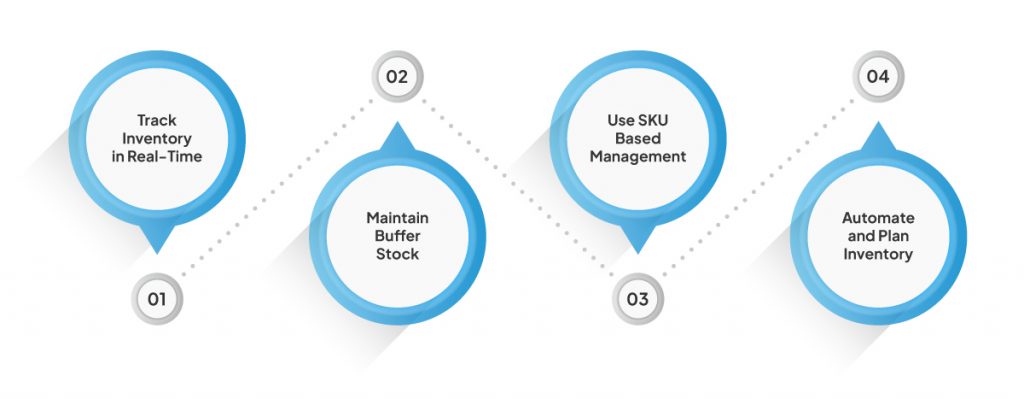
Real-time tracking of your inventory will give you an accurate view as to the amount of stock at all times across all locations. Use your dashboard at sites such as Flipkart Seller Hub India or Amazon to monitor your inventory levels. This will reduce your risk of overselling, minimize the chance for errors and keep you informed about products you need to order, as well as those that are currently in stock.
During your busiest times of the year, you will want to keep a buffer in place to ensure that you can accommodate any unexpected demand. Having a buffer allows you to meet your customers’ needs and grow your sales because you do not have to worry about running out of product.
All of your listings should have corresponding SKUs associated with them. This will provide you w/ a much easier way to keep track of a single listing/running multiple listings w/ the same sku; thus, SKUs will reduce ambiguity, provide more accurate inventory numbers and allow for better management of variations on listings i.e., myriads of size/colour/style across both platforms.
You can automate the process of updating your stock on Amazon and Flipkart by using an ERP system. Automation allows you to reduce errors and save valuable time. Reviewing historical sales patterns and seasonality allows you to create a better plan for ordering inventory, and will help you avoid both overstock and out-of-stock situations.
Modern retail businesses can also streamline their marketing efforts by connecting customer insights, sales analytics, and campaign management within a single platform. With a bulk ad launcher, retailers can create, manage, and publish multiple ad campaigns efficiently while testing different promotional strategies to identify what generates the best sales results. This helps businesses scale campaigns faster without switching between multiple tools or platforms.
Order management begins at the point the customer has placed an order. Fast processing can help to keep your rating high.
Accept orders promptly, as delays can negatively impact your seller performance rating.
Pack the item well for protection against damage during shipping.
Choose the correct fulfillment method. Amazon has FBA and Flipkart can help by providing shipping services for you. They have a constant process for monitoring packages. They have a regular practice of keeping customers updated with order information.
As a seller, you must follow platform cancellation policies carefully to avoid penalties. If they fail to comply with the seller platform’s correct cancellation policy, they can be subject to penalties placed by the platform.
Timely delivery leads customers to trust your company and is likely to generate repeat purchasing from this customer. The methods of handling orders efficiently are the foundation for your success as a seller on either Amazon or Flipkart in India and for consistent growth in your business.
Both platforms charge different fees. Understanding them helps you price products correctly. Plan your pricing carefully to maintain healthy profit margins.
| Component | Description |
| Referral Fee | Percentage charged per sale |
| Closing Fee | Fixed fee per order |
| Shipping Fee | Based on weight and distance |
| Storage Fee | Charged for warehousing |
| GST Charges | Applicable on platform fees |
Handling post-sale issues is important for long-term success.
There are numerous reasons as to why a consumer would want to return an item. Genuine return requests should be processed promptly to maintain customer trust. Before processing a customer’s refund, it is critical that you check the state of the product that has been returned. By handling returned merchandise efficiently, your customers will gain confidence in your shop, and your seller rating will improve.
All refunds need to be processed per the respective platform policy. This needs to be carried out otherwise the amount of time spent processing the refund may cause customers to give negative feedback. In regards to communicating refund transactions; it should always be done as clearly as possible at every step until advisor resolves transaction issue.
Always respond to negative reviews. Instead of defending yourself, try to provide a resolution to the customer. You can also use customer feedback to enhance the quality of your products and services. Building a business’s reputation through how you handle poor customer experiences takes time.
Many beginners make avoidable mistakes. Understanding them can save time and money.
| Mistake | Impact |
| Poor product listings | Poor listings reduce your product visibility in search results. This leads to fewer clicks and lower chances of conversion. |
| Wrong pricing | Incorrect pricing can either reduce your profit margins or make your products uncompetitive. This directly affects your overall sales performance. |
| Ignoring reviews | Ignoring customer reviews damages your brand reputation over time. Negative feedback without response can reduce buyer trust. |
| Inventory mismanagement | Poor inventory control can lead to stockouts or excess inventory. Both situations affect sales and increase operational costs. |
| Not understanding fees | Lack of clarity on fees can reduce your profit margins significantly. Sellers often realize losses only after multiple transactions. |
Avoiding these mistakes will help you build a more sustainable and profitable online business. Being an online seller is very competitive; learning from your mistakes will help you get there faster using this guide to starting an online business for new sellers in India.
Starting an e-commerce business in India has never been more accessible. With the right strategy and commitment, you can build a profitable e-commerce business. This guide has taken you through each step needed to sell on Amazon and Flipkart in India with content covering registration, inventory and order management along the entire process; you have learned about all of these elements to ensure they play a role in making your ecommerce business successful.
As your business grows, having everything managed manually starts to become challenging and that’s where something like VasyERP can help you; this program helps you to do Inventory Management, orders and accounting in one location saving you a lot of time and money.
If you want to successfully grow your business you need to implement the right system from day one. Start today and convert your retail store into a successful online brand!
1. How can I start selling on Amazon and Flipkart in India?
Begin by signing up for an Amazon and Flipkart seller account, as well as submitting the necessary documentation to complete verification (e.g., PAN number, GST number). Once you have created your seller profile and listed your products, follow a structured process to educate yourself about the proper way to sell products on these platforms in India.
2. Is GST required to sell on Amazon and Flipkart?
Most categories of products fall under the GST requirement. Therefore, a GSTIN is required when you want to register. Registering using a valid GSTIN helps you comply with tax rules and more easily learn everything you need to know on GST registration to sell online in india.
3. What documents are needed for seller registration?
PAN card, Aadhaar, GST certificate, bank information, and address verification was required to verify identity and place of business. Must provide these same documents when registering as a seller on both Amazon and Flipkart.
4. How much does it cost to sell on Amazon and Flipkart?
Selling costs include referral fees, shipping charges and storage fees. All of which vary depending on categories or the size of the product. Understanding your selling fee structure would help you set appropriate pricing for your products and ensure you maintain your expected profit margin.
5. What are common mistakes new sellers should avoid?
Some mistakes new sellers make, but should not include: poor listing quality, incorrect pricing, failure to monitor customer feedback, not effectively managing their inventory, and not understanding platform fees. These mistakes can delay growth and decrease profits for each seller and their e-commerce journey.

Every technology and innovation has initially met with ...
November 12, 2024

Ease Your Retail Business Operations with the Smart Vas...
July 17, 2023

July 10, 2026

July 8, 2026

June 15, 2026

June 5, 2026

June 1, 2026