5 Best Warehouse Management Software for Businesses in 2026
May 29, 2026

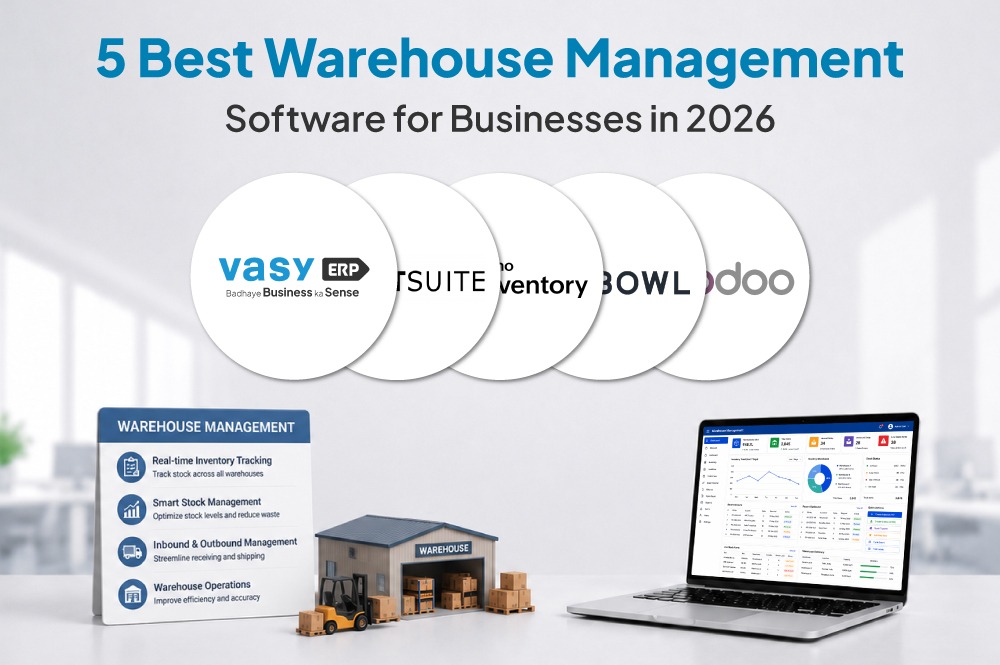
Lack of proper solutions when handling a warehouse causes shipping errors, delays, and poor client service. To avoid the abovementioned issues, it's important that the correct warehouse management system, is used to track inventory levels, streamline operations, and enhance accuracy within your company. Below we have listed some of the top WMS software options available for 2026 and discussed their important characteristics as well as potential cost advantages. We will also show you how to select the right WMS to help your company grow and operate more efficiently.
Warehouse Management Software (WMS) assists businesses in organizing inventory and executing warehouse operations and fulfilling orders from one single source. It enables businesses to monitor stock flow in real time. This increases efficiency with the ability to pick, pack, ship, and receive merchandise quickly and accurately.
WMS helps people reduce human impact on processes and allows for increased productivity through improved inventory visibility. A good WMS will automate repetitive tasks as well as generate detailed reporting.
In recent years, many companies have turned towards using cloud-based warehouse management systems due to the increased level of flexibility and scalability these solutions offer. The best WMS solutions are capable of integrating with ERP, POS, and eCommerce platforms. The right WMS enables businesses to grow much more quickly and maintain control over their warehouse costs.
Every warehouse is unique, so the function of its software will also differ. The essential function for every warehouse management system is simplifying inventory control, enhancing inventory tracking and supporting business expansion.
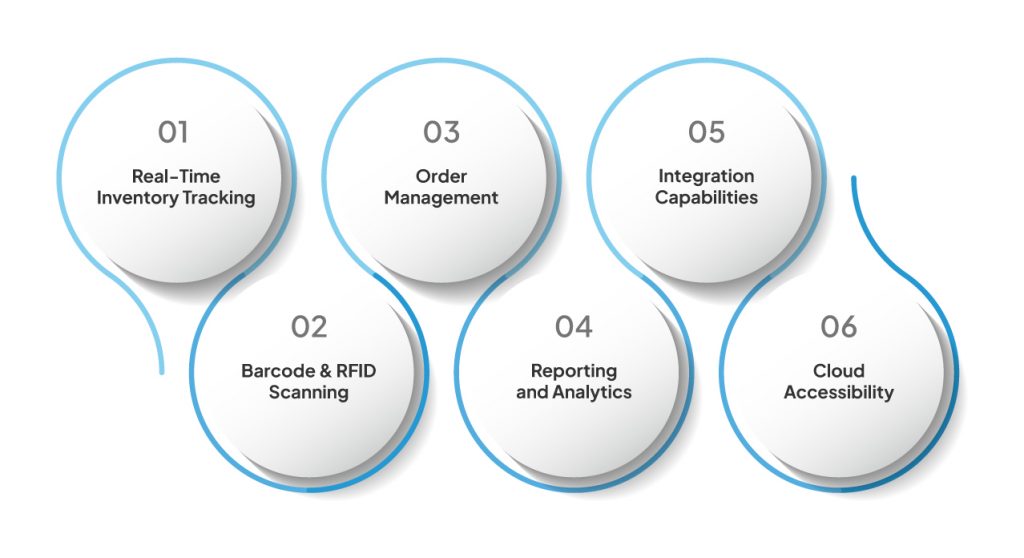
Real-time inventory tracking gives businesses the ability to know the real-time movements of their goods. This decreases inaccuracies in counting inventory and helps to keep from overloading on stocked items or being out of stock. The WMS you choose should enable your operations to have accurate inventory counts available in all your warehouses.
Barcodes and RFID scanning improve the speed and accuracy of warehousing. Staff members can scan products using barcodes or RFID throughout the process from receiving to picking to shipping. Many leading warehouse management software programs utilize these features to minimize or eliminate manual work, thereby increasing efficiencies and speed of operation.
Order Management focuses on improving the speed of processing customer orders. The order management module tracks an order throughout its lifecycle from when it is packed to when it is delivered. In addition, by automating various processes within the order management module, the best WMS also reduces delays caused by manual processing and improves customer satisfaction.
Reporting of analytics provides insight into how well a warehouse is performing. Reports give insight to warehouse operations while analytics provide information about inventory trends, order accuracy, and employee productivity. Most of the best Warehouse Management Systems (WMS) have fully functional dashboards that provide users with insight into work performance and business intelligence.
A warehouse management software solution must be integrable with an organization’s ERP, accounting, or Point Of Sale (POS), and eCommerce solutions. When you have an integrated approach to warehouse management, you will experience more workflow automation and there will be fewer opportunities to enter duplicate data. Most of the leading WMS vendors include compatibility or interoperability with other major applications or solutions.
Cloud-based applications enable warehouse users to access their warehouse data from any location. Cloud-based solutions also enable users to remotely manage warehouses and create an enhanced collaboration environment. Most leading warehouse management software solutions are based on the cloud, receiving real-time updates for better security.
Today’s warehouses need automation, precision, and responsiveness. Having the right WMS will provide your business with faster fulfillment as well as improved control over your inventory. Below you will find the leading WMS available to businesses in 2026.
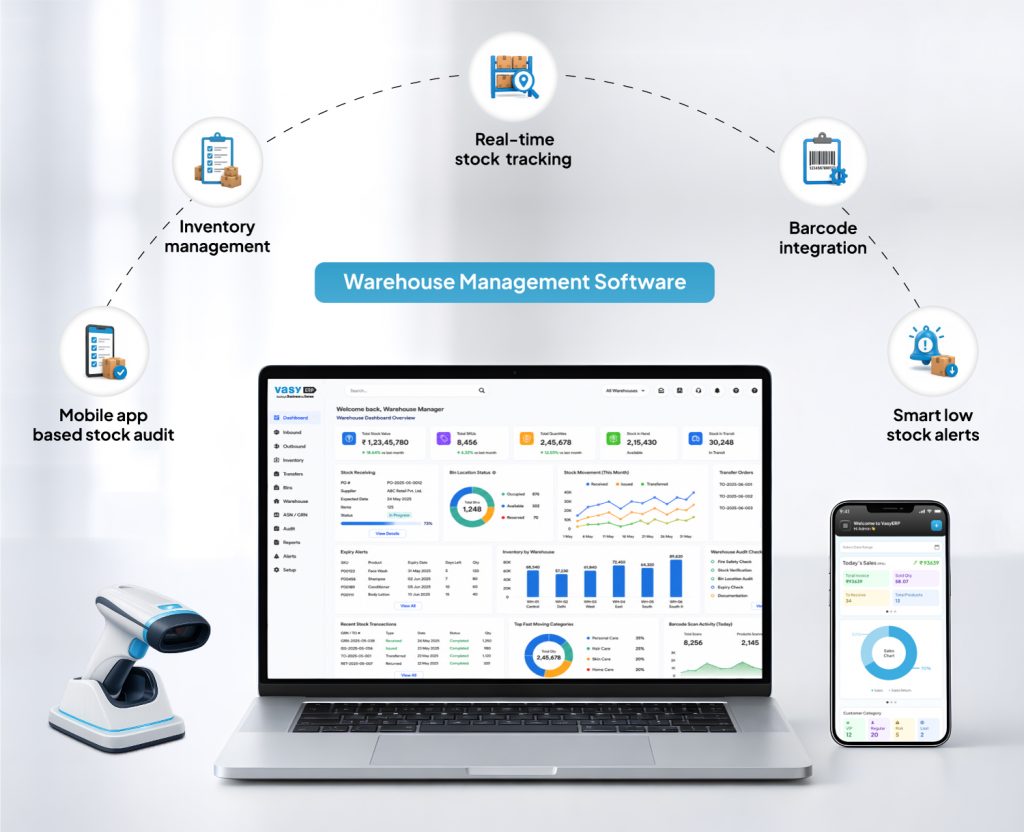
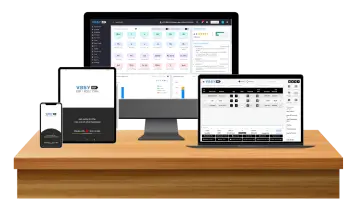
VasyERP is one of the premier solutions available to growing companies with inventory needs. This warehouse management software provides businesses with an all-in-one package to manage their inventory, automate their warehouse processes, facilitate the creation of billing invoices, and manage customer orders. Customers use VasyERP to enhance their visibility over their inventory and to lessen their operational errors. This WMS can be an excellent choice for many types of businesses, including retail, wholesale, manufacturers, and distributors. Additionally, VasyERP has mobile capabilities and cloud-based access to help make it one of the strongest WMS for conducting business operations in 2026.
NetSuite WMS serves as a cloud-based solution designed for medium and larger companies. This software helps the business to automate all of its warehousing operations, provides greater accuracy regarding inventory levels, supports advanced picking and cycle counting processes, and supports order fulfillment. A large number of companies will often choose this system based on its direct integration with ERP operations. It is widely thought to be one of the best WMS systems on the market for larger companies looking for scalable warehouse systems and real-time operational control.
Zoho Inventory is a simple, cost-effective, and user-friendly inventory management solution built for small and mid-sized businesses (SMB). Zoho Inventory provides SMBs with complete operational visibility from one dashboard. This is done by enabling them to easily manage all of the orders, warehouses, and shipments. Businesses can use Zoho Inventory to create and integrate with third party sales channels, as well as accounting software systems. Startups view Zoho Inventory as the leading WMS provider to facilitate their early-stage growth. This is due to its extensive capabilities and affordability.
Fishbowl Inventory is a robust inventory and storage solution for manufacturers and wholesalers alike. This software solution helps to automate inventory management and manage the workflow in the warehouse more effectively. In addition, it integrates well with accounting systems and has features for advanced tracking of inventory stored in warehouses. Many companies have turned to Fishbowl because it has proven to improve accuracy in warehouse operations, as well as increase operational efficiency. Fishbowl is a prominent choice for managing warehouses and has been an industry leader in managing warehouses for companies that hold a lot of inventory.
Odoo Inventory provides warehouse management features for any size of business. With its range of features like inventory management, shipping integration, and automated functions, Odoo allows companies to create standard and sophisticated processes within their warehouses. All these features come together to make it as flexible as possible when connecting to other ERP systems or having different types of warehouses via modular design. Many experts rate Odoo as one of the best warehouse management solutions because of the combination of price and features that Odoo’s warehouse management system provides.
By viewing software features side by side, you can make comparisons easily. The table below shows you some comparisons in price, the size of business that is appropriate for using WMS, and some of the strengths each WMS has to offer will help any business decide which is best suited for their operation.
| Software | Best For | Deployment | Key Strength | Suitable Business Size |
| VasyERP | Retail & Distribution | Cloud | Complete ERP + WMS | Small to Large |
| NetSuite WMS | Enterprises | Cloud | Advanced automation | Medium to Large |
| Zoho Inventory | Startups & SMBs | Cloud | Affordable pricing | Small to Medium |
| Fishbowl Inventory | Manufacturing | On-Premise & Cloud | Inventory accuracy | Medium Businesses |
| Odoo Inventory | Flexible operations | Cloud & On-Premise | Customization | Small to Large |
The best warehouse management software will depend on your size, how complex your warehousing operation is, and what budget you have to work with. For example, small businesses prefer very cost-effective and easy-to-use WMS. In contrast, larger companies generally have a greater need for advanced automation and integration with ERPs.
There are many of the best WMS solutions on the market for different reasons, and these solutions provide a wide range of benefits to operators. Some WMS excel in inventory management, while others have better overall operational control.
Quick Tip:
Always choose a software system that has the scalability to grow with your company; a flexible WMS will save you money in the long run, as you will not have to upgrade your system later at an additional cost.
When choosing the right warehouse software, the first step is to determine your warehouse challenges. Each business’s automated manual warehouse needs differ, so finding the best warehouse management system (WMS) to fit your company’s size, industry, and budget is key.
The evaluation of WMS solutions should include verifying the software’s ability to provide barcode scanning, reporting, integration, and cloud-enabled functionality that can help to streamline operations while reducing manual touch points. Another consideration regarding the software will be scalability. Will you need to upgrade functionality as your warehouse becomes larger and more sophisticated?
Evaluating the overall user experience of a WMS is also key. Employees will learn how to use the system more quickly if they have well-designed dashboards. Support from the software vendor during implementation will also help ensure success with the WMS.
When comparing different WMS solutions, the two key areas to look for improvements are inventory visibility and speed in fulfilling customer orders. To find the best WMS system for your business, you will want to compare several options before making a final decision. Choosing from the top WMS solutions will provide you with a better overall experience and improved performance over time with regard to your warehouse operations.
As we approach 2026, warehouse environments will demand more speed, accuracy, and improved inventory management capabilities. Proper Warehouse Management System (WMS) solutions allow businesses to reduce errors and automate operations for order fulfillment. All businesses of any size need to find a WMS that meets their current operational needs and provides future growth potential so they can help grow their productivity and customer satisfaction.
The best WMS solutions are capable of performing real-time order tracking and reporting as well as providing complete integration to third-party systems. A reliable WMS will enable your business to save time, reduce costs, and increase the overall operational efficiency of your warehouse operations. An investment in the best WMS (Warehouse Management System) is essential for achieving long-term growth, enhancing operational efficiency, and improving stock control in today’s highly competitive business environment.
VasyERP has gained interest for its many features, including functional flexibility, usability, scalability, and the ability to combine multiple WMS functions (e.g., billing, inventory, and ERP) into a single software application, thereby providing a business with complete control of its operations using only one software application vs. having multiple applications to monitor and manage its operations.
Are you ready to make your warehouse operations easier? If so, try VasyERP for faster, more accurate, and more efficient operation of your warehouse by managing your inventory, orders, and workflows. Book your free demo today.
1. Which warehouse software is best for small businesses?
The best warehouse software for your small business is Zoho Inventory or VasyERP due to their low cost and ease of use. Both can help automate your small business and have cloud storage to make tracking inventory easy. Start-up costs are also very low with these products.
2. What features should warehouse management software have?
Common features of warehouse management software are order management, inventory tracking, barcode scanning, reporting, integration with other systems, and cloud-based accessibility (to support remote locations). Real-time updates will improve the overall efficiency of your warehouse by reducing errors.
3. Can warehouse software integrate with ERP and POS systems?
Yes, most new-generation warehouse management system (WMS) software integrates with enterprise resource planning (ERP), point of sale solutions, accounting, and e-commerce systems. By providing all the functionality from all business processes on one platform, warehouse management systems can offer improved workflow automation.
4. Is cloud-based warehouse software better?
Among the advantages of utilizing cloud-based software for warehousing are a flexible platform with access to remote locations or anywhere with an internet connection; the software will be updated automatically, which decreases total maintenance expenses; and there are many companies that have scaled their infrastructure rapidly based on the demands of cloud computing. Also, typically, the best WMS application enhances productivity and control over the company’s executed business processes because it is cloud-enabled.


In the past, the concept of inventory referred to the c...
January 1, 2026
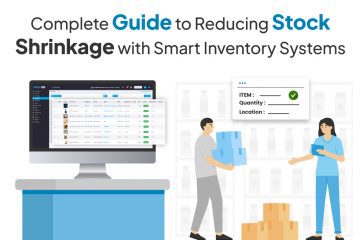
Stock shrinkage reduction is one of the biggest challen...
November 13, 2025

July 10, 2026

July 8, 2026

June 15, 2026

June 5, 2026

June 1, 2026