Signs Your Manufacturing Business Needs ERP Software Right Now
March 18, 2026

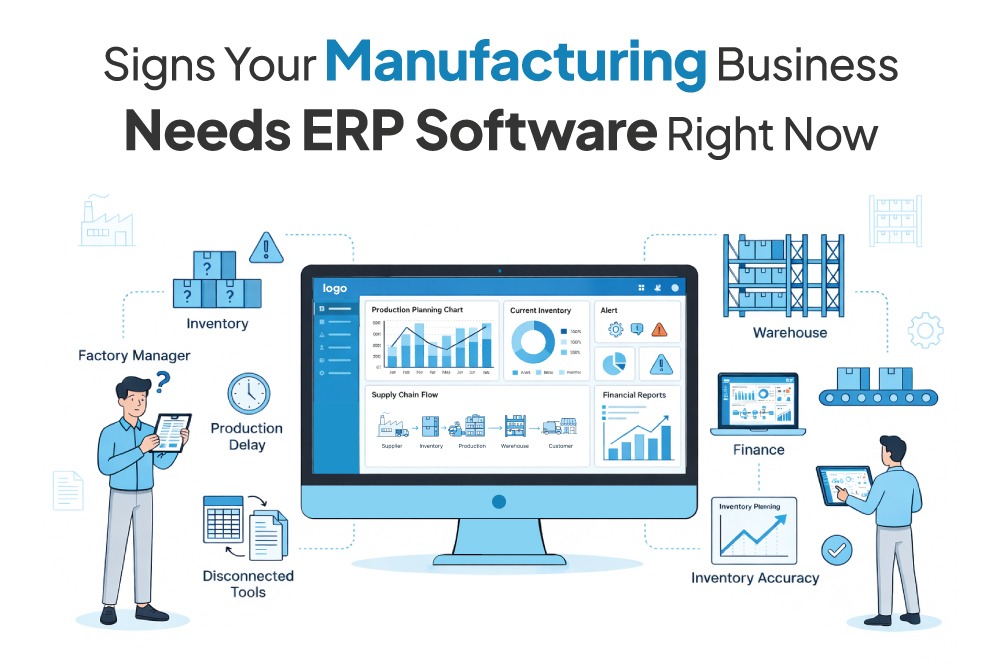
Due to the complexity of today’s manufacturing industry, production planning, inventory control, supply chain coordination, and financial tracking must all work together effectively. Unfortunately, many manufacturing companies still use spreadsheets and disconnected tools. They would also use manual processes. This can lead to delays, errors, and a lack of visibility across departments.
To help solve these challenges, modern ERP systems provide an integrated platform for the major functions of a business. VasyERP a specialised ERP software designed for manufacturing companies. Now this was carried out to provide extensive functionality.
Does your manufacturing company experience any kind of operational bottlenecks or lack data visibility? If yes then it may be the right time to smartly invest in an ERP software. This blog outlines some of the core signs that indicate your manufacturing company needs an ERP software now.
Manufacturers have long been one of the most prolific users of ERP solutions because of the complexity involved in their operations. They require reliable data and real-time visibility of their processes from procurement and inventory. This can be carried out through to production and distribution in order to be operating in a sustainable manner.
| Quick Fact:47% of those looking at getting an ERP system come from a manufacturing background. By far, the largest segment of ERP purchasers are manufacturers. Source: Link |
ERP systems enable the integration of all departments within an organization onto one platform. This allows for improved collaborative processes and also helps accelerate reporting times. Now in addition to this many manufacturing organizations employ ERP software. They do this to automate their daily repetitive tasks.
It is indeed a fact that ERP is no longer optional for manufacturers. It has become a rather strategic tool for future growth. It improves efficiencies and also helps maintain a sustained competitive position in the entire marketplace.
You may want to consider implementing an ERP system for your manufacturing business if you are experiencing one or another of the following difficulties:
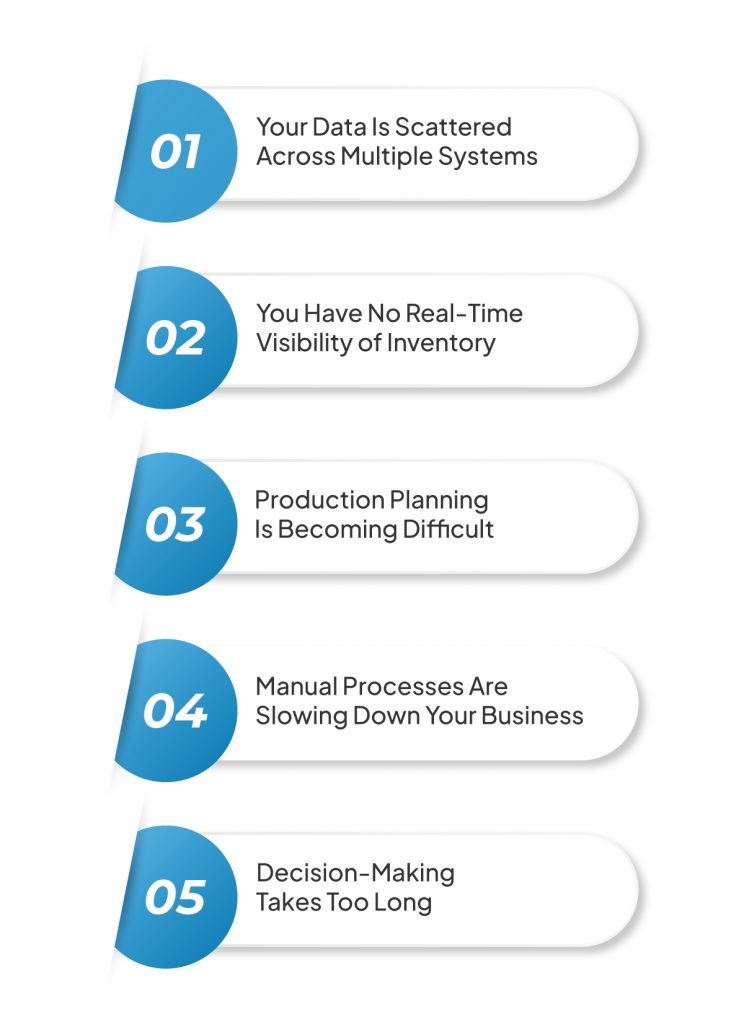
When accounting, production, inventory, and sales use separate systems, employees spend significant time manually transferring data. ERP software solves this by centralizing all information into one platform. This is where departments can access the same data in real time.
Many manufacturers find that they do not have accurate inventories because they are either manually tracking their inventories or using outdated or inadequate methods of keeping track of inventory. This means that you will either experience stock-outs or overstocked items, which can lead to lost production time. An ERP system will track your inventory in real time allowing you to maintain your optimal inventory level. It will also help improve the overall coordination of your supply chain.
The greater the output of production, the tougher it becomes to construct a production schedule. ERP systems automate the manufacturing process. This is carried out through better alignment of demand forecasts. The software also helps align the availability of raw materials. It also helps reduce unproductive machine time..
Manual processes including data entry, reporting, and paperwork, use up precious time and increase the chance of making a mistake because of human error. ERP software enables you to automate tasks that occur multiple times daily. Thus streamlining operations throughout your organization. It also helps support a higher level of overall productivity.
When managers use outdated reports and data compiled manually from spreadsheets, it leads to decisions being made in an unreliable and slow manner. An ERP Solution provides managers with up-to-the-minute dashboards. It also provides analytics and reports that enable the business leader to make better and quicker decisions.
Many manufacturing companies have more than one operational problem to solve at a time. An ERP Solution will solve many of these operational challenges.
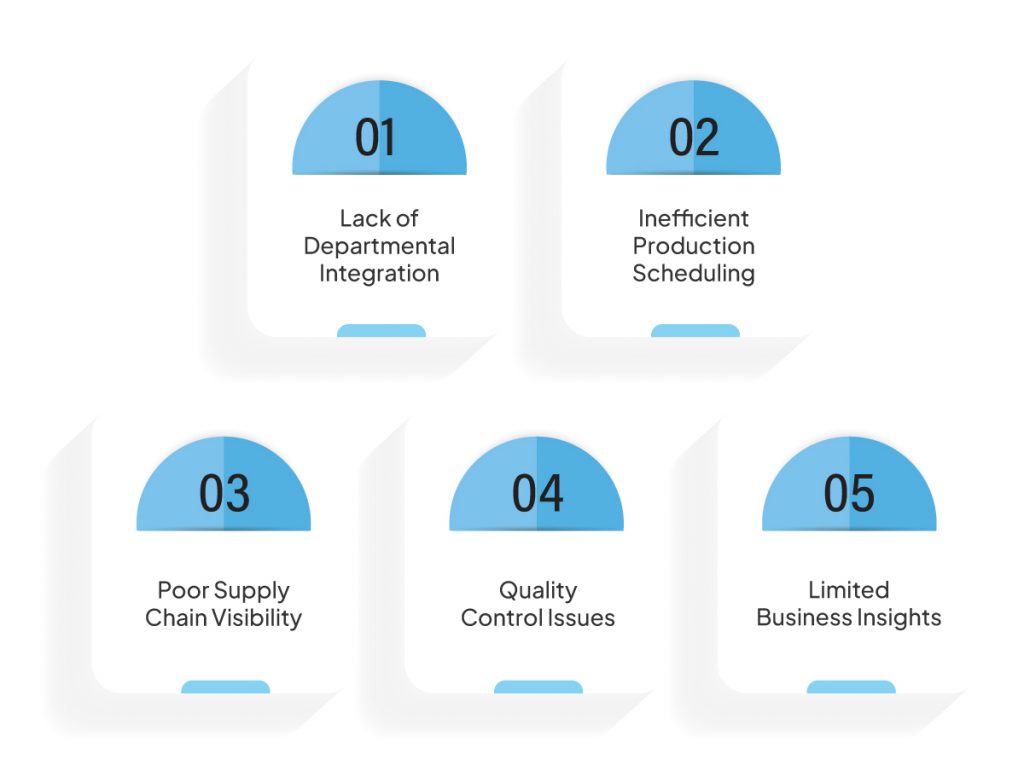
When departments operate independently, it creates communication problems. ERP systems connect all functions together. It helps provide a platform for easier collaboration and movement of data.
Attempting to manage your production schedule manually will create delays and resource conflicts. ERP’s automate production planning and scheduling. The software carries this out in real-time based on demand and the availability of machines.
Manufacturers require visibility throughout the suppliers, warehouses, and distribution channels utilized by manufacturers. ERP tools will track all phases along the supply chain and improve your ability to forecast and schedule your deliveries.
Without centralized visibility, it is difficult to control the quality of products being produced at a manufacturing facility. Now the ERP systems have been designed specifically to include all of the quality management modules. These allow manufacturers to monitor all the inspections and compliance.
Without advanced analytical tools, manufacturers will find it difficult to identify inefficiencies within the business model. ERP systems provide companies with reporting dashboards. Also provides performance metrics that allow for business process optimization.
ERP software provides manufacturing companies with numerous operational benefits. The ERP software can assist an organization in improving efficiency. It can also enable a higher degree of control over organizational processes.
| ERP Benefit | How It Helps Manufacturing Businesses |
| Centralized Data Management | All data related to an organization’s operations is captured and maintained in one system, offering real-time access to business information (production, finance, and inventory) across all departments. |
| Improved Inventory Control | Manufacturers can more effectively manage the flow of materials through the warehouse by accurately tracking inventory levels, improving the organization’s ability to avoid stockouts or excess inventory. |
| Better Production Planning | ERP systems will help organizations coordinate their demand forecasting with their production schedules and available resources to enhance a smooth, seamless operation. |
| Faster Decision-Making | Business leaders can find out how a business is performing instantly with real-time dashboards and reports so they can make an informed decision quickly. |
| Process Automation | The processes that are repeated many times such as order processing, reporting and procurement, are all automated by ERP solutions. Automating these tasks reduces manual errors and time spent. |
This is why ERP is continuing to grow in adoption among many different types of manufacturers. Many of the companies that have installed ERP benefit from improved operational capabilities. This is in comparison to the software they had before installing the ERP solution.
| Quick Fact: Studies indicate that ERP systems reduce operational spend by approximately 22% and improve the efficiency of business processes. There are three main reasons for this. First the ERP solutions automate routine business functions. Next it improves resource allocation to avoid redundancy. Finally it eliminates duplication of effort across multiple departments. Source: Link |
Manufacturing ERP software has numerous features that allow for the more efficient operation of manufacturing businesses.
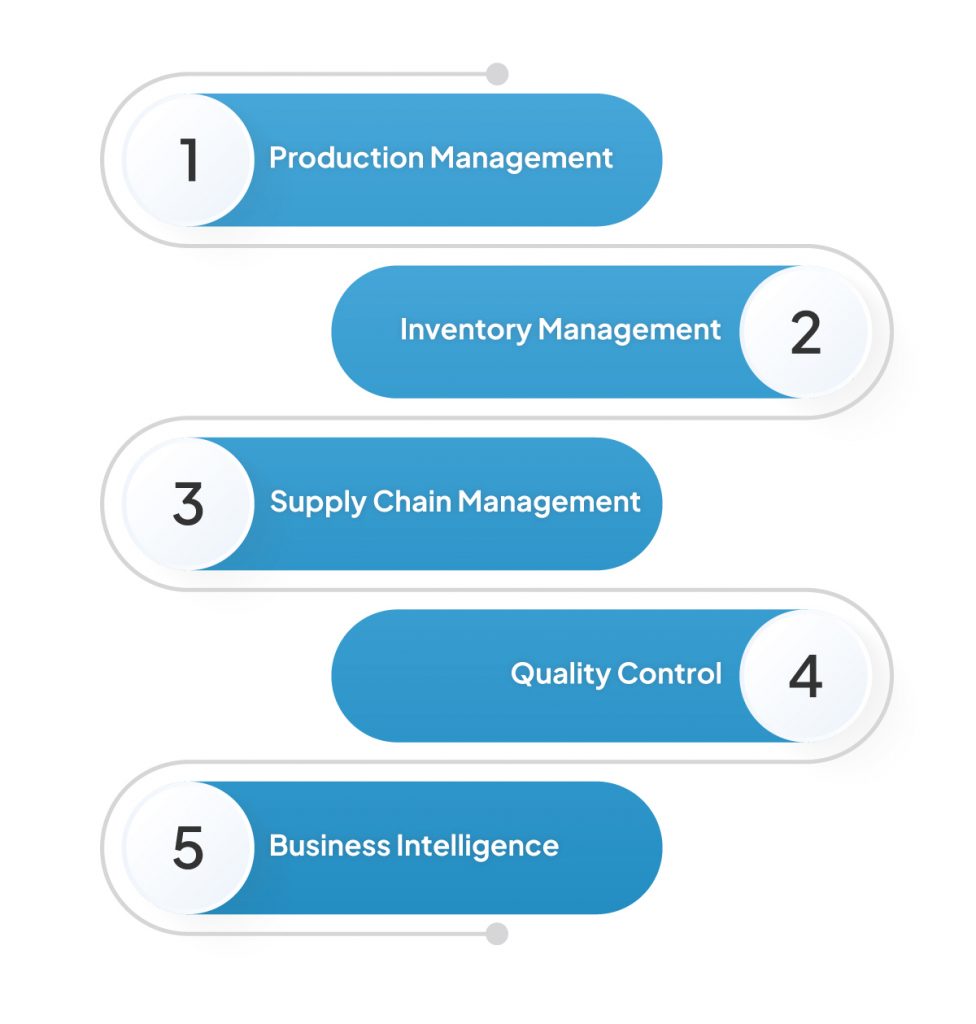
The manual management of the entire production process can be very challenging for a manufacturer with a growing operation. Production management modules in ERP systems provide the manufacturers with the best real-time visibility. It helps keep track of the updates of work orders, machine usage, and production stages. It also helps minimize downtime and support the continued achievement of production quotas.
Manufacturing businesses that have significant issues related to their inventory can greatly hinder their operations. An ERP system acts as a powerful inventory management solution, providing manufacturers with accurate and real-time visibility into their inventory levels. It helps further keep a track of their raw materials, along with the work-in-progress and produced goods. This information is critical to assist manufacturers across all of their processes. It helps them in reducing stock shortages and avoiding creating excess inventory and effectively planning purchases.
Coordinating the entire chain of supply is an important aspect of running a successful manufacturing business. The ERP systems generally provide the manufacturers with tools to connect their suppliers. It also helps them connect to their warehouses and the distribution channels they use to get their products to customers. This provides the manufacturers with the power to communicate better with all of the suppliers. They can also track the movement of shipments. This also helps them manage supplier relationships more productively and at their best.
The quality of Products that are manufactured will be uniform for the duration of the manufacturer’s life cycle. ERP Systems document quality testing results, keep track of defects, and create guides for meeting quality standards. All of these things work together to ensure that manufacturers’ products are reliable. Further helps in compliance with regulatory requirements, all of which are up-to-date.
Data is a key factor in making good manufacturing decisions. A will order reports and find out how company is performing. This way a manufacturing manager will have information that can allow him or her to make decisions very quickly. Moreover, he or she can base that decision on real-time data.
All types of manufacturers are combining these (4-5) modules into one solution. They are doing this seamlessly by using modern ERP software like VasyERP. This is because it allows manufacturers to increase efficiency. It also helps automate the processes and create more visible data across their businesses.
Businesses that manufacture are under increasing pressure to speed up, cut costs, and maintain high quality products. Many of them generally continue to work with spreadsheets, do manual work, or use separate systems. The result of these problems is often that they are not able to be as efficient as they should be. Therefore all of their overall efficiency is affected.
ERP software can help alleviate some of these problems. With ERP software, all the given departments and the various functions of a business are integrated into one centralised place. It also enhances your ability to see and share data and reduces all of the repetitive tasks through automation. It further improves your ability to plan for production.
It may be time to consider implementing an ERP solution. The most advanced ERP systems available, such as VasyERP, have many features and capabilities. These can minimize inefficiencies within your business. The software can also better coordinate along all of the supply chains. It can help position your business to experience future success.
1. What is ERP software in manufacturing?
An ERP solution for a manufacturing company would typically consist of an integrated system. This system is one that combines various processes. It includes processes such as inventory management. Production planning and financials too and more into a single system. The purpose of this solution is to allow manufacturers to automate their entire workflow.
2. How does ERP improve manufacturing efficiency?
The ERP software improves all of the manufacturing efficiency. This is done by automating routines through software applications. This is carried out for better communication. It also helps integrate all of the company departments within one application. This in turn helps reduce errors when performing tasks and makes producing the items easier to plan.
3. When should a manufacturing company implement ERP?
An ERP system for a manufacturing business should be put in place. This should be done when the operation of the company has developed to be complicated. It can also be implemented when there is a growing number of databases that are residing in separate systems. Now an increasing number of discrepancies with respect to inventory can also be the reason for the ERP implementation.
4. Is ERP suitable for small manufacturing businesses?
Now most of the ERP solutions were developed specifically to be used by small and mid-sized manufacturers. At the same time, ERP systems that are based on the cloud provide small manufacturers with the ability to purchase functional modules initially. The software then helps increase features within the system as its operations expand.
5. How does ERP help with production planning in manufacturing?
ERP software assists manufacturers to streamline their production plans. This is done by simply combining all of their available machinery. It also helps combine materials and workforce with the actual demand forecast. As a result, manufacturers will have fewer interruptions in their schedules. This will also improve the continuity of all the production operations.
6. Can ERP software grow with a manufacturing business?
Yes, almost all ERP applications provide businesses the opportunity to scale. It allows companies to begin with an essential module and then add functionality as their requirements evolve. Now with this level of adaptability the manufacturing companies can continue to grow in response to customers’ changing requirements.

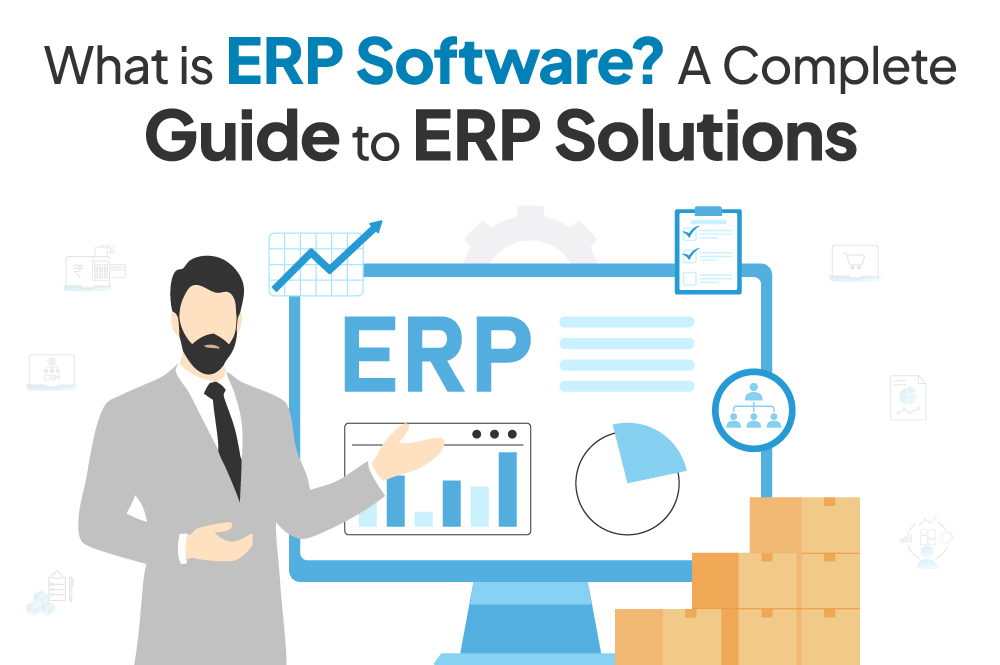
What is ERP Software? ERP systems are key to making ret...
January 1, 2025
Choosing the right retail software will have a large ef...
April 22, 2026

July 10, 2026

July 8, 2026

June 15, 2026

June 5, 2026

June 1, 2026